Back in St Maarten completing the STCW boat course this week. First things first, back in the US, I have realized, that I don’t want to buy my own boat. It’s important to highlight this one, because in “The Dilemma” post, I have extensively talked about the option of buying my own boat. Maybe once the time will come, but not now. Maybe never. At this point I don’t feel the urge at all. Erik has put this seed in my head during the crossing, and instead of ignoring it, I was carefully observing this option and how my gut feels about it, actually for months. Also, the people who I have met on the way and in the US, somehow convinced me, that going down to Patagonia on land, is still a beautiful plan to have. It’s funny, that I had to leave St Maarten and distance myself from everything that was surrounding me here, to realize this. And at one point, back in the US, I was sitting in a cafe saying,
‘Okay, let’s do this. I’m going to Patagonia. As I have initially planned at the beginning of my trip. I will try to do it on mainland and enjoy the ride. And the rest is out of my control, so I don’t need to worry much about it.’
What a relief it was! In a traveler’s life, the worst part is, when things are static and not moving forward. It’s conflicting, because without static, there is no movement. It’s the ying and the yang. Sometimes you need to slow down to be able to go fast. Back in Providence, I spent 4-5 days just sleeping after I was working on a boat in Newport preparing it for a cross-Atlantic race. I was levitating and meditating. Doing my self-hypnosis exercises. There was no flow for days, and it felt bad, it felt awful, but I had to trust the process, and the flow has slowly presented itself, once I’ve got enough energy to ride it. And what a flow it was! Probably the best 2 weeks on this whole travel so far. I was considering staying in the US to find work there, but honestly I didn’t feel much comfort risking it with my B1/B2 visa with the growing political tensions, and I felt it in my bones and on my bank account with a bleeding budget, that I had to leave. For the record, the political surrounding was not the main reason, I just felt it was high time to continue with the initial travel plans, because it was getting out of control with too much distractions.
Also, there was a (very) special person in my life up in Providence, whose presence, or influence (?) or input (?) made me reconsider my plans heavily. She was the fuel for the flow experience, and having her leaving the US one day before I left, I was like,
‘What am I doing here? It might just feel empty staying here without her. So let’s go.’
So my US exit was more of an impulse decision I made in a 2 days frame, that pulled me out of my comfort yet once again. And maybe the time will come, when I will talk more about her. For now, let it be enough that she likes tea. English tea. And she can sing. Like a bird. So saying goodbye to Providence couldn’t have been more emotional. It was heartbreaking a bit, but that’s what it is, when you are traveling, you just have to keep going.
Back to the American Square One
Coming back to St Maarten, got back to square one, where I have arrived from Europe with boat back in March. Arriving back to the island, I have realized that I have no more time to waste to search for a boat bringing me to, or closer to mainland. Walking around the island it’s scarily empty, and the majority of the sailors seem to have already gone. I wanted to monetize on my freshly received STCW, to stack up some more resources before I leave, but at least to cover my expenses on the island until I find a boat, but after talking to locals, chances are slim to find work due to low season.
I possibly have an option to deliver a boat to Jamaica with Tyson, the German businessman with the Jamaican accent (it actually sounds very funny), whose boat we were sitting with Sam for 2 weeks, but it’s still in the air and sooner than later I will need to get to some specific details on the next steps. With Jamaica a potential risk might be, that even if I hit the island, I’d might not find another boat to progress further. But for now, I don’t worry too much about that part.
So it’s time to build a plan!
The plan should be directional, I don’t like to plan out every step, so it gives me room for spontaneity and improvisation. But having the direction is still worthy, so I’m not running into unexpected bummers on the road. Eg. arriving to a place just realizing that I cannot progress further. That’s a bummer.
So the planning involves:
- Checking the situation of the remaining boats on St Maarten and its surrounding islands assessing all the available options.
- Updating my boat CV and send out some Facebook posts, and look around in sailor bars networking with the remaining people around.
- Finding a strategic spot on mainland that enables the continuation of my trip to South America, also considering that certain areas might be inaccessible or edgy to visit. This strategic spot should leave some air to breathe and ->
- Leaving me enough time to acclimatize to hispanic culture and catchup with the language. I’ll need to reactivate my basic Spanish vocab and level my language knowledge. I find this fundamental to make my stay in the hispanic countries more enjoyable. I was thinking to volunteer in a hostel somewhere in Columbia or Central America, maybe Guatemala or Nicaragua. Honestly, maybe Columbia would be the best option, because then I already have access to South American land. Because if I’m not hitting South America early enough, the hurricane season might just strikethrough my plans to access south via boat if the smuggling routes are inaccessible between Panama and Columbia.
- Draft the route mindfully, so eg. going to an island or a land location doesn’t close out the options of succeeding with the travel plans further.
Everyone’s best friend, ChatGPT comes into picture
I was using ChatGPT to help me prepare for the ocean crossing back in November, and it gave me a fairly good idea of how to get my head around the crossing without any sailing experience. I’ve put together a 5-10 pager playbook, that I used as guidance to prepare for the trip. It’s answers of course should be taken with caution, so it’s good to give you a direction, but not every word should be taken as written in stone.
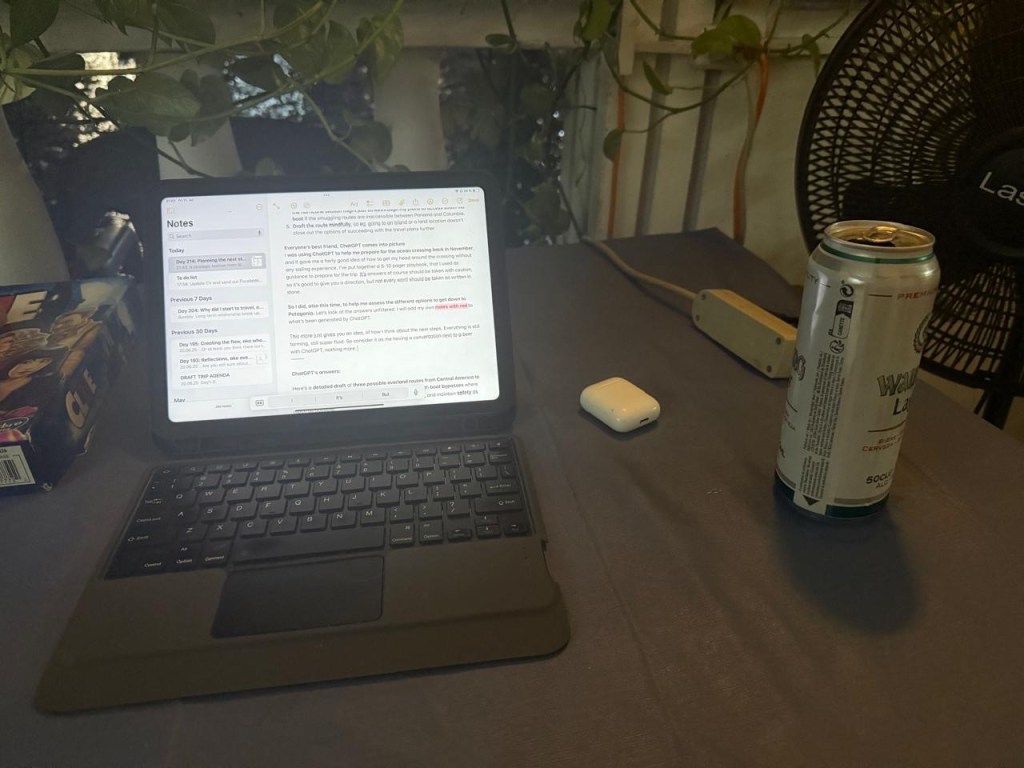
So I did, also this time, to help me assess the different options to get down to Patagonia. Let’s look at the answers unfiltered. I will add my own notes with red to what’s been generated by ChatGPT.
This more just gives you an idea, of how I think about the next steps. Everything is still forming, still super fluid. How to build something from nothing. From scratch. So consider it, as me having a conversation next to a beer with ChatGPT, nothing more, nothing less.
And I’m not joking about the beer, for the record.
⸻
ChatGPT’s answers:
Here’s a detailed draft of three possible overland routes from Central America to Patagonia, primarily by bus, hitchhiking, and walking, with boat bypasses where necessary. The routes aim to avoid flying, keep costs low, and maintain safety as much as possible.
Safety, budgeting are high priorities. I plan to use mostly public transport, boat, wherever it’s possible, hitchhiking.
⸻
🌎 OVERVIEW
• Start point: Guatemala City (representative Central American hub)
• End point: Ushuaia, Argentina (southern tip of Patagonia)
• Goal duration: ~5 months (approx. 150 days)
• Assumptions: Backpacker style, budget-conscious, Spanish-speaking or learning, flexible, no strict visa issues.
As an EU citizen, visa restrictions should not really apply, because I’m not planning to spend in any of the countries more than 90 days (gosh, we just don’t realize as EU citizens the privileges we have, when it comes to traveling). It seems hitting mainland in any of the Central American countries would help me progress down further to Panama, then in Panama the situation of the Darien Gap is something to consider bypassing with a boat. I need enough information to find out on this one, and early on, so I don’t run into the hurricane season not being able to access through the Caribbean sea to Columbia.
On another note, it’s not part of the options, but if I get to find a boat south (which is not my core plan at this point, since I’ve had the chance to already visit Trinidad), I would also play with the idea to access through Venezuela despite it’s unstable political situation. I think it could be played safe and then through Guyana and Suriname, Brazil could be accessed. On its east coast, I think the descending would be doable. Some of my fellow-hitchhiker/ traveler friends I met back in the Canaries are now in Trinidad, and meeting them up somewhere along the way, would just be fantastic.
⸻
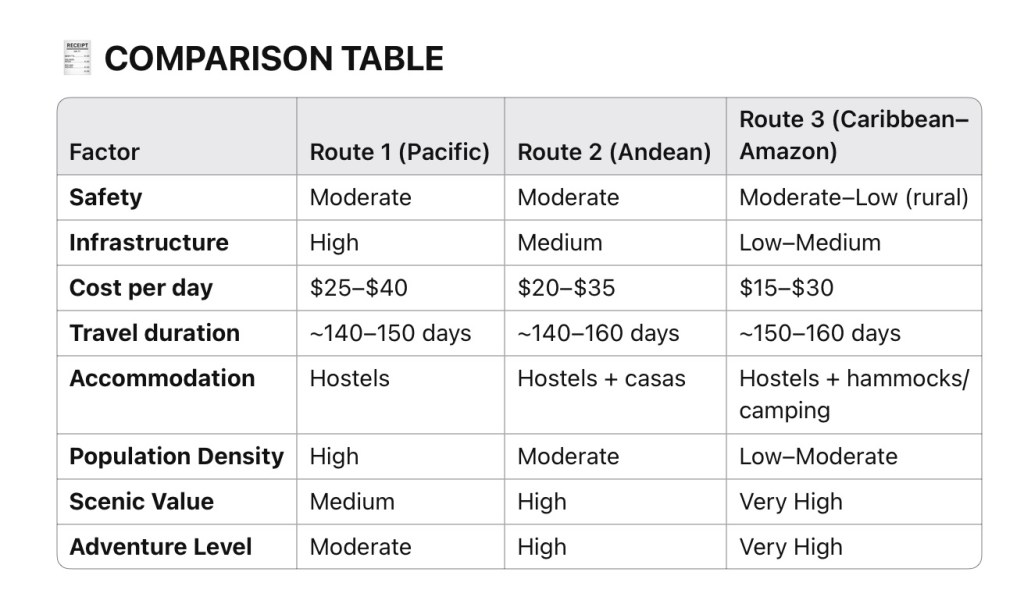
Another note, I have way too much stuff at the moment and I will need to do a thorough review letting things behind again, at least 5-6kgs of stuff. That’s a lot of stuff!
⸻
🚧 KEY OBSTACLE
• Darién Gap (Panama–Colombia): Inaccessible by land (dense jungle + cartel/militia risk).
• ✅ Bypass via boat or ferry from Panama (Portobelo or Colón) to Colombia (Capurganá or Turbo).
Yeah, the Darien Gap is something I’ll might need to look into more. At this point, it’s still too far, but if I progress towards Panama, I’ll need to collect more information.
⸻
ROUTE 1: Pacific Spine Route (High infrastructure, moderate cost, steady progress)
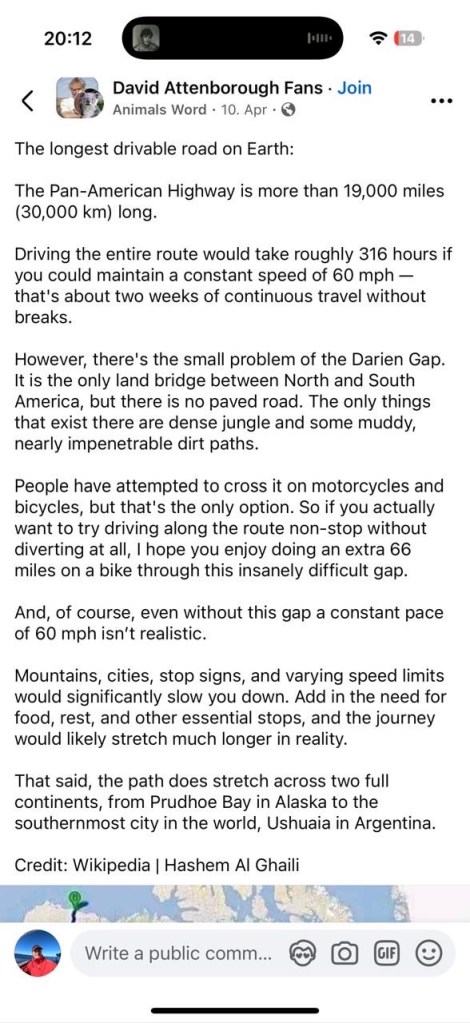
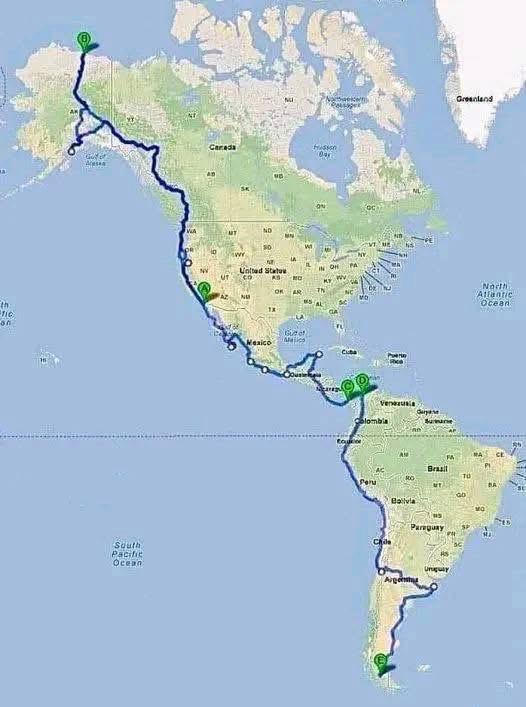
I’ll just put here a Facebook post with the map about this one. It looks highly accessible, except for the Darien Gap. So it seems with a motorcycle or with bicycle it would be actually doable. But then I would rather prefer to cross with a boat instead. Shall see. Apart from this part, I actually like this road.
Overview: Follows the Pan-American Highway where possible, sticking to populated zones, using long-distance buses, hitchhiking, and hostels.
🛣️ Route:
1. Guatemala ➝ El Salvador ➝ Honduras (quick transit) ➝ Nicaragua ➝ Costa Rica
2. Cross to Panama (follow Pacific coast via David to Panama City)
3. Boat from Colón or Cartí to Capurganá or Turbo (Colombia)
So this is the piece that could be bypassed. Due to the Pacific access, Panama is considered as a boat paradise, not sure what’s the situation there now though. Yet to figure out.
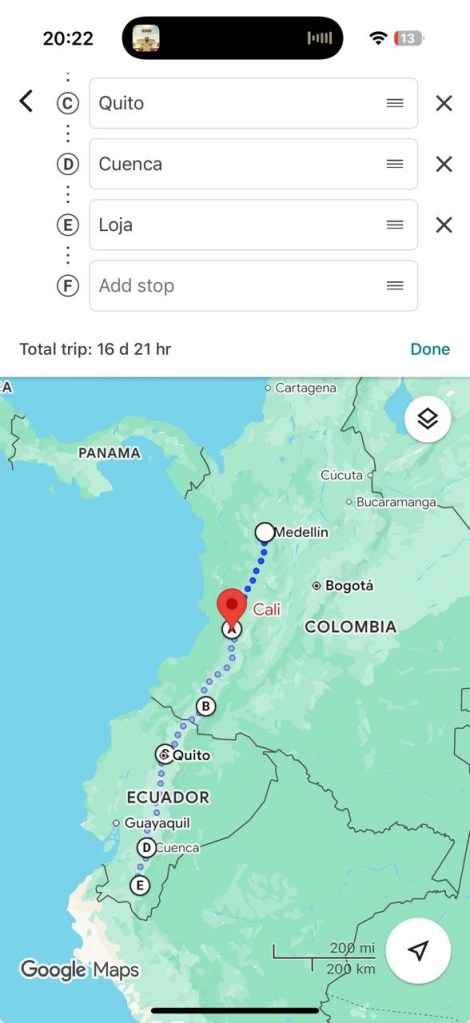
4. Colombia: Medellín ➝ Cali ➝ Pasto
This part will need to be detailed further. ChatGPT doesn’t describe how do I get to Medellin from Capurgana.
5. Ecuador: Quito ➝ Cuenca ➝ Loja
I just looked this one up in Google, and it looks highly accessible and doable. In fact, it gives me the impression that if the Panama – Colombia – Medellin issue can be solved, there is a green light down south.
On the other hand, I’m like ‘Am I really going to do this for the next 5 months? Really? I’m not sure if I’m prepared’ XD
6. Peru: Piura ➝ Trujillo ➝ Lima ➝ Arequipa
7. Chile: Arica ➝ Santiago ➝ Puerto Montt ➝ Carretera Austral ➝ Coyhaique ➝ Villa O’Higgins
8. Boat to El Chaltén, then continue down Argentina’s Route 40 to Ushuaia
✅ Pros:
• Reliable transport (main bus routes)
• Good infrastructure in major cities
• Budget hostels widely available
• Moderate safety if cautious (avoid night travel in northern Peru and Honduras)
❌ Cons:
• Less off-the-beaten path
• Some regions (northern Peru, Colombia’s south) require extra caution
Overview: Focuses on Andean spine, less coastal, with more walking/hiking options, rural lodging. I want to keep walking/hiking options available, but with moderate caution, given the whole trip is already super stretched, and will need to be strategic managing my energies and resources not to fall out halfway. This will definitely come with compromises and sacrifices on seeing scenic spots. That’s just the way it is when traveling. Something for something. And yes. Trade-offs. Still hating trade-offs.
🕓 Duration:
• Avg. 1 week per country → ~20 weeks total (~140 days)
• Reserve ~10 days for delays or rest
💰 Cost:
• $25–$40/day (budget)
• Approx. $4,000–$5,000 USD total
Hm, I’ll might need to squeeze this budget further down. Not sure yet if doable.
Overall this looks like a solid option, South Columbia might be edgy. On the way more information to be gathered.
⸻
ROUTE 2: Andean Highland Route (Scenic, cultural, more remote)
Yeah, one of the main reasons I wanted to visit South America is the Andes.
Like getting the most out of seeing the Andes. This must be breathtaking.
🛣️ Route:
1. Guatemala ➝ Honduras ➝ Nicaragua ➝ Costa Rica ➝ Panama
This is great, same as option 1, so the Andean and the Pacific highway route leads the same way through Central America without much diversion, which will leave me enough time to decide on the next steps when approaching South America.
2. Boat to Colombia
3. Colombia: Stay inland — Medellín ➝ Bogotá ➝ Popayán ➝ Pasto
I don’t mind much about these options at this point at all. This will be a next chapter, if and when I make it down to Colombia, I can make up my mind.
4. Ecuador: Otavalo ➝ Quito ➝ Riobamba ➝ Loja
5. Peru: Cajamarca ➝ Huaraz (Cordillera Blanca) ➝ Cusco ➝ Puno
6. Bolivia: Copacabana ➝ La Paz ➝ Uyuni ➝ Tupiza
An important caveat here is, that this route leads through Bolivia and not Chile, which actually could make my Argentina entrance more accessible not through highlands. Shall see later on when I get more clarity.
7. Argentina: Jujuy ➝ Salta ➝ Mendoza ➝ Bariloche ➝ El Bolsón ➝ El Chaltén ➝ Ushuaia
✅ Pros:
• Stunning mountain landscapes
• High cultural immersion (indigenous villages, Quechua/Aymara communities)
THIS ONE IS RED (wordpress doesn’t let me edit this to red) : I definitely want to have some deep cultural experiences, meeting the indigenous, and visiting places where average tourists probably would not go.
• Cheaper in Bolivia/Peru (sub-$20/day possible)
Another important consideration is costs involved, I’d definitely go with the cheaper options wherever possible as long as infrastructure, accommodation and infrastructure makes it reasonable.
❌ Cons:
• High altitude (possible altitude sickness)
Hmm, too high altitudes might be problematic. What’s good, is that I don’t need to decide now. Point number 1 itinerary route is the same with Option 1 and 2. So I can make my mind up of what I want on the way.
• Remote areas → fewer transport options
• Infrastructure thinner in Bolivian Andes
THIS IS RED TOO: The Bolivian Andes must be kick-ass. I’m not sure if I have the right clothing though and backpack to carry that. Shall see.
🕓 Duration:
• ~5 months realistic, may be slower in mountain regions
💰 Cost:
• $20–$35/day
• Approx. $3,500–$4,500 USD
⸻
ROUTE 3: Mixed Caribbean–Interior Route (For lower density + nature)
Overview: Mix of Caribbean coast, Amazon basin, and remote Patagonian tracts. Requires more boat rides, less highway, hitchhiking and trekking are more common.
🛣️ Route:
1. Guatemala ➝ Honduras (La Ceiba) ➝ Boat to Nicaragua’s Caribbean coast
2. Nicaragua ➝ Bluefields ➝ boat to San Juan del Norte ➝ enter Costa Rica via Río San Juan
3. Costa Rica: Caribbean coast ➝ Puerto Limón ➝ San José
4. Panama: Cross to Colón ➝ boat to Capurganá
5. Colombia: Caribbean coast ➝ Santa Marta ➝ inland to Bogotá
6. Amazon basin: Cross via Leticia ➝ boat down to Iquitos ➝ travel to Andes (Cusco)
Going through the Amazon must be kick-ass for sure. But have to consider clothing, camping stuff and if it is reasonable.
7. Continue via southern Peru ➝ Chile ➝ Argentina
✅ Pros:
• Wild and less-traveled
• Close to nature, cheaper in many rural zones
• River transport is scenic and cheap (Amazon region)
❌ Cons:
• Slower, lower infrastructure
• More planning/logistics
• Fewer hostels, may need camping gear
I think I could get some volunteering opportunities in hostels. That way could mitigate the cost factor with route options A or B.
🕓 Duration:
• Slower pace, but possible in 5 months with good planning
💰 Cost:
• $15–$30/day
• Approx. $3,000–$4,000 USD
THIS IS RED: This is the travel budget that I’m trying to squeze my trip into. Even though considering Option A or Option B more than Option C.
⸻
🚢 DARIÉN GAP BOAT OPTIONS (All routes):
• Option 1: Sailboat from Portobelo or Cartí to Cartagena (~5 days, $400–$600; pricier but beautiful)
• Option 2: Public boat to Capurganá → Turbo → bus inland (~$100–$150)
THIS IS RED TOO: I will need to reduce my boating costs to close to zero, to max food coverage level. I think at this point I should already have enough experience to be actually useful on sailing boats. And have already invested quite some money to cross the ocean, on certificates, etc to see some actual return on it.
⸻
Summary
Okay, so wrapping things up, a key location is Columbia. If I want to go with either of these options, I will eventually need to hit Columbia. Without any doubt. This should leave me enough time to get my head around the next steps and it’s not really worth going into any more detail up until things get crystalized. I would say hitting Columbia, could eventually happen in the next 2 months?!! Maybe?! Things might speed up though at one point.
Now I will need to focus on building a strong boating profile and get the lure out via Facebook posts and networking to see what’s the appetite and if there is any catch. If anybody wants me, really on their boats.
How exciting!!!
Stay tuned!

