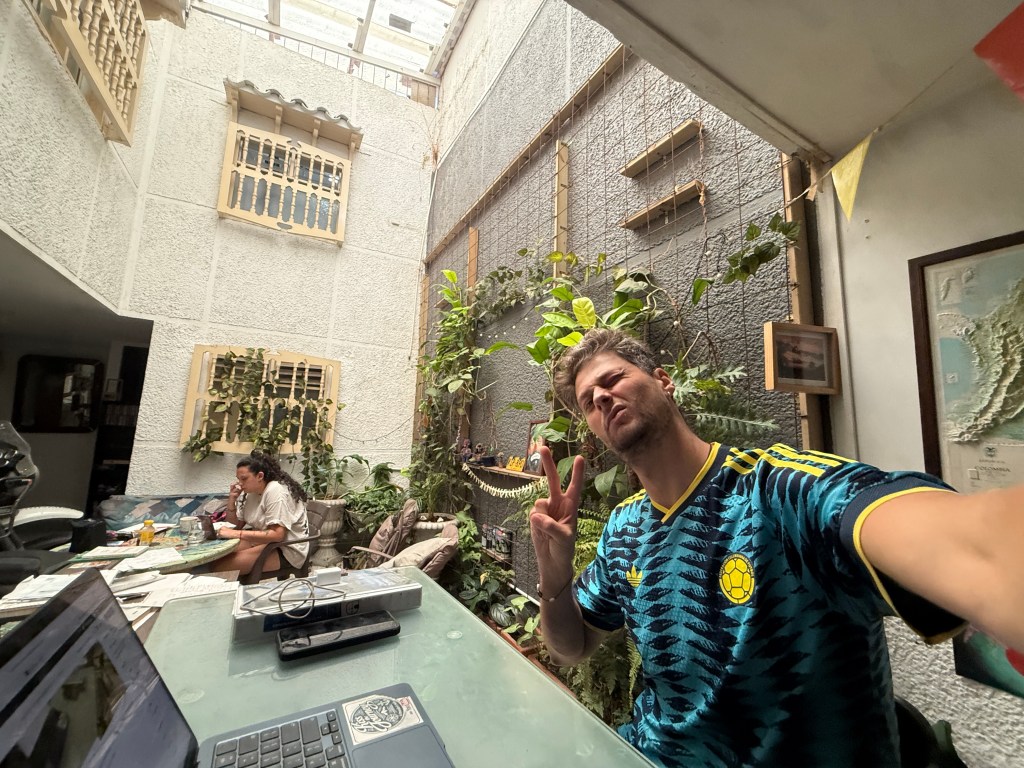
675. nap: Hogyan készülsz fel arra, hogy egyedül eljuss a világ végére?

Előszó

Mindig is úgy tekintettem erre az utazási projektre, mint a saját kísérleti / pilot vállalkozói projektemre. Kezeld ezt egy kis fenntartással, de lehet, hogy idővel mégis találsz benne inspirációt a saját ötleteidhez, vagy ahhoz, hogyan közelíts meg egy olyan projektet, amiről már régóta álmodsz, de valójában sosem merted igazán megpróbálni.

Beleférhet egy élet dobozokba?

Meghoztad a döntéseidet, az óra pedig ketyeg.

El kell adnod mindent, és dobozokba kell csomagolnod az életedet.

Nagyon gyorsan egy másik lakásba kell költöznöd.

Aztán néhány hét múlva ki kell pakolnod a régi lakásból, és át kell költöznöd egy harmadikba.

Majd újabb néhány hét múlva végül Németországból Magyarországra kell hazaköltöztetned az életed megmaradt romjait.

Minden perc számít, de valahogy mégis sikerül mindent megoldanod.

Van valami a levegőben.

Mintha minden így lenne megírva.

A dolgok, amiket el akarsz adni, megtalálják az új gazdáikat.

A testvéred a lehető legjobb pillanatban jelenik meg, hogy segítsen visszafesteni a falakat és leszerelni a polcokat.

Még az új bérlő is kedves, aki átveszi tőled a lakást, és felajánlja, hogy rengeteg cuccodat megveszi.

És közben tényleg azt akarod, hogy működjön.

Hogy mindenki számára a helyes dolgot, a helyes módon csináld.

Mert mindenki a legjobbat érdemli tőled.

Ezért keményen dolgozol azon, hogy megoldásokat találj, ne újabb problémákat.

És elkezdesz gondolkodni:

Ez az én életem dobozokban?
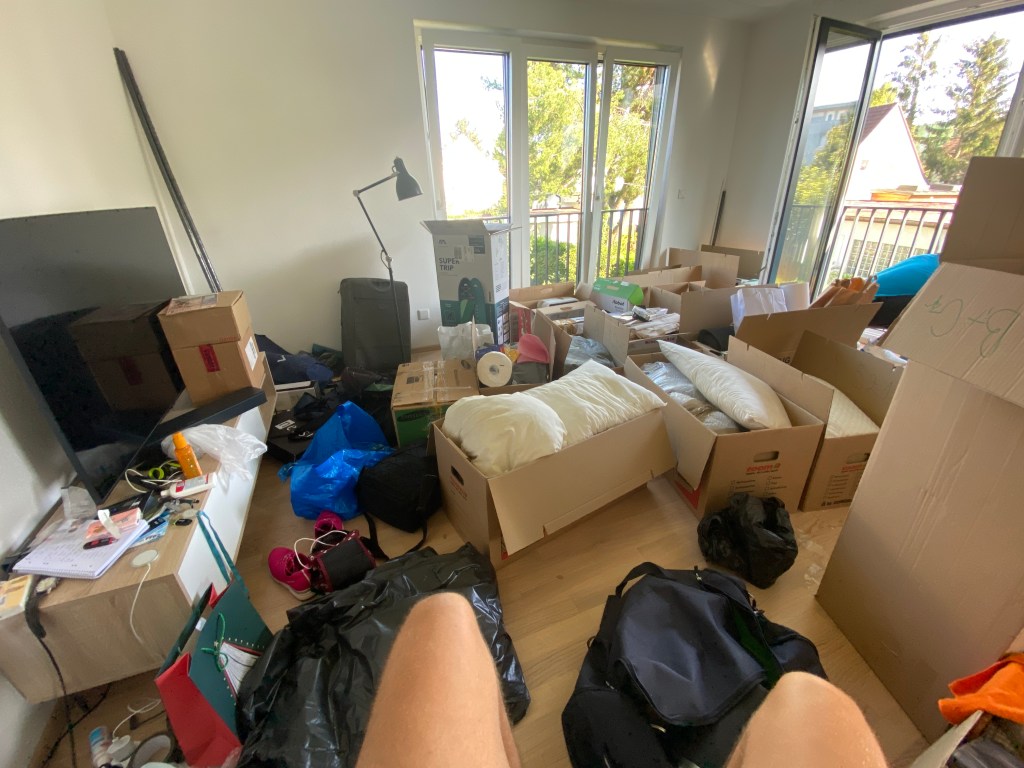
Azt hiszem, 2024 augusztusában ilyen gondolatok forogtak bennem, amikor láttam a romokat magam előtt.

Ennyi maradt az életemből?

Egy döntés, amely látszólag elkezd gurulni, mint egy hógolyó, és végül lavinává válik.

Majdnem maga alá temet és megfullaszt.

Az egyetlen dolog, amit tehetsz, hogy megpróbálod a fejedet a felszín fölött tartani.

Első doboz.

Második.

Harmadik.
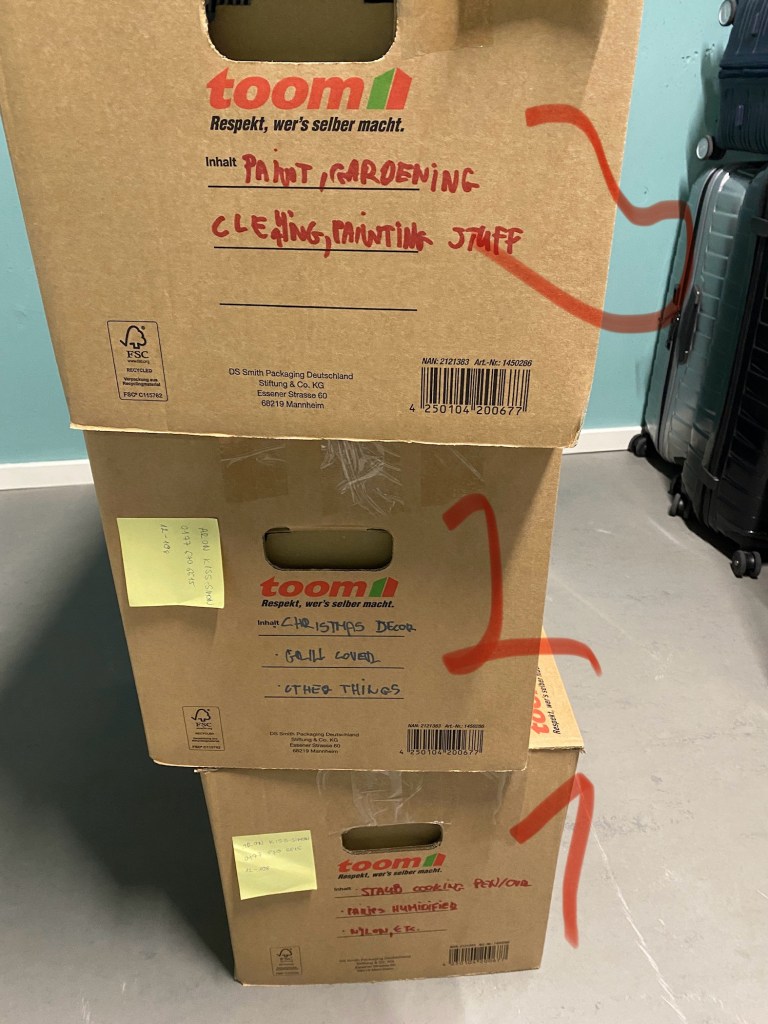
Ennyi maradt?

De azért nem keseregsz túl sokat.

Nincs rá idő.

Egyik megoldásnak követnie kell a másikat, különben az egész projekt megbukik.

És ez a te döntésed volt.

Úgyhogy jobb, ha kézben tartod.

De valójában egész lazán kezeled az egészet, és ahelyett, hogy túlságosan aggódnál, elmész megnézni a következő Liverpool-meccset az ír kocsmába.

Felpattansz a biciklire, és áttekered a müncheni nyarat.

A sör friss.

Az élet pedig… nos, úgy tűnik, az élet megy tovább.
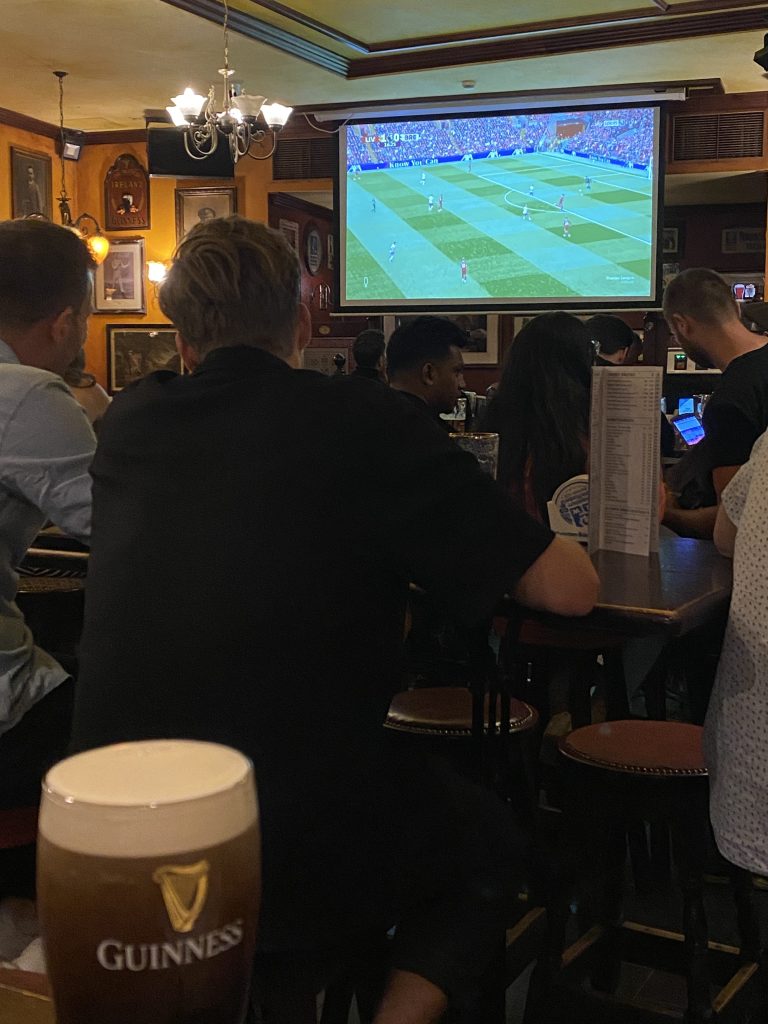
A jéghideg Guinnessedet iszod, és arra gondolsz:

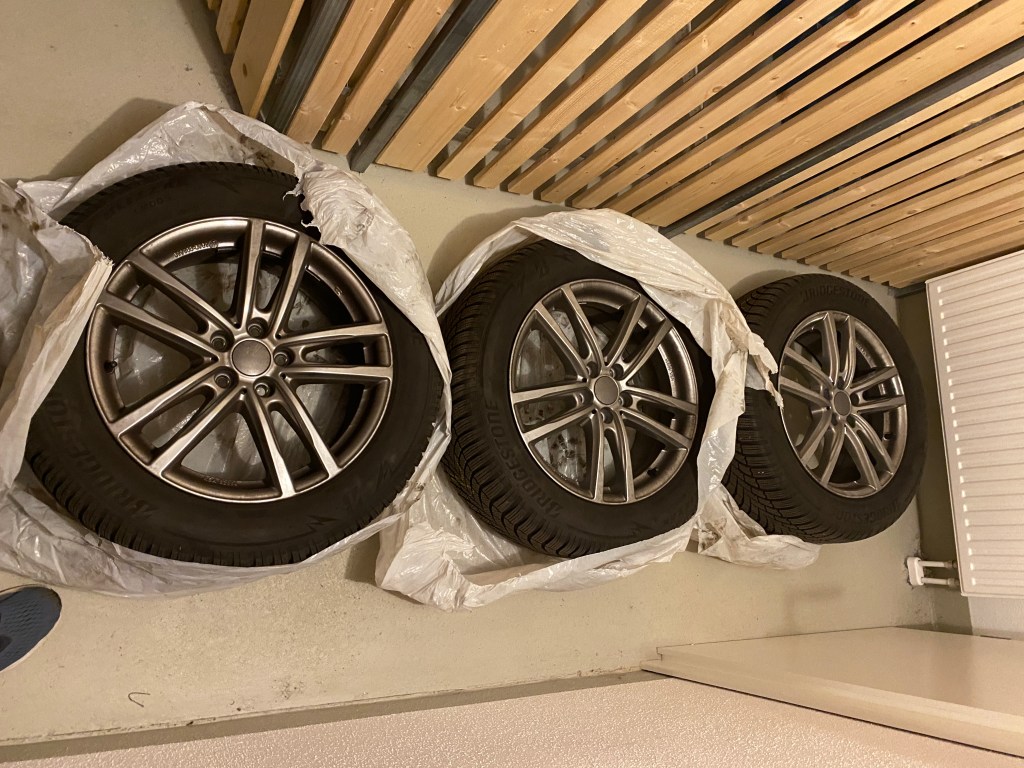
“Wow, ezt tényleg sikerült összehoznom. Szó szerint mindent eladtam a használtpiacon. Szerencsére a müncheni használtpiac virágzik. Még azok a rohadt gumik is eltűntek a pincéből, abból az autóból, amit elvitt a biztosító. Az Excel-fájl, amit készítettem az összes szarról, amit el akartam adni, megtette a magáét. Meg én is, azt hiszem.”
Megszervezed az utolsó alpesi túrát a kollégáidnak.
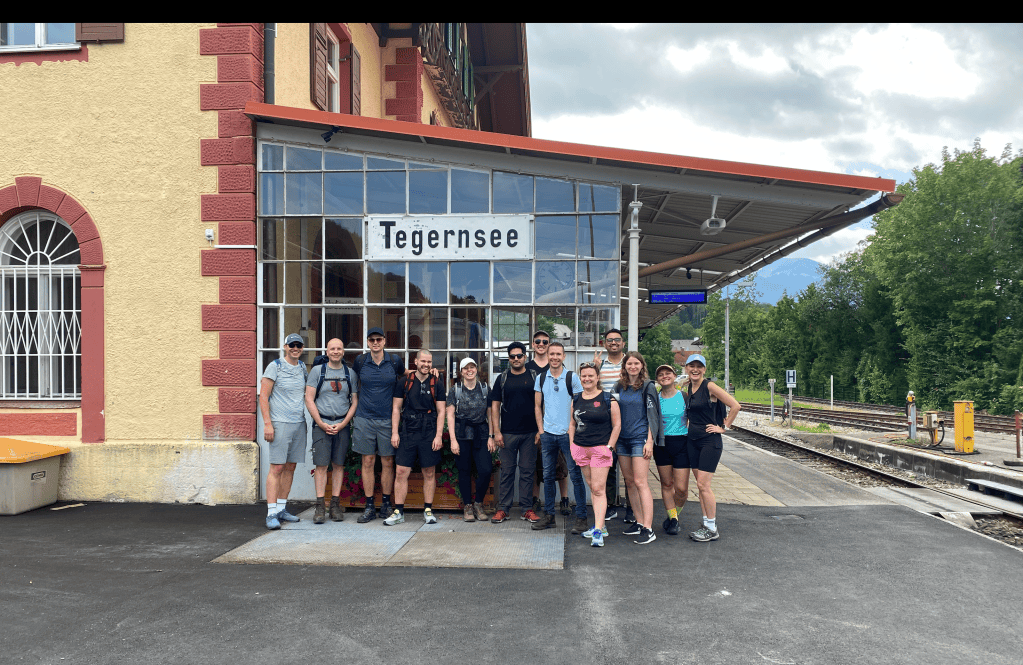
És közben arra gondolsz:

Wow.

Ez tényleg valami különleges volt.

Valami, ami nem történik meg kétszer az életben.
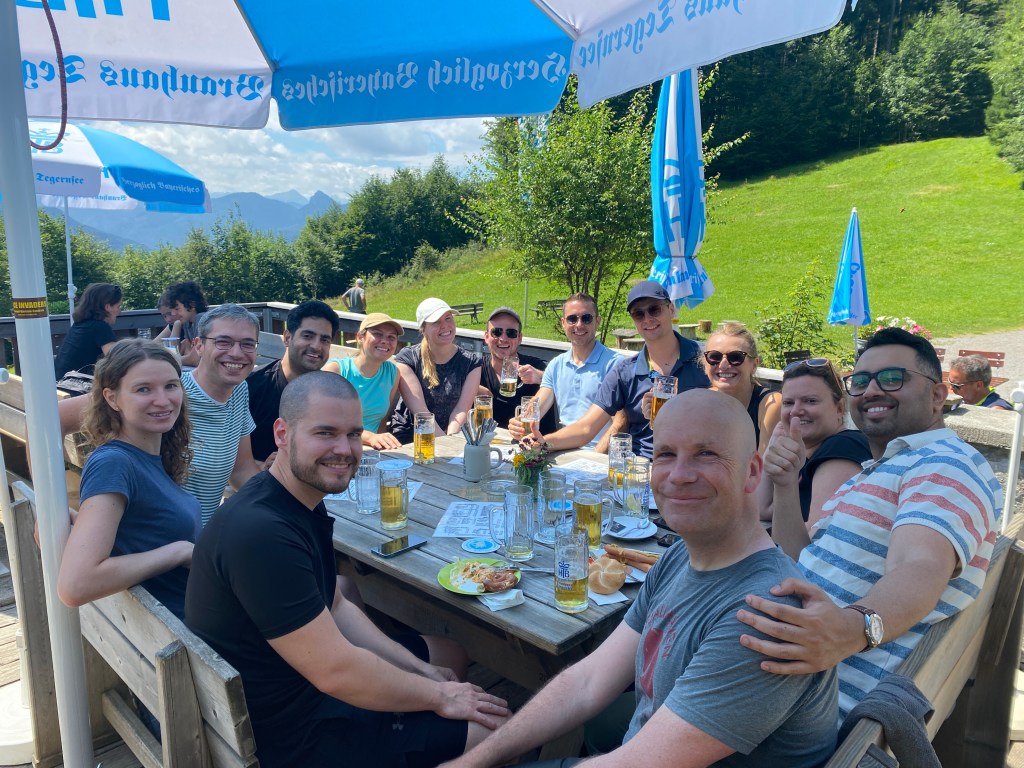
Aztán a kollégáid szerveznek neked egy szép búcsúztatót.

Teljesen váratlanul.

Mármint, évekig dolgoztunk együtt, de mégsem számítasz ilyesmire.

Bár igaz, hogy abban az életszakaszban több időt töltöttem velük, mint a családom vagy a barátaim bármelyikével.
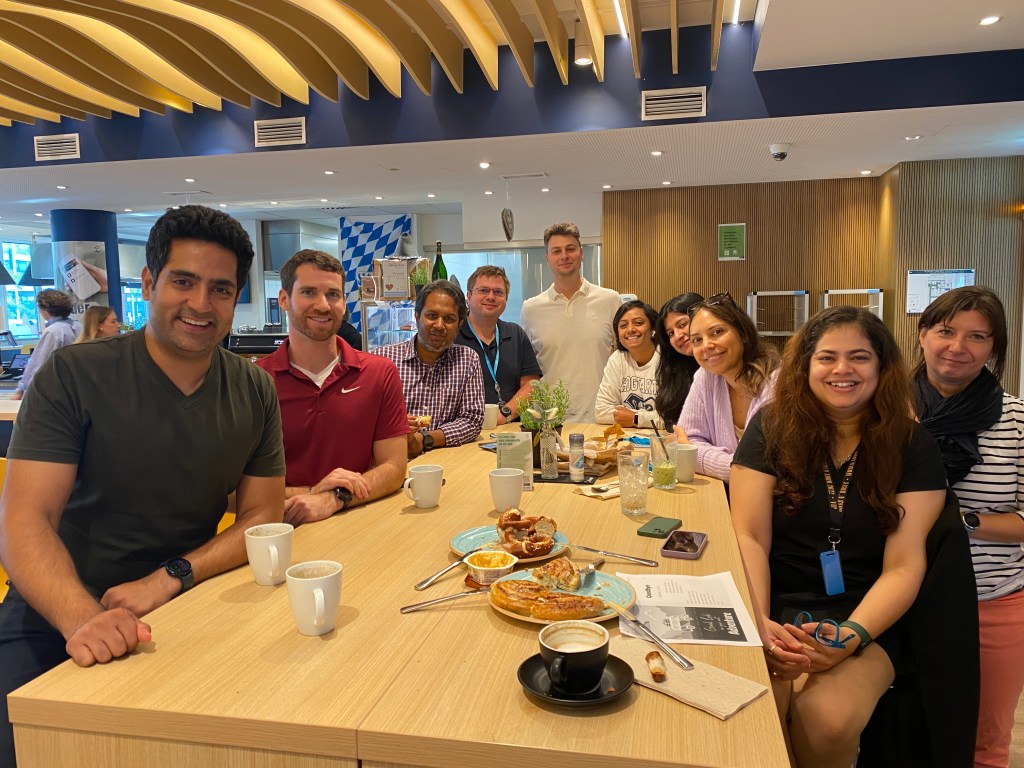
A menedzsered mond néhány kedves szót neked a buszmegállóban az utolsó napodon.

Ahogy ott állunk az iroda előtt, az utolsó buszomra várva, azt mondja:

“Wow, haver, nézz magadra. Emlékszem az első napjaidra. Férfivé váltál.”

Vagy valami ilyesmit.

Csak bólintasz.

De legbelül a szívedbe zárod ezeket a szavakat, és valószínűleg soha nem fogod elfelejteni őket.

Soha nem felejted el, hogyan érkeztél Münchenbe a Covid idején, kijárási tilalom alatt.

Az első napjaidat sem.

Azt, ahogy távolról csatlakoztál az első csapatmeetingekhez.

Soha nem felejted el, milyen izgalmas volt egy új országba költözni.

És azt sem, milyen nehéz volt megfelelni egy világszínvonalú vállalat elvárásainak.

És azt sem, hogy valójában mennyire élvezted.

Nem tudom, milyen most az Amazon irodája, de akkoriban egyszerűen más energia volt a teremben.
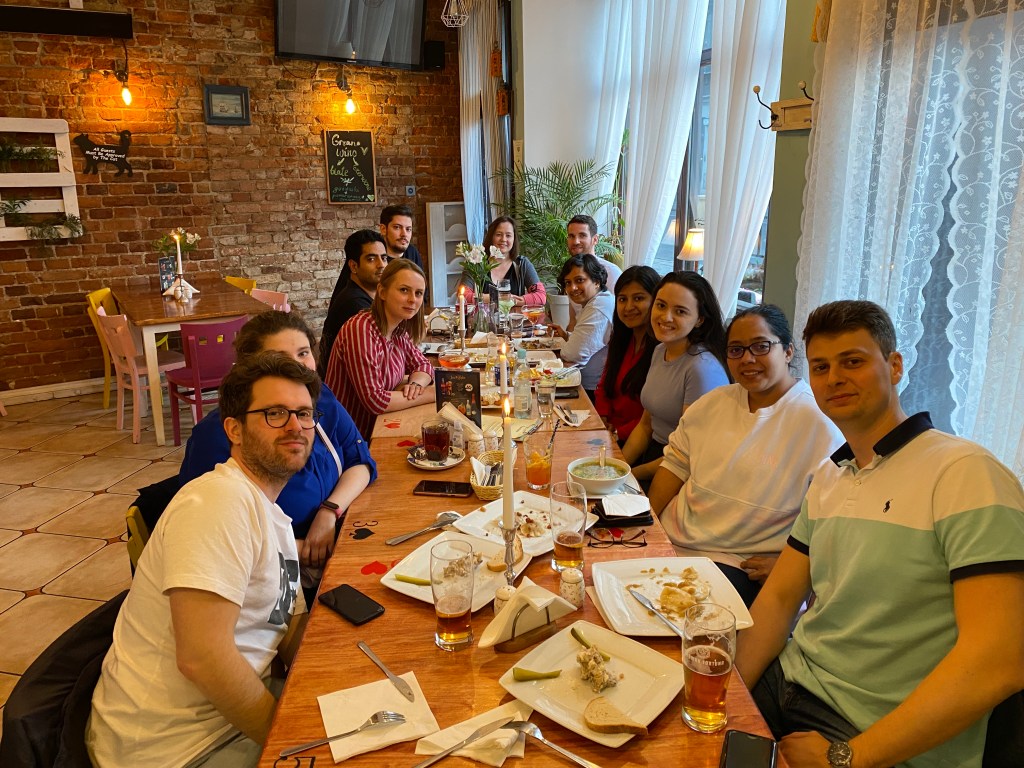
Mindenki próbált kiemelkedni, és teljesen rákapcsolt, hogy megmutassa, miben jobb a többieknél.
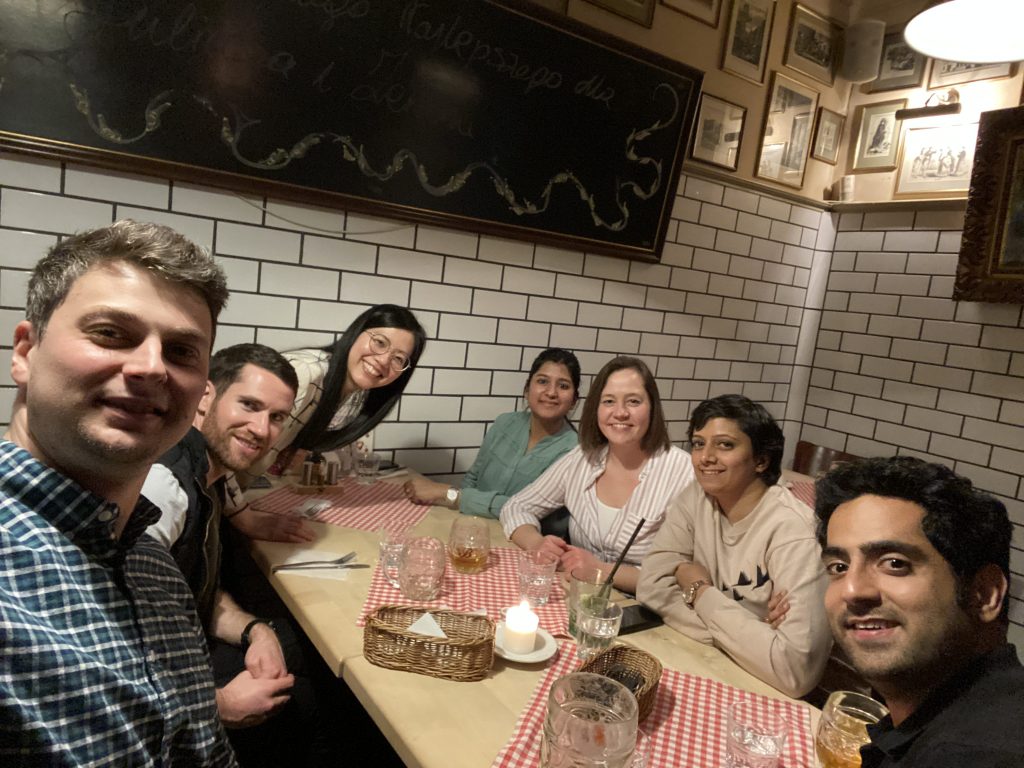
Négy meghatározó év volt az életemben.

Vannak, akik otthagyják a corporate világot, majd utána elkezdik szidni az egészet.

Értem, én.

De tőlem valószínűleg nem lenne hiteles, mert az élettapasztalatom hatalmas részét ezeknek az embereknek köszönhetem.
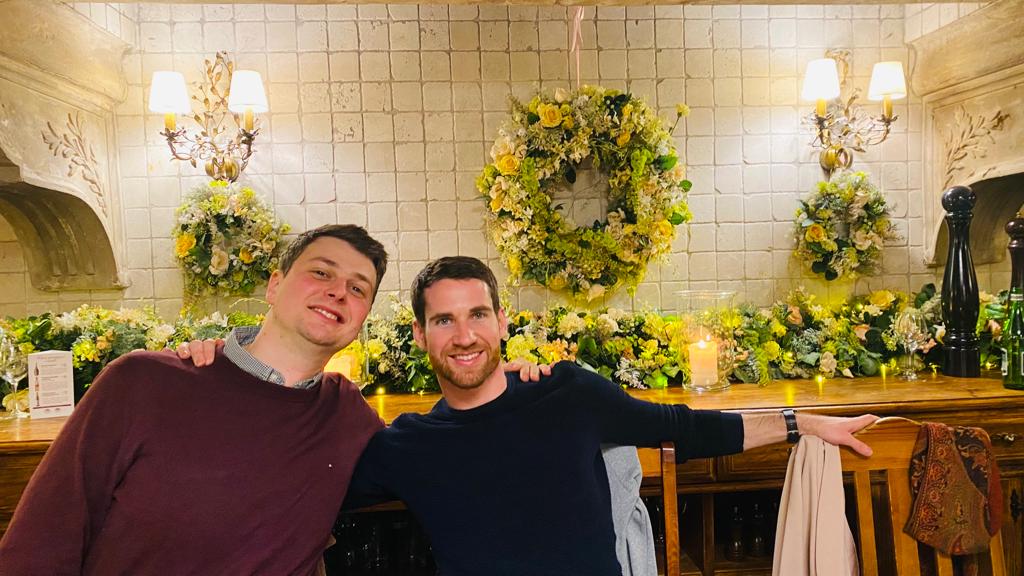
És nem csak az Amazonnak.

Hanem az első menedzsereimnek is, az első céges napjaimtól kezdve.

Ricardo, Sergio, Nora, Tuyana, Vikas, Denise, Giovanni.

Aztán Ravi, Nick, Volker és Barbara.

Nevek, amiket soha nem fogok elfelejteni.

Az utolsó hetekben, mielőtt végleg elhagytad Münchent, kihívást állítasz magad elé.

Hány buliba tudsz elmenni?

Megmondom.

Sokba.

Aztán elmész az utolsó Oktoberfestedre.

Egyedül érkezel, és idegenekkel találkozol.
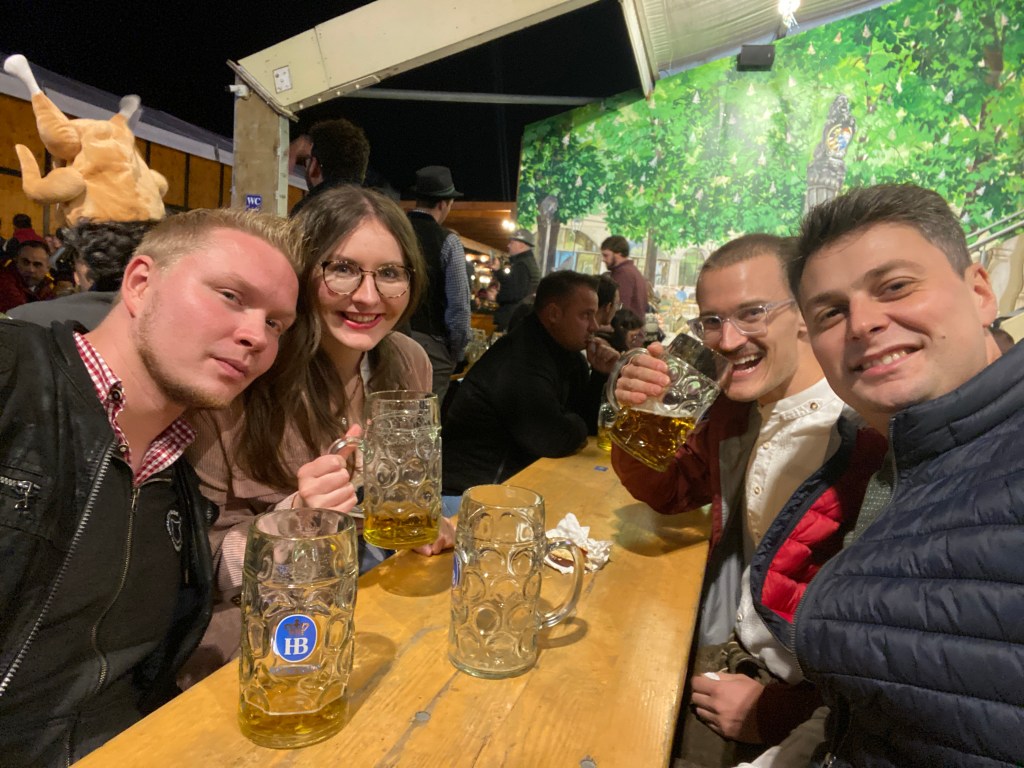
Aztán a kollégáiddal is elmész még egyszer.
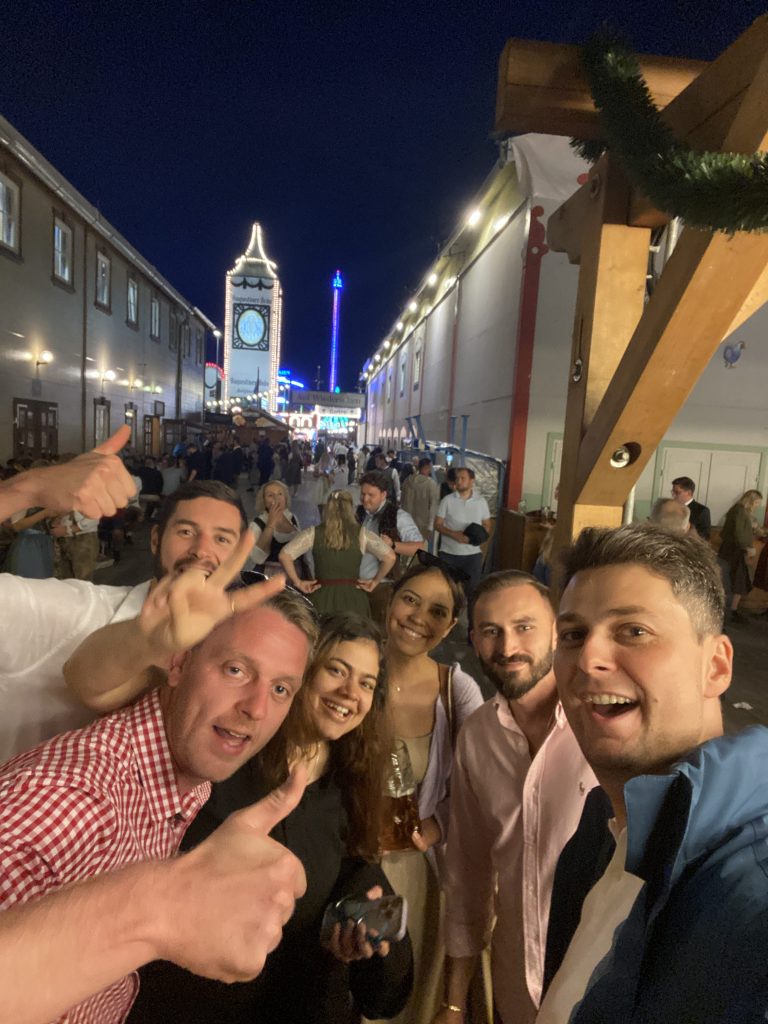
Végül még egy utolsó afterpartyra is beesel.

És aztán, csak úgy, véget ér a müncheni időszakod.

Mintha soha nem is lett volna.

A vonaton ülsz, és nézed, ahogy a fák és az alpesi hegyek villámgyorsan suhannak el melletted.

A vonat 200 km/h-val halad.

Alig tudod követni.

A retinád őrült sebességgel ugrál egyik fáról a másikra, próbál fókuszálni, de minden egyes milliszekundumban kudarcot vall.

A gondolataid valahol máshol járnak a csendes kabinban, és csak a fémen csúszó fém hangját hallod.

Haza kell menned, és újra kell szervezned az életedet.

Nem tudod, sikerülni fog-e.

Közben pedig azt gondolod:

Mi jön ezután?

És ami ezután jött, azt soha nem tudtam volna elképzelni.

Egy titkos vágy

Mielőtt mindent felmondtam és otthagytam, a cégen keresztül igénybe vettem egy magyar life coach szolgáltatásait.

A vele folytatott beszélgetések rengeteget segítettek abban, hogy meghozzam a saját döntéseimet, és megtaláljam az életem megfelelő irányát.

2024 májusa körül megkérdezte:

Mit csinálnál, ha nem az Amazonnál dolgoznál?

Szinte gondolkodás nélkül azt mondtam:

“Elmennék Patagóniába, Argentínába, repülés nélkül, vitorlázva átkelve az óceánon.”

Erre mondott valami olyasmit:

“Oké, esetleg valami reálisabbat?”

Én pedig:

“Nem. Ennyi. Ezt csinálnám.”

Öt hónappal később anyum lakásában ültem a kanapén, és azt gondoltam:

Mi legyen most?

Kiléptem egy olyan élethelyzetből, amelyben úgy éreztem, hogy tovább kell lépnem.

Úgy éreztem, hogy kinőttem az egészet, és irányt kell váltanom.

Ez egy elég kemény felismerés, elhiheted.

Felbukkan a tudatalattidból, mint egy pattanás.

És amikor megpróbálod eltávolítani, egyszerűen nem tudod.

Egyre nagyobb és nagyobb lesz, amíg már NEM TUDOD nem észrevenni.

Valójában szembe kell nézned vele.

És lépned kell.

És amikor megléped, tisztázod az új irányt, azt gondolod, hogy okosabb és bölcsebb lettél.

De valójában nem.

Csak megoldottál egy helyzetet.

Szóval mi jön ezután?

A belső gyermek táplálása

Nem lettem okosabb.

De arra gondoltam:

Hát, az elmúlt hét évben megállás nélkül dolgoztam, országot váltottam, folyamatosan a következő előléptetésért dolgoztam, és közben még egy egyetemet is elvégeztem.

Azt hiszem, most az a dolgom, hogy tartsak egy kis szünetet.

Szórakozzak.

És gondolkodjak.

Időt kértem mindenkitől a családban.

Különösen anyámtól, aki próbálta megérteni, mi történik velem.

Azt mondtam:

“Hagyjuk hadd ülepedjenek a dolgok.”

Minden kicsiben kezdődött.

Elkezdtem olyan dolgokkal kísérletezni, amiket korábban soha nem csináltam.

Mi lenne, ha fülbevalót hordanék?

Soha nem volt.

Nem mintha valaha is akartam volna, de amikor szembesültem a szabadságnak ezzel az új formájával, egyszer csak azt gondoltam:

Miért ne?

Először szőkére akartam festeni a hajam.

Barbara, az Amazonos menedzserem viszont azt mondta, ne tegyem, mert tönkreteszi a hajamat.

A hajam pedig amúgy is elkezdett természetesen George Clooney-féle őszbe fordulni.

Arra gondoltam:

Miért bántsam?
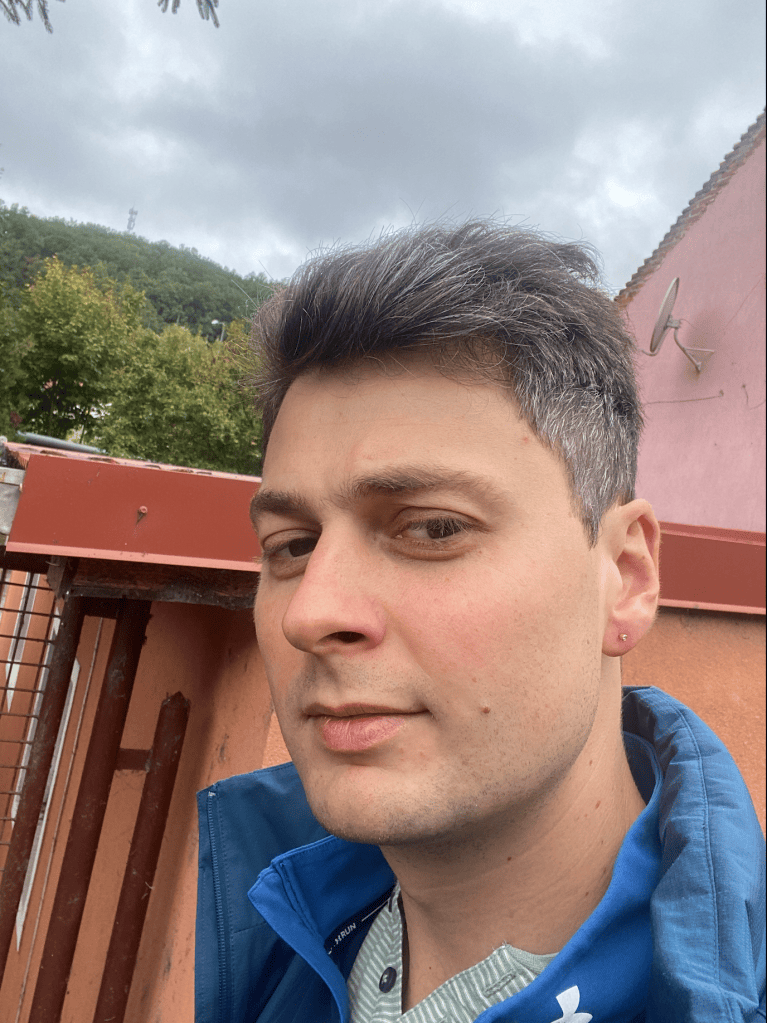
Maradt a fülbevaló.

Aztán:

Ez király.

Mi lenne egy tetoválással?

Olyanom sem volt.

A családom mindig rossz szemmel nézte a tetoválásokat, de néhány évvel korábban a testvérem és a felesége elkezdtek párat csináltatni.

Mindenki felhúzta a szemöldökét.

Aztán rájössz:

Minden csoda három napig tart.

És valójában senkit nem érdekel.

Úgyhogy arra gondoltam, hogy már pont elég sztoikus bölcsességet szedtem össze random Instagram-posztokból ahhoz, hogy rákerüljön a karomra az Amor Fati — szeresd a sorsodat.
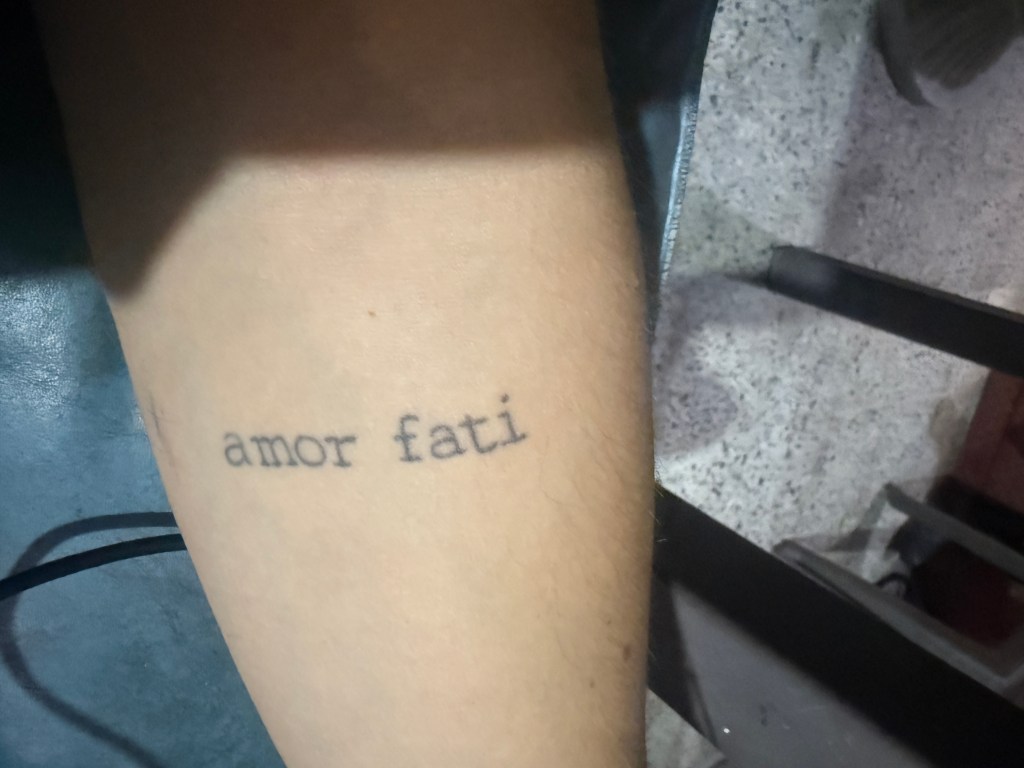
Mi mást csinálhatnék?

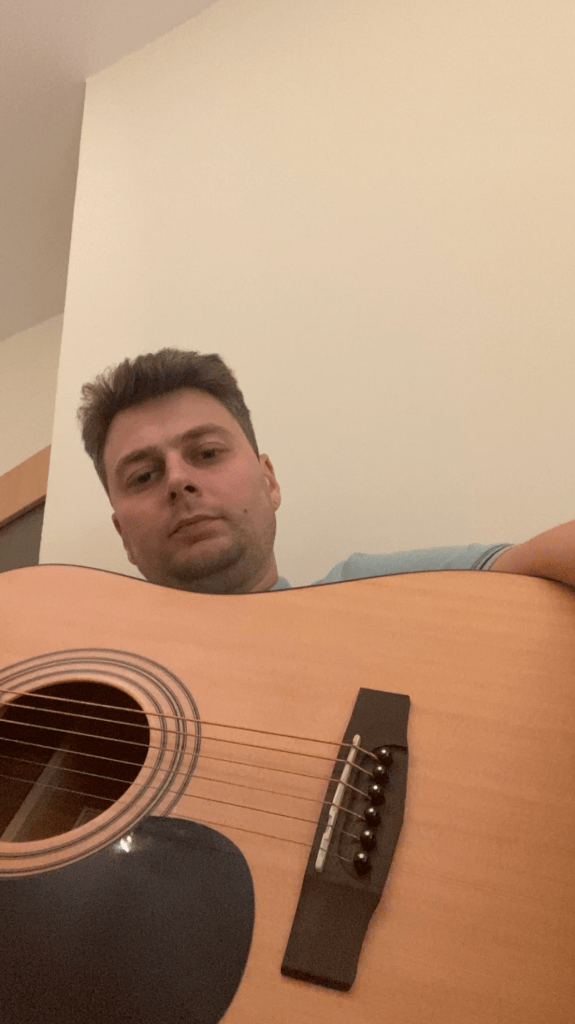
Megfogom újra a gitárt, hogy megnézzem, milyen érzés.

Hét év kihagyás után.

És nagyon jó érzés volt.
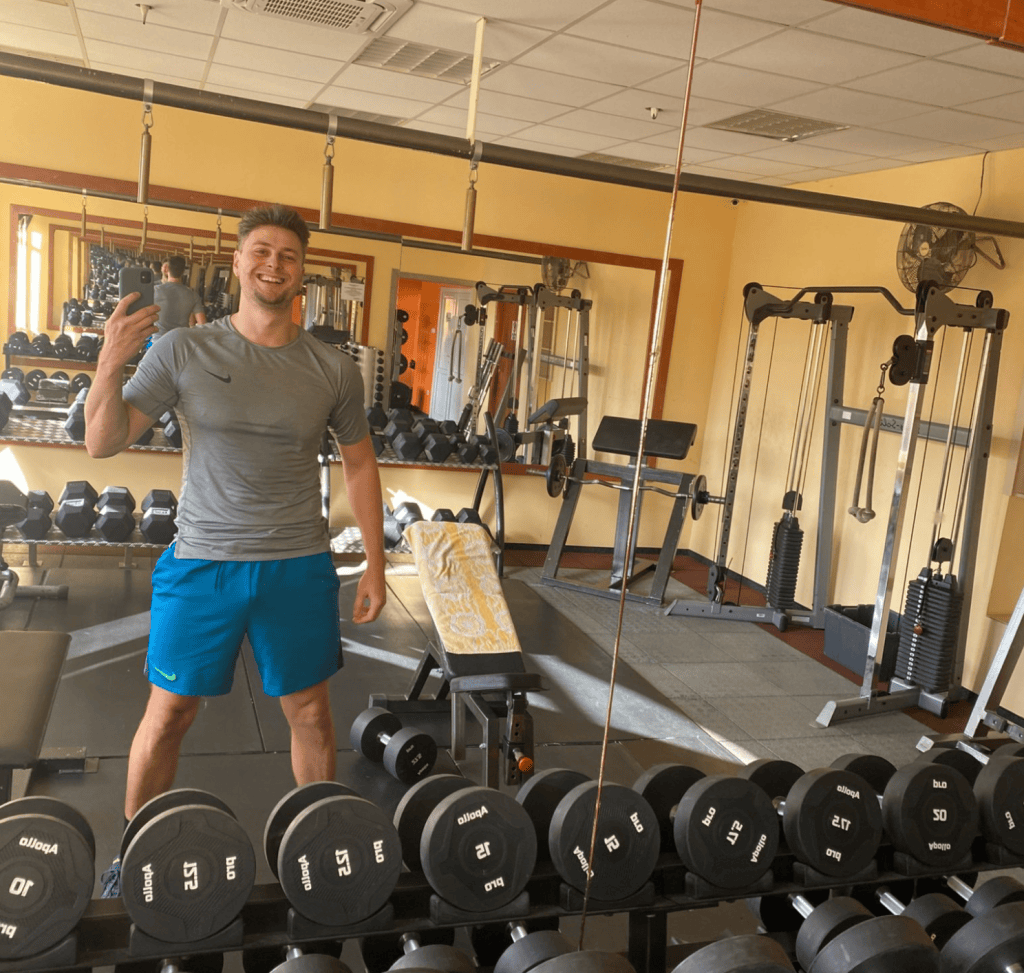
Mi lenne, ha néha elmennék a konditerembe?

De nem 45 percre.

Hanem kb három órára.

És minden második nap.

Milyen érzés lenne tényleg törődni magammal?

Csinálni valamit, amit olyan hosszú ideje hanyagoltam.
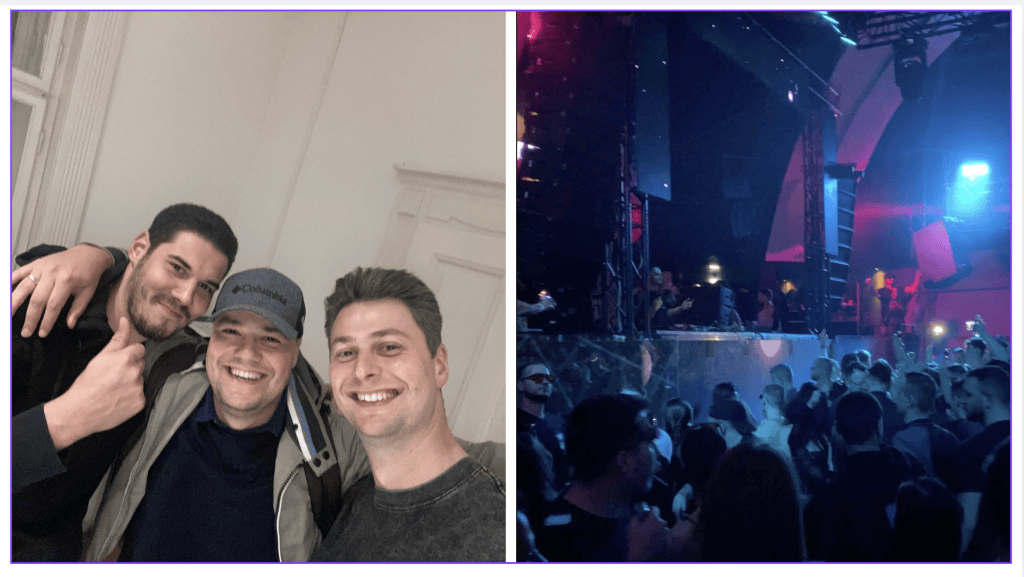
Mi lenne, ha elmennék a testvéremmel és az unokatestvéremmel egy techno buliba?

Ahol az unokatestvérem majdnem eltöri a lábát a lépcsőn lefelé menet.

Szerencsére a lába túlélte a dolgot.
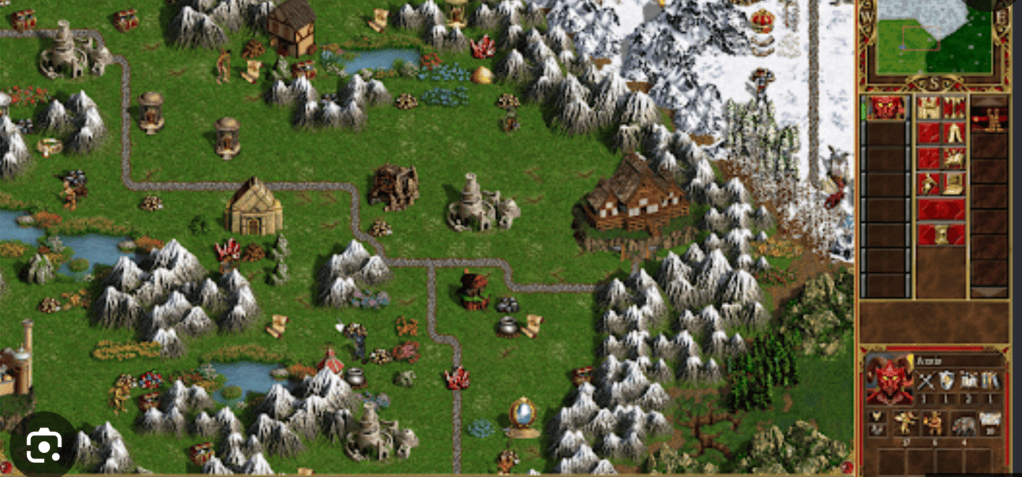
Vagy játszanék a minden idők kedvenc számítógépes játékával, a Heroes 3-mal?
Végül ezek mind olyan dolgok voltak, amiket hosszú időn keresztül elhanyagoltam.

Néhányat éveken keresztül.

Mindegyik táplálta a belső gyermekemet.

Én pedig soha nem hagytam, hogy a belső gyermekem táplálkozzon.

Egyszerűen kiéheztettem addig, amíg már nem volt visszaút, és szembe kellett néznem az igényeivel.

És ahogy azokban a hetekben otthon újraépítettem magam, 2024 októbere körül elkezdett kialakulni egy terv.

Egy titkos terv.

Amiről igazából senkinek sem mertem beszélni.

Talán a testvéremnek és apumnak, akik mindig is kicsit bűntársak voltak a dologban.

Utazni. Elmenni.

Egyedül elmenni a világ végére.

És mindezt repülés nélkül.

675. nap: Hogyan készülsz fel arra, hogy egyedül eljuss a világ végére?

Hatalmas harcot vívtam saját magammal.

Már 32 éves voltam, és úgy éreztem, hogy telik az idő.

Itt lenne az ideje megállapodni.

Hosszú távú befektetéseket csinálni.

Megtalálni az életem párját.

Karriert építeni.

Stb.

De éppen egy nagyon hosszú kapcsolatból jöttem ki.

Éppen magam mögött hagytam Európa egyik legjobb karrierlehetőségét.

Hova máshova mehettem volna?

Ezzel már nem nagyon lehetett megfogni.

Nem álltam készen egy új kapcsolatra.

És egy új munkahelyre végképp nem.

Valahol legbelül pedig azt éreztem:

“Azért csinálom mindezt, mert UTAZNI AKAROK. ÉS UTAZNI FOGOK.”

Így október vége körül egy ponton arra gondoltam:

Eleget pihentem.

Ideje tervet készíteni.

Terv készítése

A terv egyszerű volt.

Leülni a számítógép elé, és leírni egy dokumentumba, hogy mit akarok csinálni.

És ezt írtam:

A opció) Magyarországról eljutni Patagóniába, Argentínába, repülés nélkül.

B opció) Elrepülni Indiába, a Himalájába egy jógaelvonulásra.

Akkor még bizonytalan voltam ezzel az egész patagóniai dologgal kapcsolatban.

És ennyi.

Aztán feltettem magamnak a kérdést:

A kettő közül melyik projekt okoz nagyobb félelmet bennem?

A válasz:

“Határozottan az A opció.”

És a kontextus kedvéért tudnod kell:

Soha nem voltam nyílt tengeren.

Nem beszéltem spanyolul.

És életemben nem utaztam egyedül.

Szóval ennek az A opciónak kellett lennie.

Azt gondoltam:

“Oké, akkor tényleg az A opció. Rohadtul félelmetes. És valahogy a megérzésem azt mondja, hogy oda kell mennem, ahol a nagyobb a félelem. Minél nagyobb a félelem, annál nagyobb a kihívás. Minél nagyobb a kihívás, annál nagyobb a tér a fejlődésre.”

Aztán megkérdeztem mindenki legjobb barátját, aki éppen készül meghódítani a világot:

a ChatGPT-t.

Készítsen nekem egy tervet.

“Szeretném vitorlással átszelni az Atlanti-óceánt Spanyolországból vagy Portugáliából a Karib-térségbe, majd onnan különböző közlekedési eszközökkel dél felé haladni Dél-Amerika szívébe, egészen Argentínáig, és végül Patagóniában befejezni az utazást.”

Aztán tovább kérdezgettem a ChatGPT-t, hogy egyre tisztább tervet kapjak.

Az utolsó kérésem ez volt:

“Állíts össze egy 100 pontos ellenőrzőlistát, amely figyelembe vesz mindent, amire szükségem lehet, és mindent, amire figyelnem kell az út során — az európai indulási pontomtól kezdve, az Atlanti-óceán vitorlázva történő átszelésén keresztül, majd szárazföldön Közép-Amerikától Dél-Amerikán át egészen Patagónia legdélebbi részéig.”

Elképzelheted, hogy az a 100 pont elég alapos volt.

De — és nyilvánvaló okokból nem fogom ide bemásolni az egészet — csak néhány pontot kiemelve:

  1. Útlevél érvényessége.
  2. Vízumok az egyes országokba.
  3. Nemzetközi utasbiztosítás tengeri fedezettel.
  4. Védőoltások érvényessége és új oltások, például sárgaláz és hepatitis.
  5. Betegségek elleni gyógyszerek, például malária elleni.

…

  1. Vészhelyzeti kapcsolatok, nemzetközi bankkártyák és elérhetőség.

…

  1. Hátizsák és kempingfelszerelés.

…

  1. Kolumbia, Peru és Chile útvonalának előkészítése.

Azt hiszem, két percig olvastam a listát, aztán becsuktam a számítógépet.

Teljesen túlterhelt.

Túl sok volt.

Lehetetlennek tűnt.

Rendkívül csalódott voltam magamban.

Másnap mégis visszajöttem.

Oké.

Tegyünk fel most más kérdéseket.

Próbáljuk meg másik oldalról megközelíteni.

“Hogyan keresnél megfelelő hajót az Atlanti-óceán átszeléséhez úgy, hogy optimalizáld a költségeket?”

A válasz:

“Weboldalak, például Crewbay, Findacrew, Facebook-csoportok és más online fórumok.”

Oké.

Ez már sokkal kevésbé tűnik nyomasztónak és sokkal ésszerűbbnek.

Szerencsére hamar rájöttem, hogy nem tudom egy falatban megenni az egész tortát.

Darabokra kell szednem az egészet.

És már az Atlanti-óceán átszelése is egy elég nagy falat, mivel még soha nem vitorláztam.

A többire ráérek majd gondolni, amikor eljutok a Karib-térségbe.

Bár akkoriban, mivel hatalmas projekt volt és nem volt utazási tapasztalatom, az egész dolgot anyum kanapéjáról akartam megoldani.

Nyilvánvalóan nem lehetett.

Így azt gondoltam:

“Mi lenne, ha csak megnéznék egy Facebook-csoportot? Talán azt is láthatnám, hogyan jelentkeznek az emberek az ilyen utakra.”

Megnéztem.

És azt láttam:

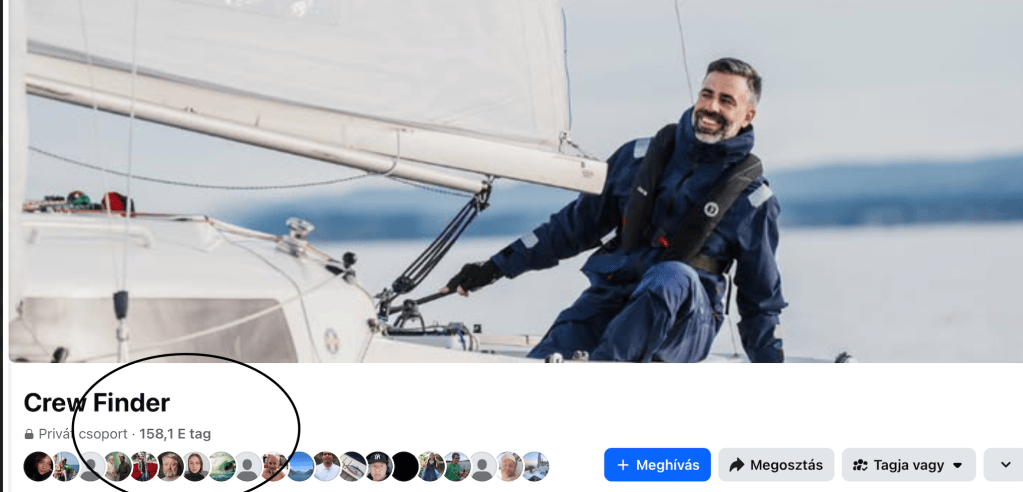
“Wow. Több mint 20 000 tag van itt. Úgy tűnik, nem vagyok egyedül.”
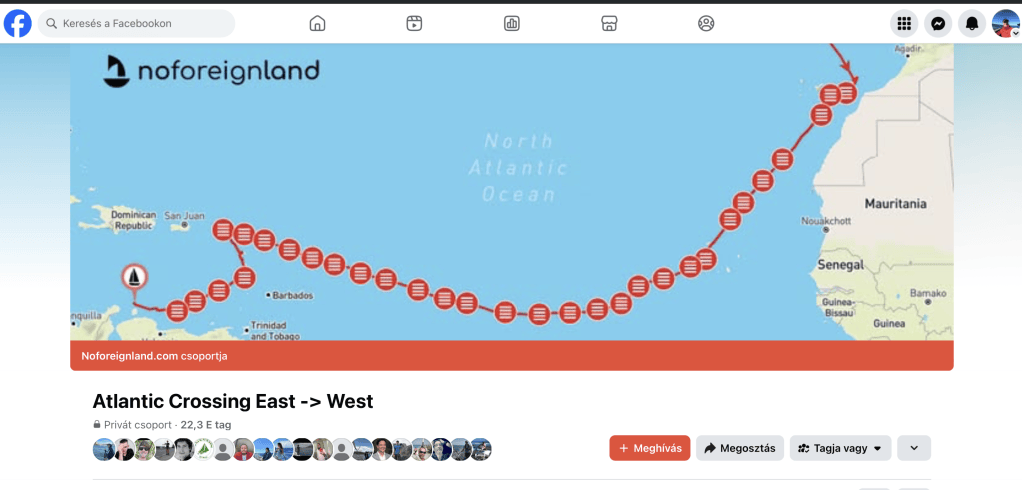
Aztán kiderült, hogy több tucat ilyen Facebook-csoport létezik.

Több százezer taggal.

Vitorlázásról.

És latin-amerikai hátizsákos utazásról is.
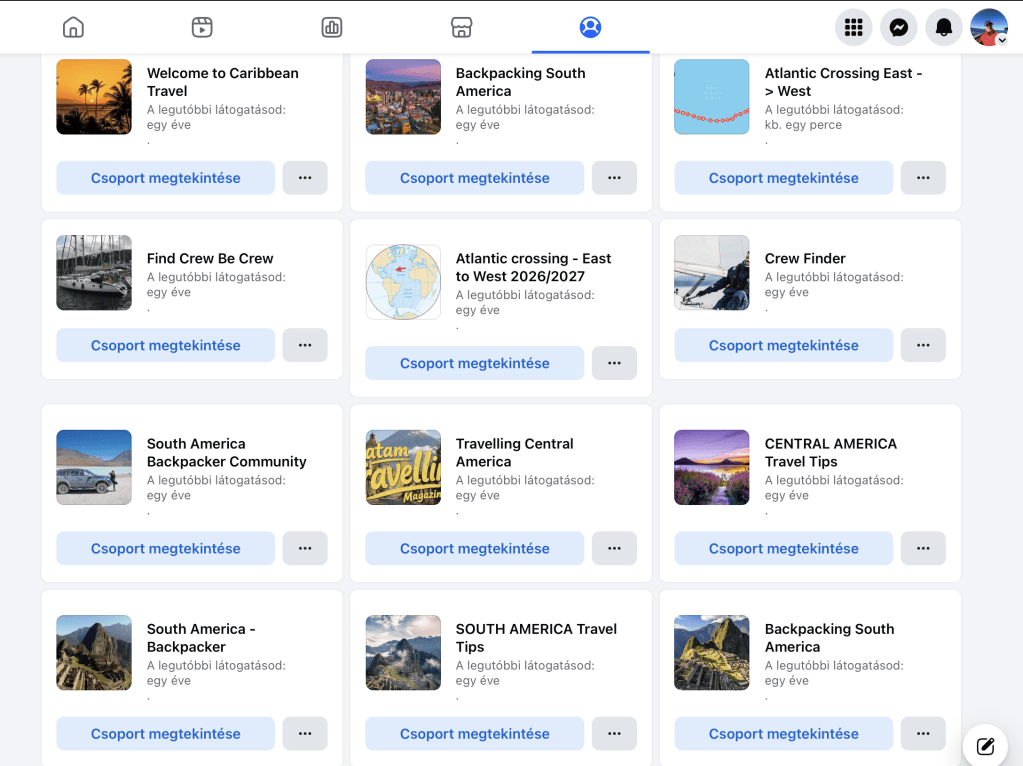
Elkezdtem arra gondolni, hogy egy tengerparttal nem rendelkező országból, egy kisvárosból, ahonnan én jöttem, mindez nagyon távolinak tűnik.

Valójában azonban emberek százezrei csinálják vagy csinálták ezt.

Egyáltalán nem vagyok egyedül.

Azt gondoltam:

“Valószínűleg a világ teljes népességének 0,1%-a tudja, hogyan kell vitorlással átkelni egy óceánon. Talán még ennél is kevesebben. Szóval csak meg kell találnom őket.”
Ketyeg az óra

Egy lépéssel közelebb kerültem az egészhez.

Ott ültem a számítógép előtt, néztem ezeket a Facebook-csoportokat, és azt gondoltam:

“Ember, ezek a srácok olyan tapasztaltnak tűnnek, hogy ez már szinte irreális. Lehetetlen velük felvenni a versenyt. Ráadásul sokkal menőbbnek is tűnnek nálam. Nem hiszem, hogy ezt meg tudom csinálni.”
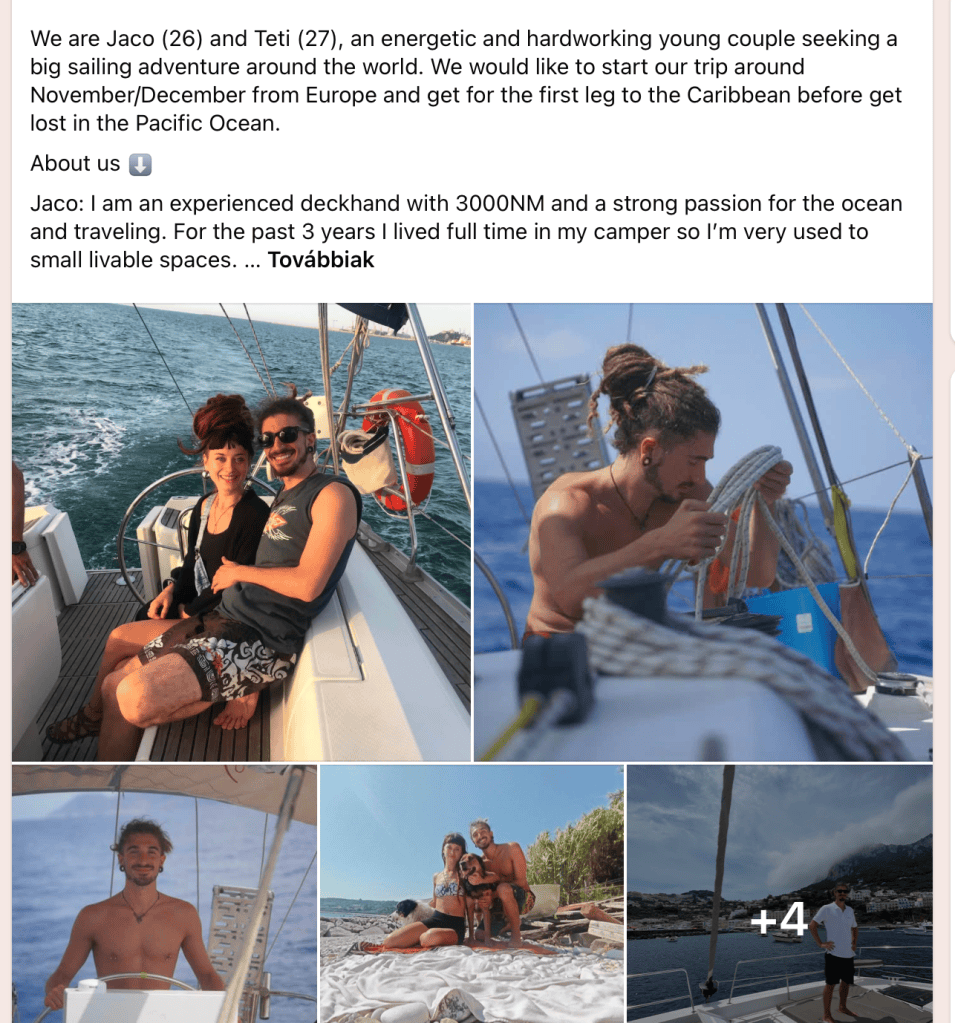
Megint túlterhelődtem.

És becsuktam a számítógépet.

Közben pedig ketyegett az óra.

Több mint egy hónap telt el azóta, hogy hazajöttem, és a nagy, titkos tervemmel valójában semmit sem haladtam.

Féltem meghúzni a ravaszt.

Lassan haladtam, és tele voltam kétségekkel.

Az igazság az, hogy halálosan féltem az óceántól.

És az egész olyan távolinak tűnt a kis szülővárosomból.

A Facebook-csoportokból megtudtam, hogy az Atlanti-óceán átkelési ablaka november közepe-vége és körülbelül február között van.

Később már nem igazán volt értelme átkelni, mert a karibi szezon csak júniusig tartott, amikor ott elkezdődik a hurrikánszezon.

Erről majd később.

Közben anyámmal is többször összetűzésbe kerültem a tervem miatt.

Több mint egy hónapja éltem szabad életet a lakásában, ő pedig válaszokat akart.

Nem akarta hallani, hogy utazni akarok.

Én pedig nem akartam hallani, hogy ő nem akarja hallani, amit én csinálni akarok.

Felnőtt férfi voltam.

Ő pedig még mindig úgy kezelt, mintha ötéves lennék.

A frusztrációja érthető volt, és együttéreztem a helyzettel.

De a feszültség egyre nőtt közöttünk.

Úgyhogy ideje volt megemelni a tétet.

A 0,1% megtalálása

Valójában ellenőriztem a 0,1%-os becslésemet.

És túlbecsültem.

Íme Gemini válasza:
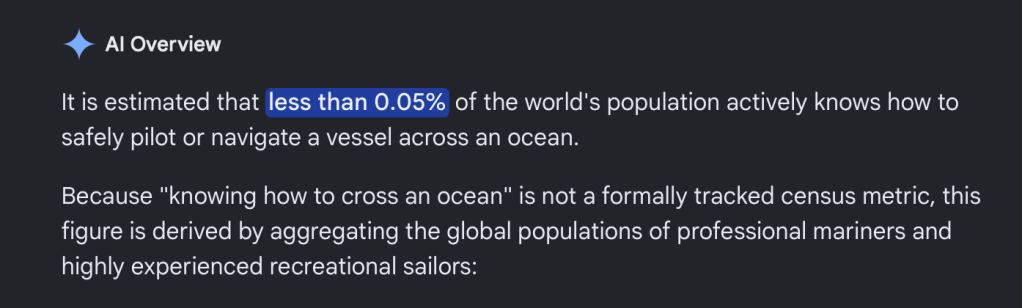
De maradjunk a 0,1%-nál.

Ha ezt meg akartam csinálni, nem volt több elvesztegetni való idő.

Október közepe-vége körül elmentem a helyi könyvtárba, és kikölcsönöztem AZ ÖSSZES vitorlázós könyvet.

Mindet.

Ugyanakkor beléptem MINDEN EGYES Facebook-csoportba, ami legénységkereséssel és óceánátkeléssel foglalkozott.

Elkezdtem magyar hajósok podcastjait hallgatni, akik már átkeltek az óceánon.

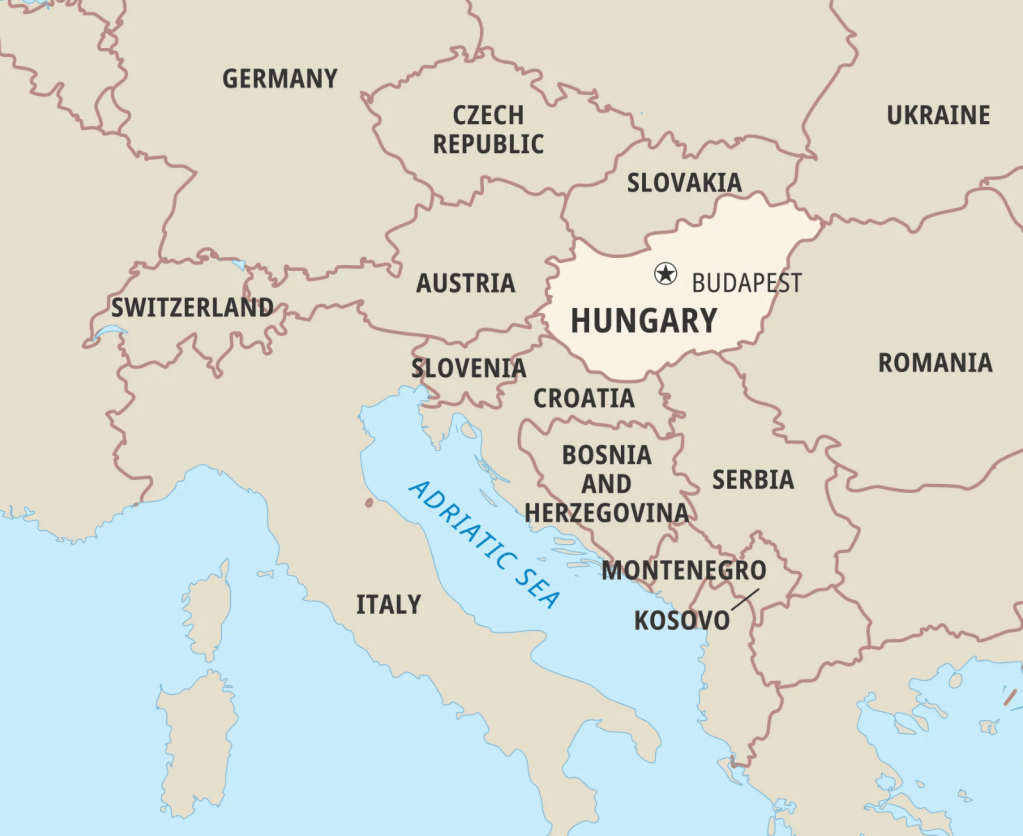
Úgy éreztem, hogy magyarként extra pszichológiai akadályt kell áttörnöm, mert Magyarország tengerpart nélküli ország.

Magyarországnak nincs hozzáférése sem tengerhez, sem óceánhoz.

Így az óceán átszeléséhez szükséges tudás egyszerűen nem volt része a nemzeti tudatnak.

Ezért sem a barátaimtól, sem a környezetemtől nem tudtam gyakorlati tanácsot kérni.
Amikor elmondtam anyámnak, hogy mit tervezek, érthető módon teljesen kiakadt.

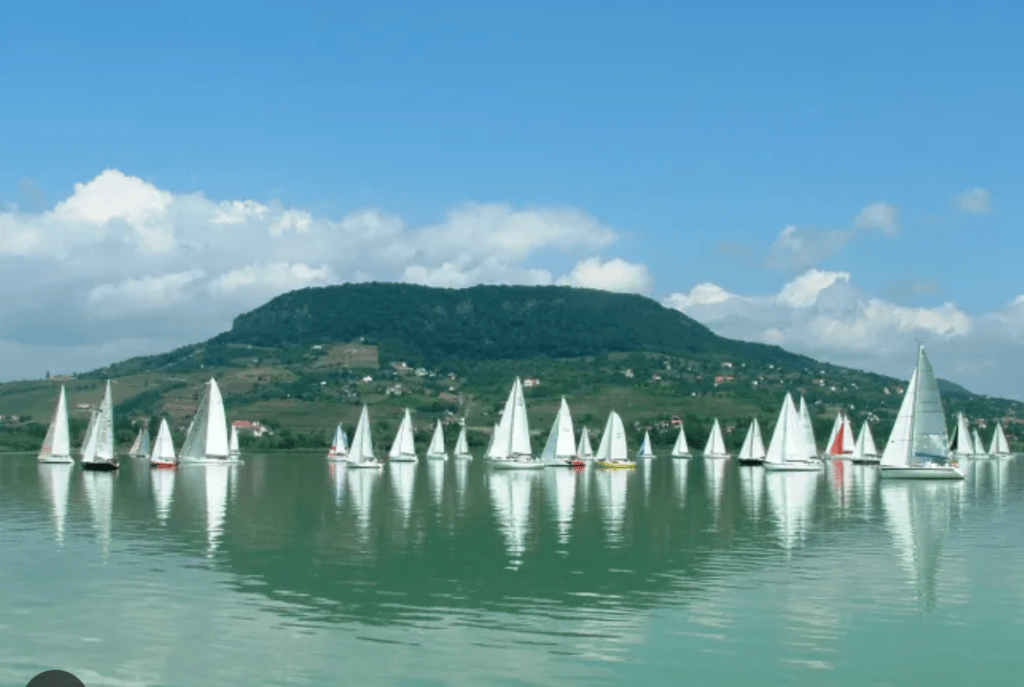
Ő attól is félt, hogy a Balatonba, Magyarország tavába is belelépjen, nemhogy egy óceánon vitorlázzon keresztül.

Azt hitte, megszállt az ördög, és megőrültem.

Pedig valójában életemben nem voltam még ennyire tisztában azzal, hogy mit akarok.

Tudtam, mit csinálok.

És a háttérben minden szükséges házi feladatot elvégeztem.

Hogy közelebb kerüljek a 0,1%-hoz, elővettem Francis Chichester önéletrajzát, és minden egyes este az ő könyvével mentem aludni.
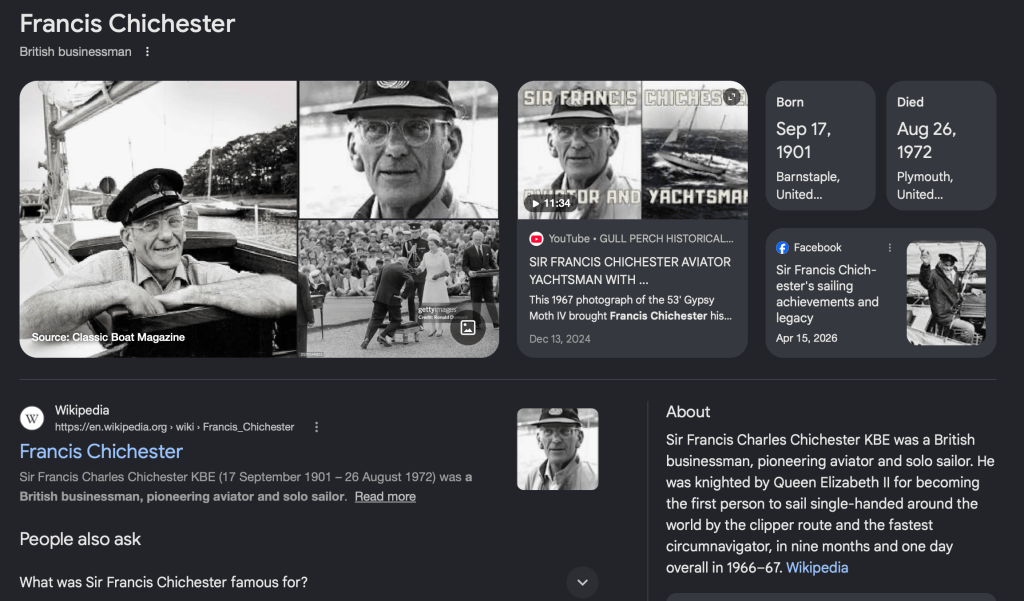
Chichester története inspirálta a legnagyobb magyar hajóst, Fa Nándort is, ahogy azt az egyik interjújából megtudtam.

Magyarországnak egyébként meglepően komoly történelme van az óceáni vitorlázással.

A Balaton hatalmas vitorlás központ.
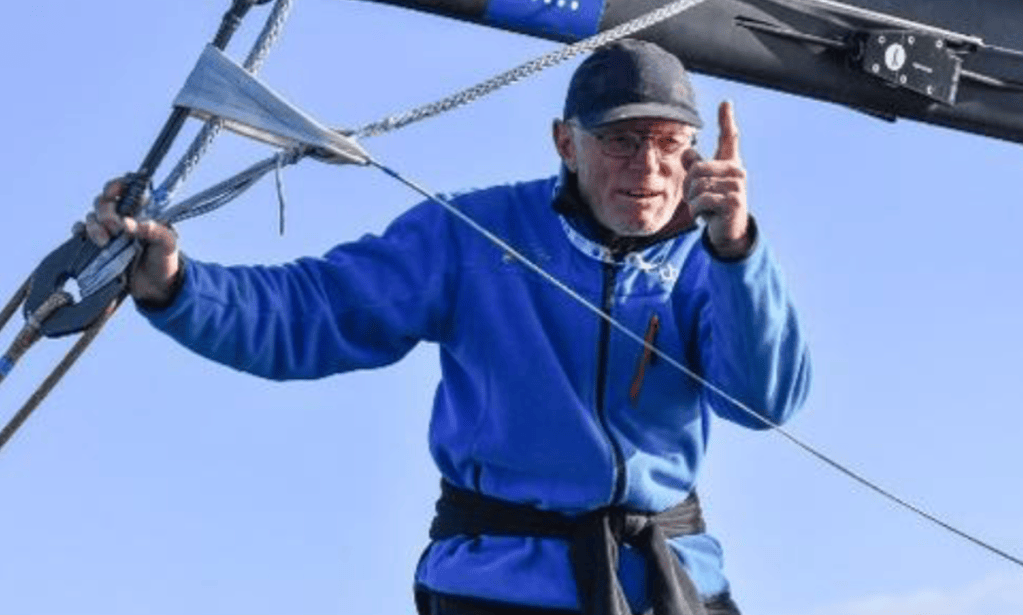
És Fa Nándor, valószínűleg a legismertebb magyar hajós, háromszor vett részt a Vendée Globe-on, a világ legnagyobb földkerülő vitorlásversenyén.
Nap mint nap szívtam magamba a tudást.

Intenzíven tanultam az óceáni vitorlázást, és nevetségesen sok időt töltöttem az edzőteremben.

Épült a lendület.
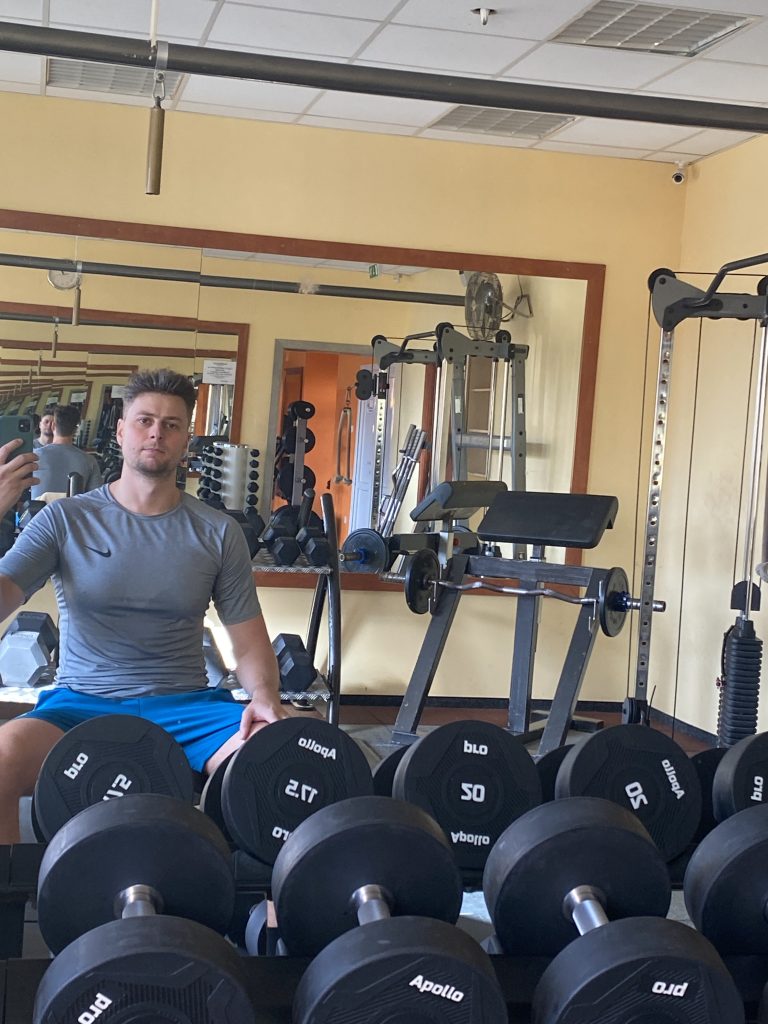
Közben mentálisan is készültem.

Rengeteg idegtudományi podcastot hallgattam — egy olyan területet, amely mélyen lenyűgöz, különösen a mesterséges intelligencia korszakában.

Képzeld el ezt.

Anélkül, hogy túlságosan belemennénk a részletekbe:

A deep learning a machine learning egyik részterülete, amely többrétegű neurális hálózatokra épül, és amelynek felépítését az emberi agy struktúrája inspirálta.

Álljunk meg itt egy pillanatra.

Az emberi agy biológiai felépítése inspirálta az MI-kutatókat arra, hogy létrehozzák a machine learninget, és lehetővé tegyék a mesterséges intelligencia deep learningjét, vagyis a mély tanulást, ami lehetővé teszi az MI robbanásszerű fejlődését.

Ugyanazt a mesterséges intelligenciát, amit ma mindenki használ.

Az emberi agy az egyik legképességesebb gépezet, amit az anyatermészet létrehozott.

Szó szerint ez a tested egyik legplasztikusabb szerve.

Új szinapszisokat tud létrehozni az idegsejtek között, és új kapcsolatokat tud kialakítani.

A semmiből.

Így tanulsz.

De ahogy felnövünk, hajlamosak vagyunk elfelejteni, mennyire erős is valójában ez a gépezet.

Hihetetlenül erős.

Egyszerűen elfelejtjük, hogyan kell használni.

És sokszor egyszerűen rossz módon használjuk.

Néha pont az ellenkező irányba.

Agysorvasztó Netflixet, TikTokot, Instagramot nézünk.

Igazam van?

Igen, téged nézlek a képernyő túloldalán.

Haha.

Ne aggódj, én is ezt csinálom.

Nem vagyok büszke az agysorvasztó tartalmak iránti függőségemre.

De legalább valamit kifejlesztettem ebben az esetben:

a tudatosságot.

És mindent felhasználtam magam körül arra, hogy többet tanuljak a vitorlázásról.

Minden érzékszervemet használtam.

Podcastok.

Könyvek.

Dokumentumfilmek.

Mindent egyszerre, hogy lerövidítsem a tanulási folyamatot.

Kapcsolatba léptem olyan emberekkel a Facebook-csoportokban, akik szintén hajót kerestek.

Először főleg gyönyörű lányokkal.

De nem válaszoltak.

Sajnos.

Így kénytelen voltam hasonló gondolkodású és szándékú srácokat keresni.

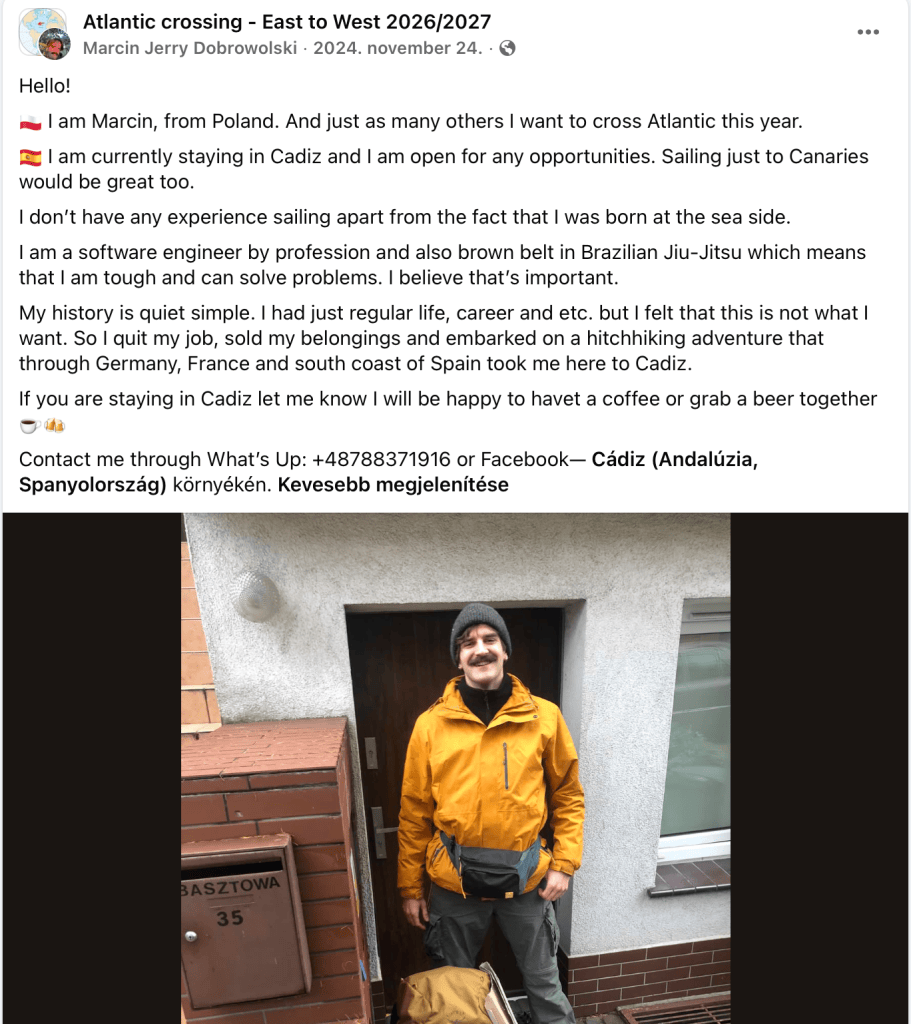
Találtam egy lengyel srácot, Marcint, hatalmas bajusszal.

Nem pontosan ő volt az, akit kerestem.

De végül is át kellett kelnem egy óceánon, és a lányok hajkurászása csak másodlagos motiváció volt.

A történetével viszont 100%-ban tudtam azonosulni.

Otthagyta a szoftverfejlesztői állását és mindent eladott, hogy utazhasson.

Pont, mint én.

Éééés:

Válaszolt!

Vicces módon még két évvel később is barátok vagyunk és kapcsolatban maradtunk.

Több mint egy hónapja keresett hajót stopposként.

Amikor már éppen fel akarta adni, megkereste egy versenyhajó kapitánya.

Ezután körülbelül 22 nap alatt átkelt az óceánon egy gyönyörű versenyvitorláson.
Egy hajóstoppostól nem is rossz!

Vicces módon ezután egy másik hajóval átkelt a Karib-térségből Kolumbiába, ahol egy hostelben kezdett dolgozni Medellínben.
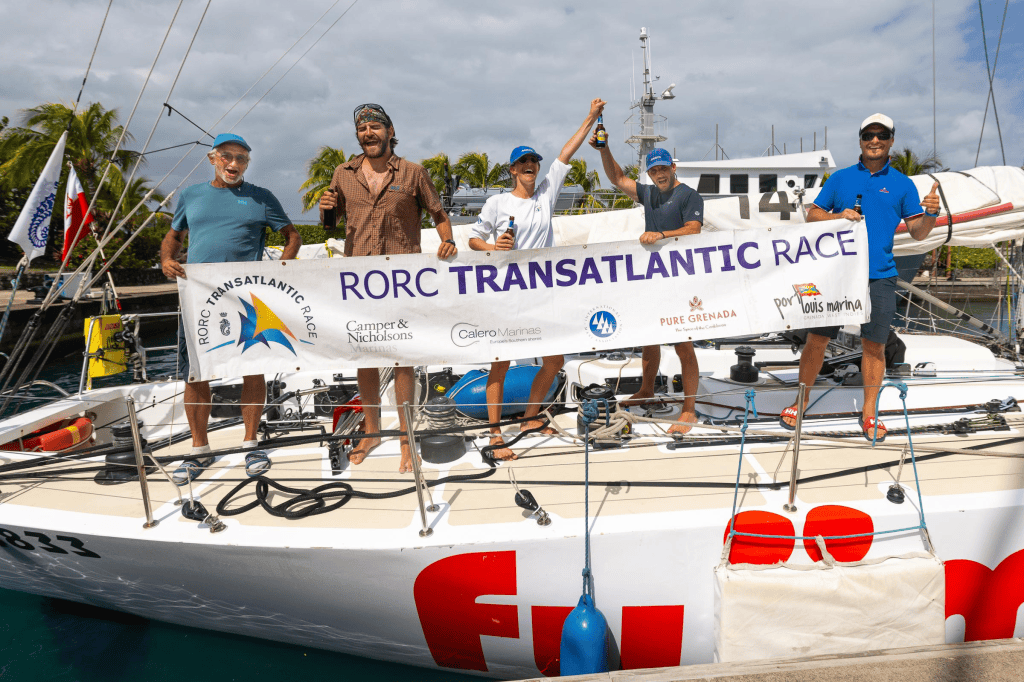
Forrás: RORC — 2025 RORC Transatlantic Race Wrap-Up

Egy évvel később, amikor én is végül hajóval megérkeztem Kolumbiába, felkerestem, hogy adja meg annak a medellíni hostelnek az elérhetőségét.

Ez az a hostel, ahol most dolgozom!

Ez a főhadiszállásom a blogoláshoz és a videózáshoz.
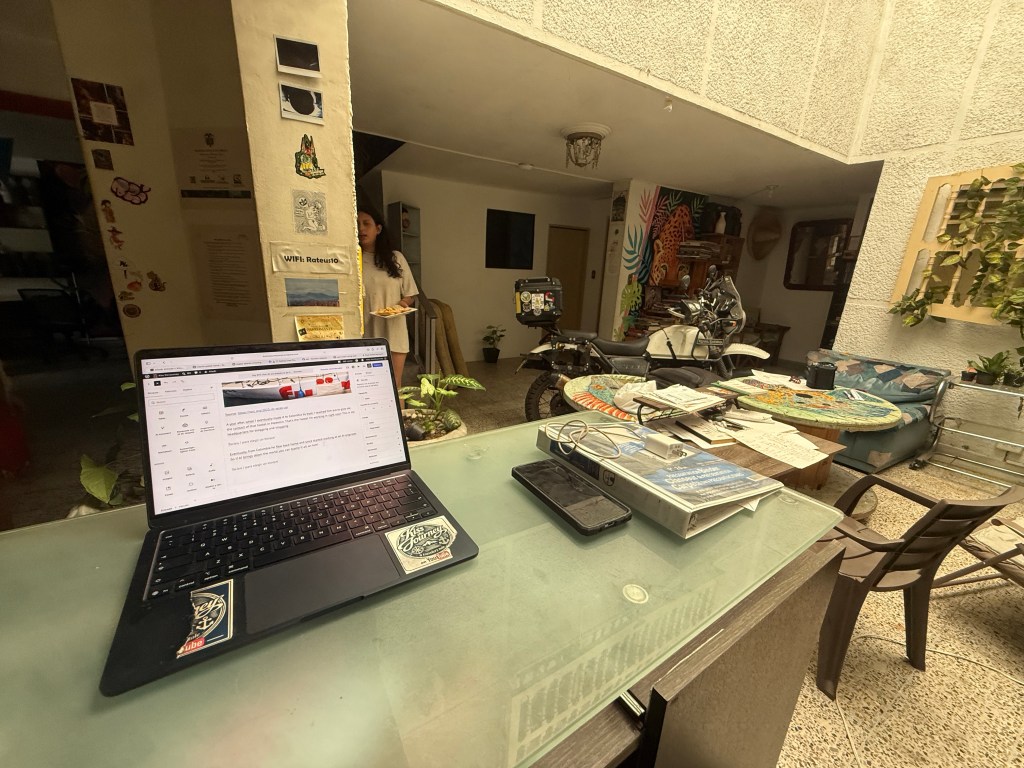
Végül Kolumbiából hazarepült, és azóta MI-mérnökként dolgozik.

Szóval ha az MI elpusztítja a világot, őt hibáztathatjátok!

A kapcsolatok építése és a rengeteg vitorlázásról való olvasás mellett ideje volt vitorlázási tervet készíteni.

Megértettem, hogy anyum aggódik.

A minimum, amit tehettem, hogy megpróbáltam csökkenteni az óceán átkelésével járó kockázatokat.

Így három egyszerű lépést találtam ki:

  1. Próbáld ki magad tengeri körülmények között.

Más szóval, menj el egy tengeri vitorlástanfolyamra.

2. Először tedd meg a rövidebb Gibraltar–Kanári-szigetek szakaszt vitorlással.
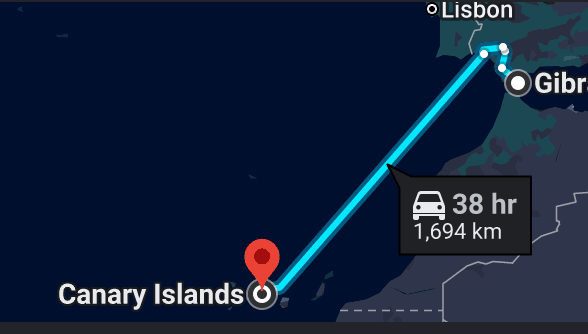
Ez kevésbé kockázatosnak tűnt, mint egy teljes óceánt átszelni úgy, hogy fogalmad sincs, mire számíts.

3. Ha teljesítem az első két lépést, végül megpróbálok találni egy hajót a Kanári-szigeteken, amely elvisz a Karib-térségbe.

Kb. 800 tengeri mérfölddel a hátam mögött ez már elég kivitelezhetőnek tűnt.

Bár ezt anyumnak nem tudtam megmagyarázni — ő aggódott a legjobban az egész családban —, saját magamnak már meg tudtam indokolni a tervet mindazok alapján, amit az elmúlt hónapokban magamba szívtam.

Minden lehetségesnek tűnt.

1. lépés: Próbáld ki magad tengeri körülmények között

RYA — Royal Yachting Association (Királyi Yacht Akadémia) tanfolyam

A kutatás során megtudtam, hogy az RYA Európában az egyik legelterjedtebb nemzetközi képzési intézmény tengeri vitorlástanfolyamokra.

Emellett stratégiai helyszínre volt szükségem, amely elég közel van az óceánhoz, hogy a tanfolyam és az Atlanti-óceán kijárata között ne kelljen túl sokat utaznom.

Miután november körül szinte az összes elérhető európai lehetőséget végignéztem, gyorsan rátaláltam egy gibraltári iskolára, amely 750 fontért, körülbelül 850 euróért kínált kiscsoportos tanfolyamot.

Ha belegondolsz, hogy egy 850 eurós tanfolyam akár az életedet is megmentheti, valószínűleg megéri.
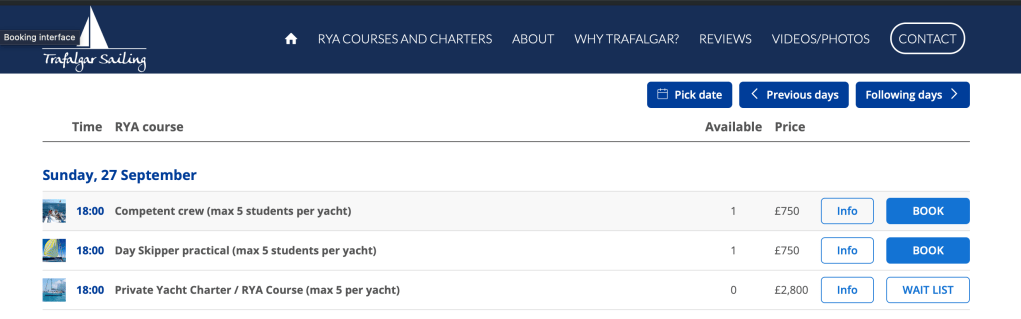
Trafalgar Sailing

Később több stoppossal is találkoztam Spanyolországban, akiknek alig vagy egyáltalán nem volt tapasztalatuk, mégis biztonságosan átjutottak a másik oldalra.

Neked kell eldöntened, hogy számodra mi éri meg.

Nekem az a 850 euró mindenképpen megérte, hogy megtudjam, hogyan reagálok fizikailag és mentálisan a tengeri körülményekre.

Az összecsapás

A dolgok kezdtek összeállni.

És minél magabiztosabb lettem, anyám annál kevésbé értette, hogy miért akarok belerohanni a falba.

Így egy ponton — látszólag elkerülhetetlenül — eljutottunk az összecsapásig.

Rájöttem, hogy nem fogom tudni meggyőzni.

Egyszerűen a saját utamat kell járnom, függetlenül attól, hogy ő mit gondol.

Egy vasárnap délután, a családi ebédnél, miközben az unokahúgom is ott volt, minden frusztrációja kirobbant belőle.

Azt mondta, hogy “lusta gyerek vagyok, értéktelen vagyok, nem dolgozom, rohamosan visszafelé haladok az életemben, és ennek rossz vége lesz.”

És normális esetben ezek a taktikák korábban mindig működtek volna.

De most nem.

Annyira meg voltam győződve róla, hogy a tervem működni fog, hogy azt mondtam:

Ennyi.

Erős vízióm volt.

Elvégeztem a házi feladatot.

És készen álltam végrehajtani.

Felálltam az ebédlőasztaltól.

Nem volt kellemes, azt elhiheted.

Felhívtam apámat, hogy kölcsönkérjem az autóját, és egyetlen délután alatt anyám lakásából minden egyes dolgomat átköltöztettem apám házába.

Ő csak egy héttel később tudta meg, mivel a saját házában volt.

Nem vagyok erre büszke.

De fontosnak érzem elmondani, hogy amikor erős víziód van valamiről, a környezetedben élők közül néhányan teljesen mást gondolhatnak.

És ilyenkor az álmod azon múlik, hogy mennyire erős a saját akaratod.

Hogy valójában mennyire akarod azt a dolgot.

Az életed valósága valószínűleg teljesen más, mint a körülötted lévő embereké.

Senki nem élte a te életedet.

Csak te.

Senki nem lát bele a fejedbe, és nem tudja, hogyan működsz.

És végül, ha elég erős az akaratod és elég makacs vagy, képes vagy formálni a saját valóságodat.

Amikor hazajöttem Magyarországra, már egy másik országban bizonyítottam.

Felépítettem egy személyes brandet egy világszínvonalú vállalaton belül.

Arra gondoltam:

Ha valamit tényleg akarok, akkor azt meg tudom csinálni.

Függetlenül attól, hogy mások mit gondolnak.

A felszerelés

Engem is meglepett a saját akaraterőm.

Úgy tűnt, ez tényleg fontos nekem.

És kész voltam a végletekig elmenni érte.

Miután apámhoz költöztem, elkezdtem összerakni a felszerelést.

Szükségem volt egy elég erős hátizsákra, ami egészen Patagóniáig kiszolgál.

Elég nagynak kellett lennie ahhoz, hogy minden beleférjen, amire szükségem van.

Így egy 80 literes hátizsákot választottam.

Elég nagynak tűnt mindenhez.
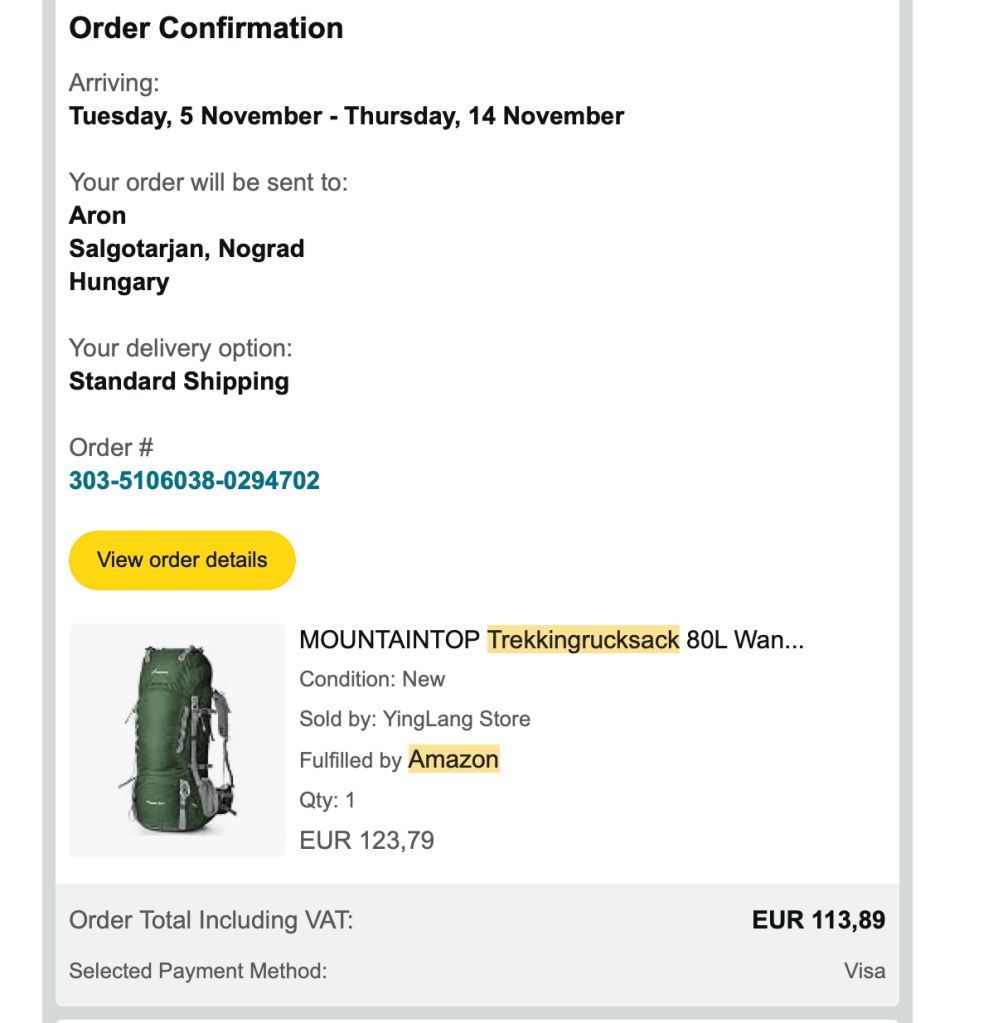
A ruhákat és egyéb kiegészítőket illetően készítettem egy listát, ami abszolút túlzás volt.

Rengeteg cuccomat el kellett ajándékoznom vagy haza kellett küldenem.

A teljes listát alább láthatod.

Most visszanézve ezt a listát azt látom, hogy ABSZOLÚT RÖHEJES volt.

De akkor még nem volt tapasztalatom, és kemény úton kellett megtanulnom, mire nincs valójában szükségem.

A listában megjegyzem majd, ahol túlzás volt.

Gyógyszerek

Malária elleni gyógyszer — abszolút túlzás. Még mindig megvannak ezek a tabletták, valószínűleg már le is jártak, de két év alatt egyszer sem jártam malária által érintett területen. Ha jártam volna, simán vehettem volna útközben.

Fájdalomcsillapítók — túlzás. Ha problémád van, bármelyik gyógyszertárban megveheted útközben.

Gyulladáscsökkentők — túlzás. Ha szükséged van rá, megveheted útközben.

Tengeribetegség elleni gyógyszer — túlzás. Megveheted útközben.

Fejfájás elleni gyógyszer — túlzás. Megveheted útközben.

Tusfürdő.

Szúnyogriasztó spray — túlzás. Megveheted útközben.

Kullancsriasztó spray vagy tabletta — túlzás. Megveheted útközben.

Ragtapaszok — túlzás. Megveheted útközben.

Sebfertőtlenítő — túlzás. Megveheted útközben.

1) Elektronika

Alapelv:

Minden legyen a lehető legkompaktabb és többfunkciós.

Ideális esetben réteges öltözködést használj a különböző időjárási körülményekhez.

Vigyél minél kevesebbet.

2 telefon — egy jobb, egy rosszabb.

Töltők mindenhez.

Legalább 1 power bank.

2) Szárazföldi ruházat

10 alsónadrág — ABSZOLÚT TÚLZÁS, RÖHEJES. 4 bőven elég.

15 pár zokni — ABSZOLÚT TÚLZÁS, RÖHEJES. 4-5 pár bőven elég.

2 sapka — TÚLZÁS. Egy elég.

Láthatósági mellény.

2 rövidnadrág — elég Spanyolországba és a Karib-térségbe. Bármikor vehetsz olcsón egyet bármelyik boltban.

2 meleg pulóver/fleece — 1 fleece bőven elég. A másikat haza kellett küldenem.

1 pár papucs.

Maximum 5 pamutpóló — max. 1 pamutpóló. A pamut gyilkos. Utazóként teljesen használhatatlan. Az összes pamutpólómat otthagytam.

Van egy mondás a túrázók között:

A pamut öl.

Magába szívja a nedvességet, amikor izzadni kezdesz, és a saját izzadságodat a testedhez tapasztja.

Aztán megfázol. Tüdőgyulladás, stb.

És véged.

5 poliészter póló — most körülbelül 4 poliészter pólóm van és 1 Kiss The Journey pamutpólóm.

A pamutot csak brandingre használom.

Egyébként teljesen használhatatlan.

Farmer — ABSZOLÚT FELESLEGES. VAGY INKÁBB SZIGORÚAN TILTOTT HOSSZÚ TÁVÚ HÁTIZSÁKOS UTAZÓKNAK.

Ott kellett hagynom.

2 melegítőnadrág — felesleges. Hazaküldtem.

2 aláöltözet — 1 teljesen elég.

+1 kabát — ez trükkös volt, mert télből nyárba utaztam. Végül hazaküldtem.

3) Tengeri ruházat és felszerelés

2 fürdőnadrág — 1 abszolút elég.

2 könnyű törölköző — még mindig kettő van, de 1 elég.

Snorkeling felszerelés — nem kell. Mindig kölcsönözhetsz.

UV-védős, poliészter, vízálló felsők.

4) Tisztálkodás

Neszesszer.

Fogkrém.

Fogkefe.

Dezodor.

Tusfürdő.

UV-védelem / naptej.

7) Vitorlás felszerelés

Gumicsizma — talán egyszer használtam Gibraltáron, egy viharban. Egyébként teljesen felesleges volt. Haza kellett küldenem.
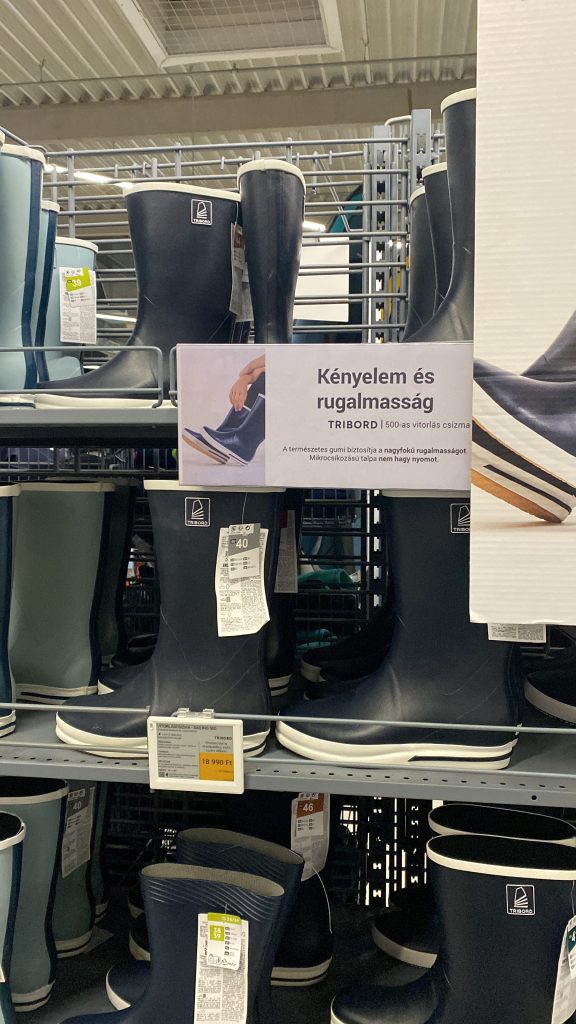
Vízálló nadrág — használhatatlan volt. Nem mentett meg attól, hogy elázzak.

Vízálló kabát.

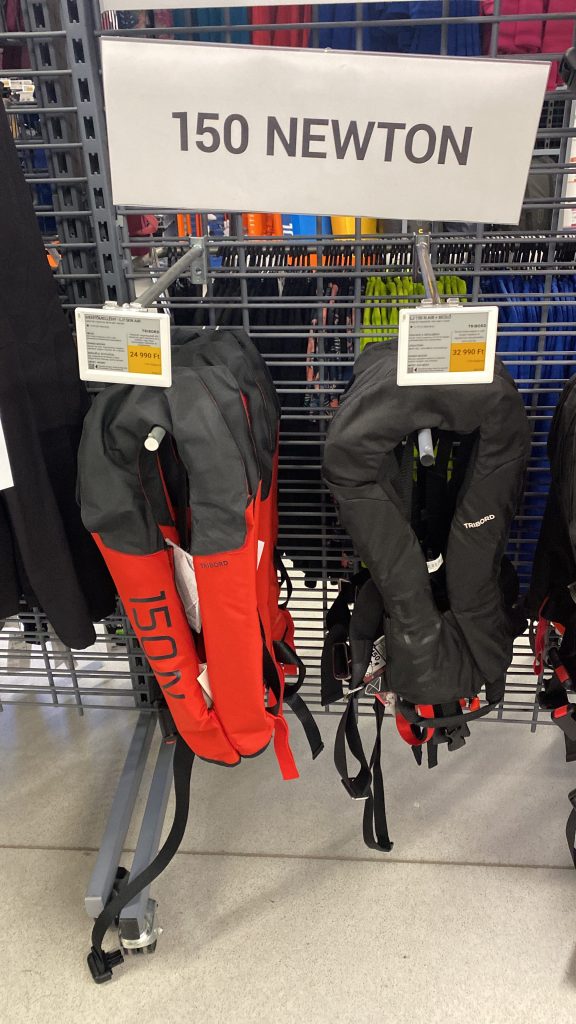
Mentőmellény, ha szükséges. – ez még mindig nálam van, sosem lehet tudni, mikor lehet rá szükség.
8) Egyéb

Vizespalack, esetleg több — egy kell.

Spanyol könyvek — NE VIGYÉL KÖNYVEKET. MAXIMUM EGYET. MEG KELLETT SZABADULNOM AZ ÖSSZES KÖNYVEMTŐL. KIVÉTEL NÉLKÜL. PLUSZ SÚLY. TILOS.

Ukulele.

Ukulele könyv dalok tanulásához — NEM NEM NEM NEM NEM.

Termosz teához.

Jegyzetfüzet íráshoz — 1 kis jegyzetfüzet bőven elég a gondolatok rögzítésére, egyébként ott a telefonod.

Harmonikа.

Nagyon alap élelmiszer.

Kis taktikai táska rövidebb / egynapos túrákhoz.
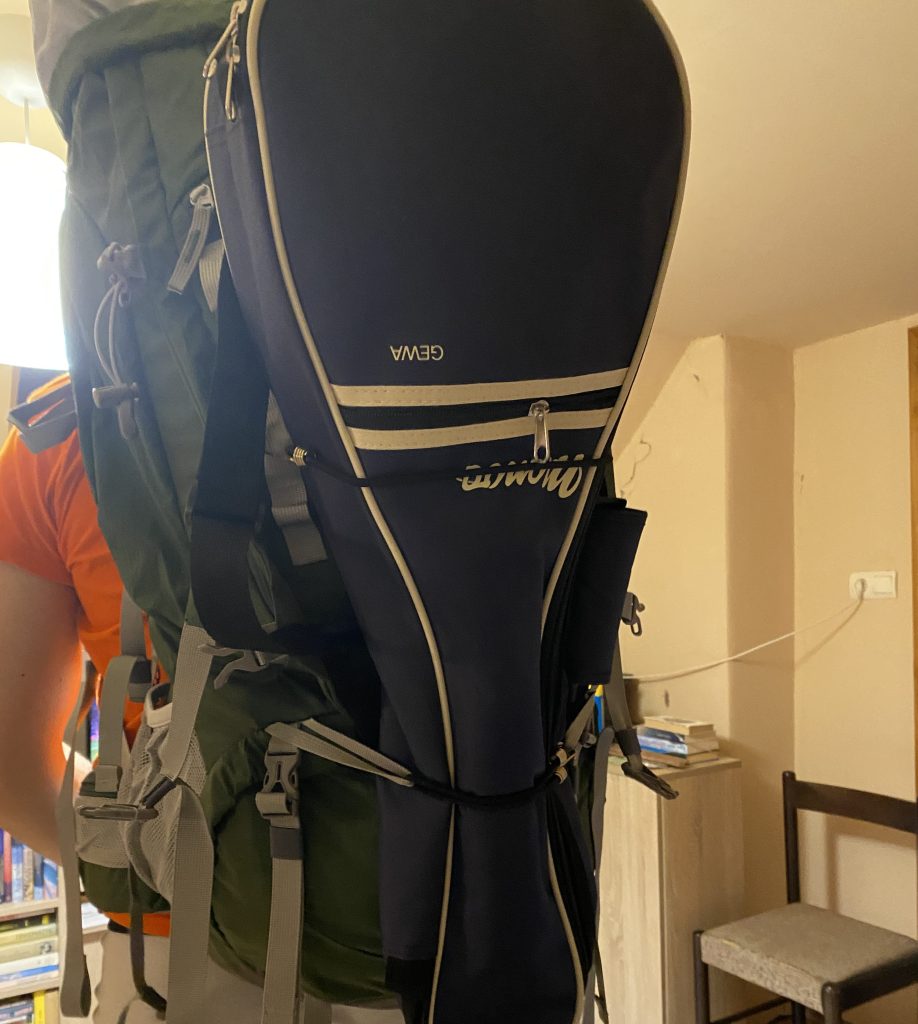
Amit kihagytam, és végül az egyik legfontosabb dolognak bizonyult, az a kempingfelszerelés volt.

Így át kellett mennem néhány fájdalmas felismerésen.

Telepakoltam a táskámat pólókkal, de nem volt nálam egy kis sátor vagy matrac, amin aludhattam volna.

Ez pedig Gibraltáron vagy a Kanári-szigeteken kifejezetten hasznos lett volna.

Később körülbelül 10 kg cuccot kellett visszaküldenem a Kanári-szigetekről Magyarországra, és vennem kellett egy matracot, illetve néhány egyéb kempingcuccot.

Összesen valószínűleg körülbelül 800 eurót költöttem az összes felszerelésre, beleértve a cipőket, bakancsot, mentőmellényt, kabátokat és a fent említett dolgokat.

Az oltások

Közben apum kutyájára vigyáztam, akinek Lyme-kórja volt.

Ölben kellett vinnem az állatorvoshoz, mert teljesen lebénult az ízületeiben kialakult gyulladás miatt.

Kétnaponta kapta a szteroid injekcióit.

Közben a saját oltásaimmal is foglalkoznom kellett.
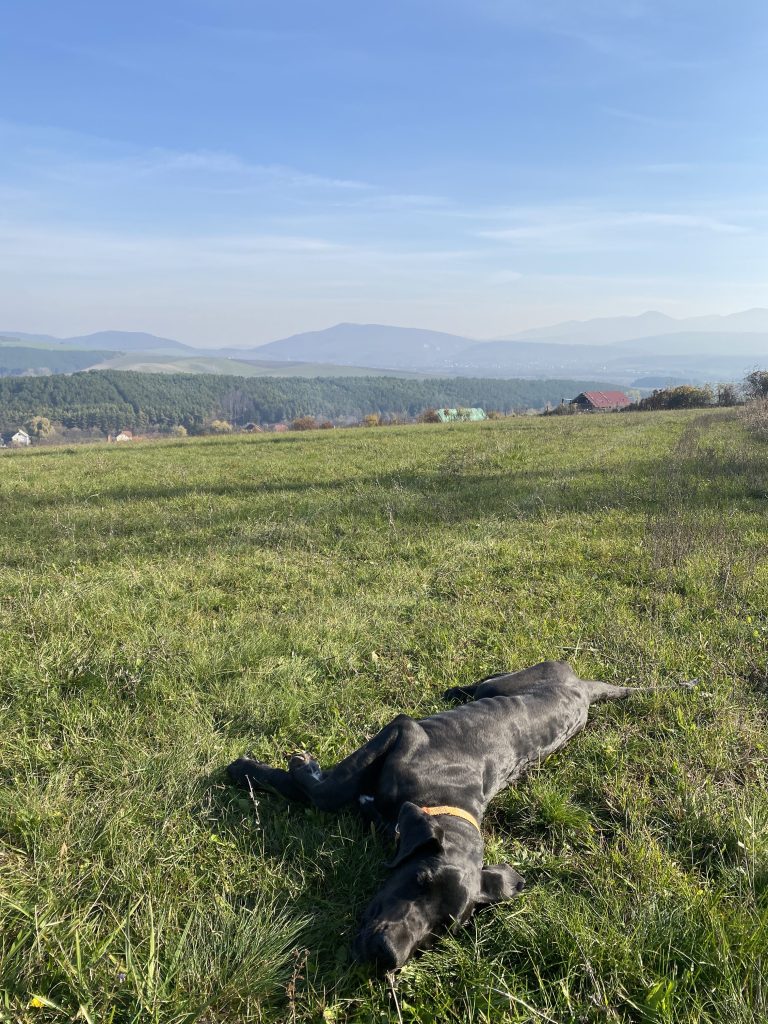
Szerencsére felépült, és nagyon boldog kutya lett belőle.
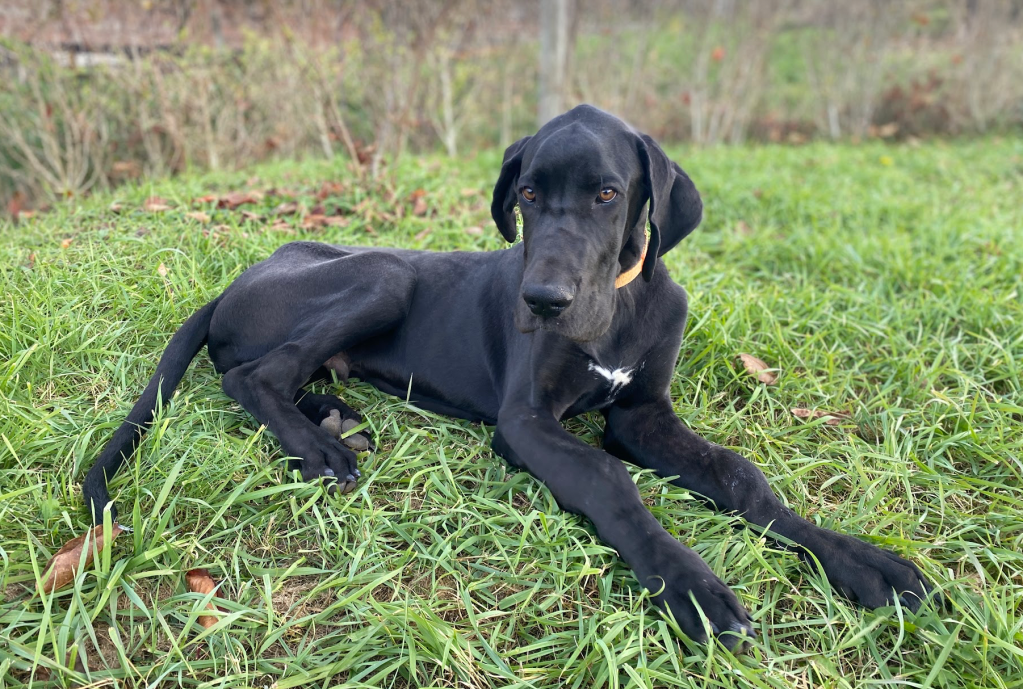
Annyira boldog, hogy apumnak végül meg kellett válnia tőle, amikor nagyobb, erősebb és gyorsabb lett.

Egy olyan családnak adományozta, akik jobban tudtak róla gondoskodni.

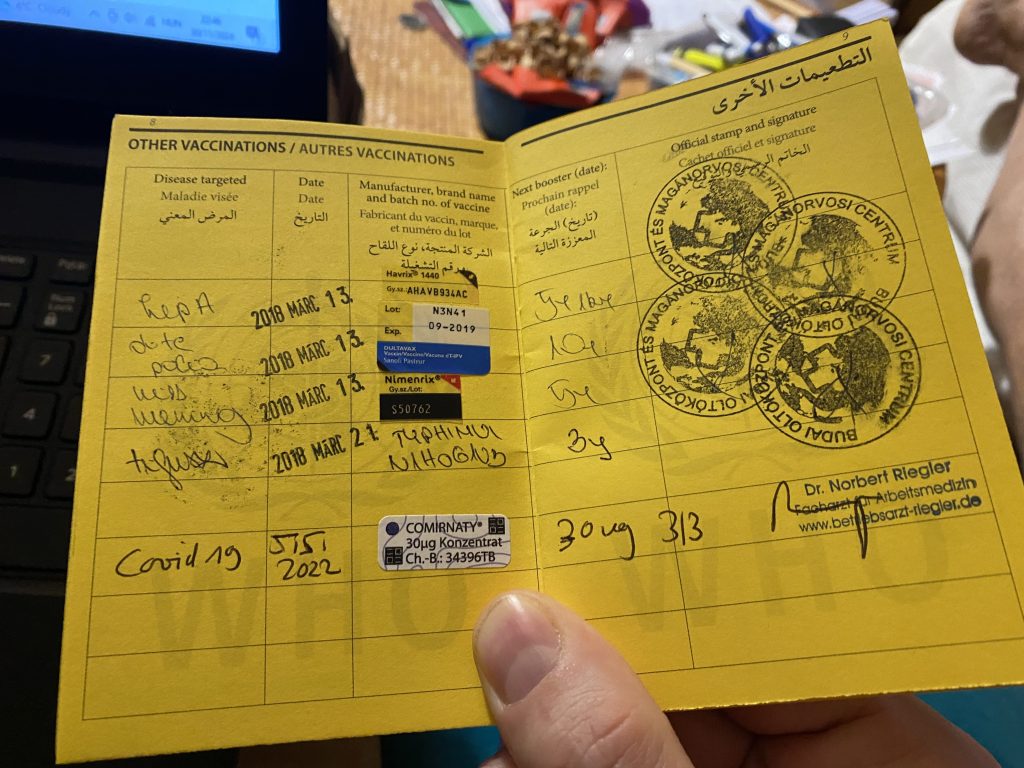
Frissítenem kellett a sárga oltási könyvemet hepatitis A, B, tetanusz stb. oltásokkal.

Ez körülbelül 300 eurómba került.

De szerintem valószínűleg már megmentette az életemet.

Néha belelépsz rozsdás szögbe és hasonló dolgokba.

Ezeket hosszú távú utazás közben egyszerűen nem tudod teljesen elkerülni.

Így abszolút a te felelősséged, hogy minden oltásodat frissítsd, mielőtt hosszú útra indulsz.

Dengue például nem kell, de hepatitis, sárgaláz és tetanusz legyen.

Indulás előtt Budapesten konzultáltam egy laborral, és az orvos beadta az összes szükséges oltást.
Az enyhülés

Közben anyum valahol rájött, hogy nem fogok visszalépni.

Néhány hét múlva el kellett fogadnia a döntésemet.

Úgy vette, mintha a fia háborúba menne.

És együtt kellett élnie ezzel.

Ekkor már csak azt akarta biztosítani, hogy ne rossz viszonyban búcsúzzunk el.

Ez nekem sem állt szándékomban.

A búcsú

Ez a rész sosem könnyű.

De akkor annyira biztos voltam benne, hogy ezt meg kell tennem, hogy egyszerűen azt akartam, hogy mindenkitől jó viszonyban búcsúzzak el.

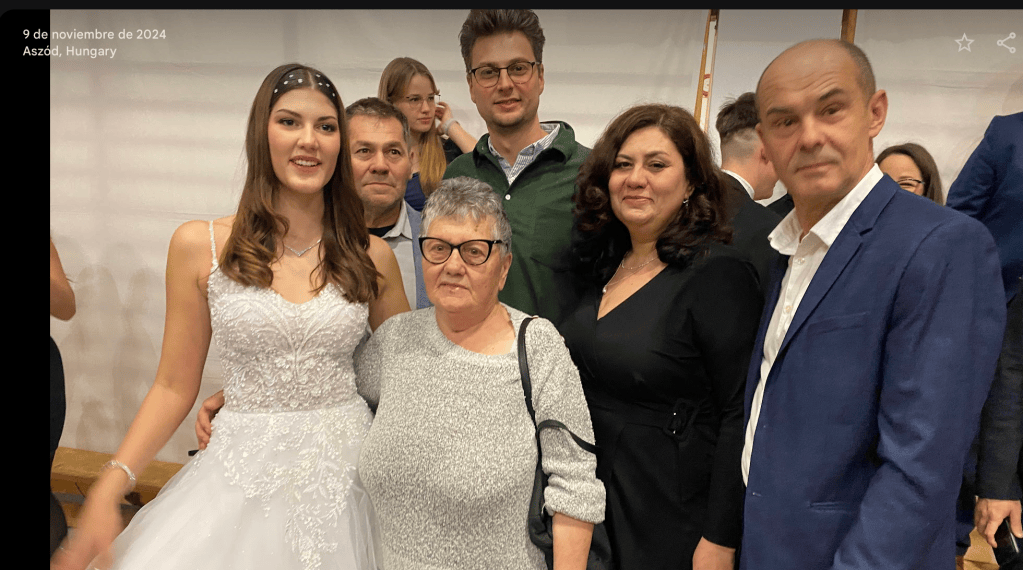
Elmentem a gyönyörű unkahúgom szalagavatójára.
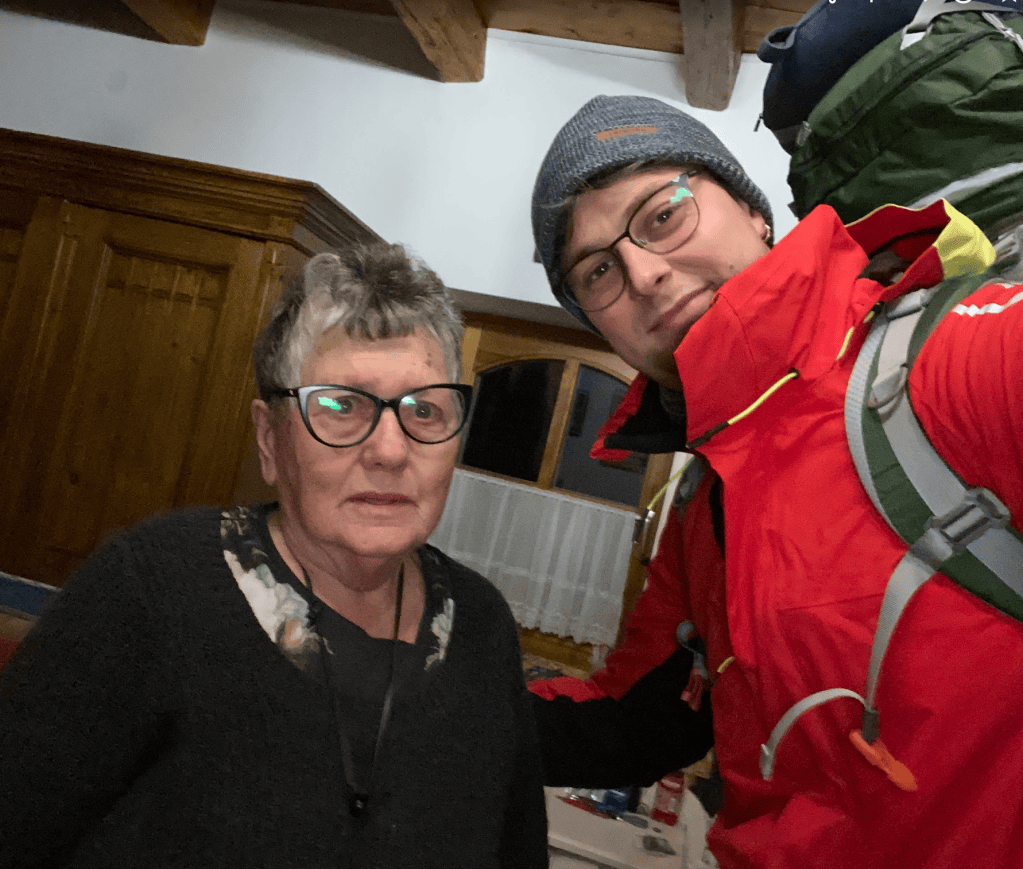
Aztán végül elbúcsúztam a nagymamámtól.

Valószínűleg ez volt az egyik legnehezebb.
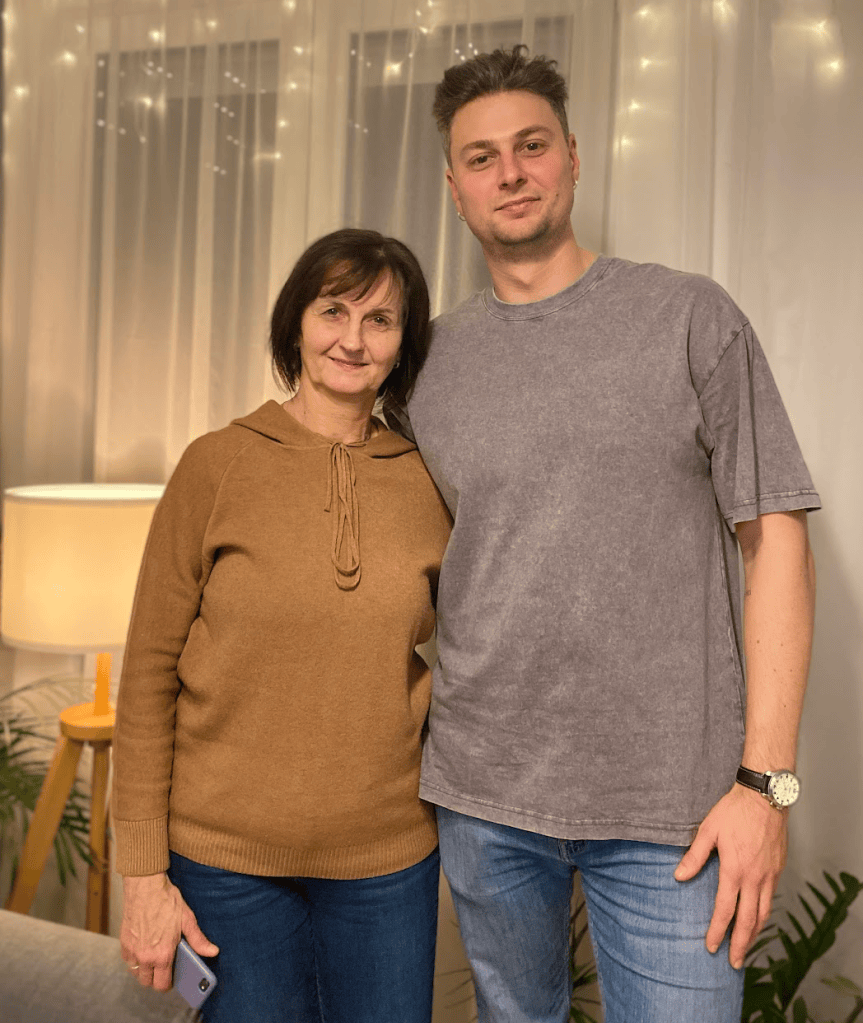
Ezután anyum elvitt a testvéremhez.

Szendvicseket csomagolt nekem az útra.

Elég rendesen próbára tettem az idegrendszerét, de úgy tűnt, végül egész jól viselte.

Biztosan nem volt könnyű neki.

És azt hiszem, ez az időszak különösen próbára tette, mert mindig az életét szentelte a családnak.

Nem tudta megérteni, hogy a fia miért megy el.
Ezután megkértem az unokahúgomat, hogy rajzoljon nekem egy #DAY 1 (1. nap) rajzot.

Majd december 5-én reggel a testvérem elvitt Budapestre, a buszmegállóba, hogy elkezdhessem az utazást.
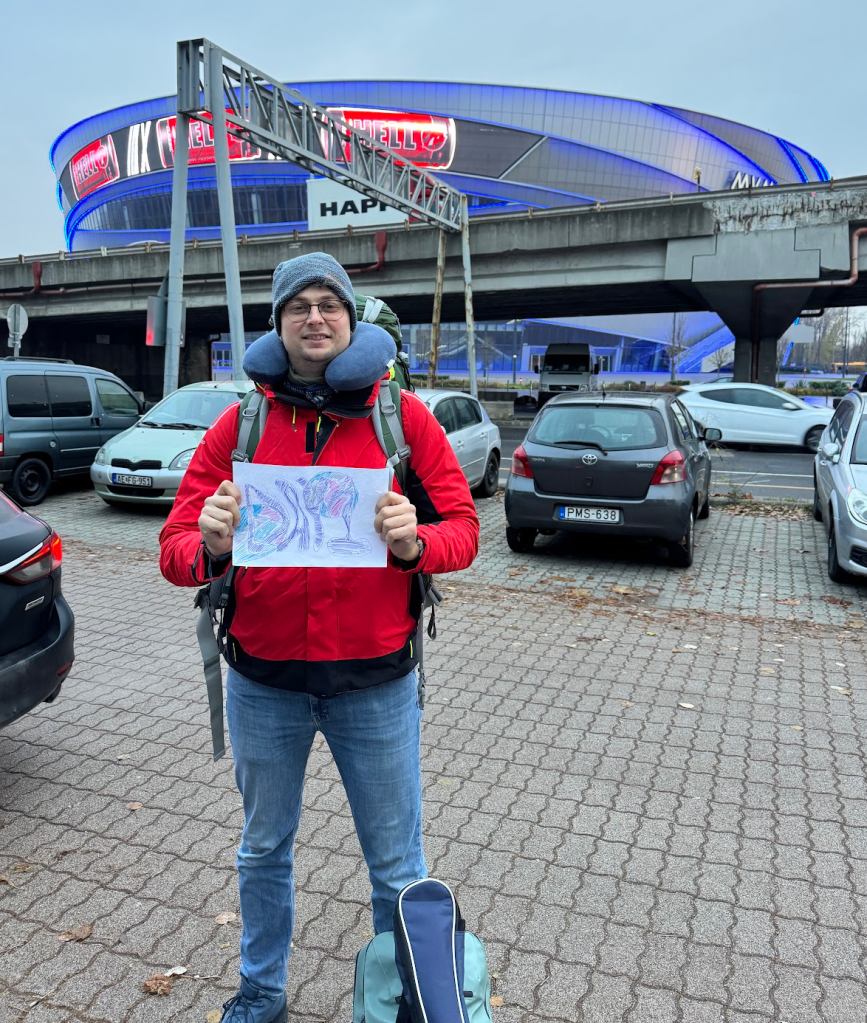
Hogy egyedül elmehessek a világ végére, repülés nélkül.
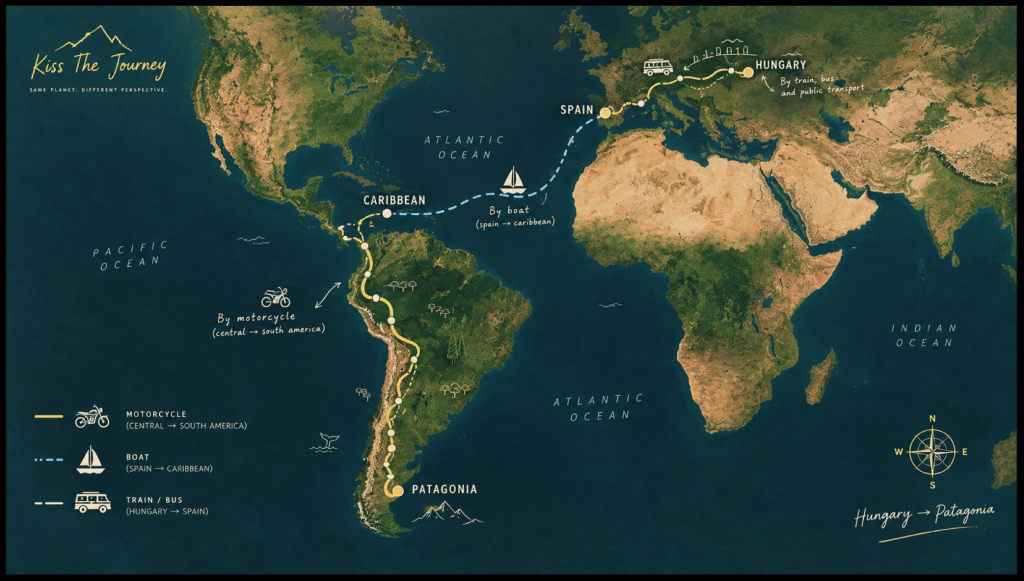
És itt kezdődött az egész Kiss the Journey élmény.
Día 675: ¿Cómo te preparas para ir solo hasta el fin del mundo?

Prólogo

Siempre he considerado este proyecto de viaje como una especie de proyecto piloto / experimento empresarial personal. Tómate todo esto con cierta distancia, pero quizá, con el tiempo, encuentres aquí inspiración para tus propias ideas, o para afrontar un proyecto con el que llevas soñando pero que nunca te has atrevido realmente a intentar.

¿Puede una vida caber en cajas?

Has tomado tus decisiones y el reloj está corriendo. Tienes que venderlo todo y meter tu vida en cajas.

Necesitas mudarte a otro apartamento muy rápido. Después, unas semanas más tarde, tienes que sacar tus cosas del antiguo apartamento y mudarte a un tercero. Y unas semanas después, finalmente tienes que trasladar lo que queda de tu vida en Alemania de vuelta a Hungría.

Todo está estirado al límite, pero de alguna manera consigues sacar todo adelante. Hay algo en el aire, como si todo estuviera destinado a suceder.

Las cosas que necesitas vender encuentran nuevos dueños. Tu hermano aparece en el mejor momento posible para ayudarte a pintar de nuevo las paredes y desmontar las estanterías. Incluso la nueva inquilina es simpática: se queda con el apartamento y se ofrece a comprarte muchas de tus cosas.

Y al mismo tiempo realmente quieres que todo salga bien, hacer las cosas de la manera correcta para todos. Porque todos merecen tu mejor versión, así que trabajas duro para encontrar soluciones y no nuevos problemas.

Y empiezas a preguntarte:

¿Esta es mi vida en cajas?

Supongo que tuve algunos de estos pensamientos en agosto de 2024, cuando miré todas las ruinas que tenía delante.

¿Eso es lo que queda de mi vida?

Una decisión que aparentemente empieza a rodar como una bola de nieve hasta convertirse finalmente en una avalancha. Casi arrastrándote y ahogándote. Todo lo que puedes hacer es intentar mantener la cabeza fuera del agua.

Caja número uno. Número dos. Número tres.

¿Eso es todo lo que queda?

Pero tampoco te lamentas demasiado. No hay tiempo para eso. Una solución tiene que seguir a la otra, porque de lo contrario todo el proyecto fracasa.

Y fue tu decisión, así que más vale que estés al mando.

Pero en realidad estás bastante tranquilo con todo esto y, en lugar de preocuparte demasiado, te vas a ver el siguiente partido del Liverpool al pub irlandés.

Lo haces completamente solo, te subes a la bicicleta y atraviesas el verano de Múnich.

La cerveza está fría y la vida… bueno, parece que la vida sigue adelante.

Estás bebiendo una Guinness helada, pensando:

“Wow, realmente conseguí que esto funcionara. Vendí literalmente todo en el mercado de segunda mano. Por suerte, el mercado de segunda mano de Múnich está en auge. Hasta los malditos neumáticos desaparecieron del sótano, del coche que se llevó el seguro. El Excel que hice con toda la mierda que estaba a punto de vender hizo todo el trabajo. Y yo también, supongo.”

Organizas la última excursión a los Alpes para tus compañeros.

Y piensas: wow, esto fue realmente algo especial. Algo que no sucede dos veces en la vida.

Y entonces tus compañeros organizan una bonita despedida para ti, algo que llega bastante de sorpresa.

Quiero decir, trabajamos juntos durante años, pero aun así no es algo que esperas.

Aunque es verdad: en aquel momento los veía más que a cualquier otra persona de mi familia o de mi grupo de amigos.

Tu manager te dedica unas palabras bonitas en la estación de autobuses durante tu último día.

Mientras estamos de pie, esperando mi último autobús frente a la oficina, dice:

“Wow, tío, mírate. Recuerdo tus primeros días. Ahora eres un hombre.”

O algo parecido.

Simplemente asientes, pero en el fondo te llevas esas palabras al corazón y probablemente nunca las olvidarás.

Nunca olvidarás cómo llegaste a Múnich durante los tiempos de COVID, durante el toque de queda, ni tus primeros días, cuando te conectabas remotamente a las primeras reuniones del equipo.

Nunca olvidarás lo emocionante que fue mudarte a un nuevo país, ni lo difícil que fue estar a la altura de las expectativas de una empresa de clase mundial.

Y tampoco olvidarás lo divertido que fue.

No sé cómo es la oficina de Amazon estos días, pero por aquel entonces había una energía diferente en la habitación.

Todo el mundo intentaba destacar y meterse de lleno para demostrar lo que tenía de especial.

Fueron cuatro años que definieron mi vida.

Hay gente que deja el mundo corporativo y después empieza a hablar mal de todo aquello. Entiendo su punto, pero creo que simplemente no sería creíble viniendo de mí, porque puedo agradecer a esa gente una enorme parte de la experiencia que tengo hoy.

Y no solo a Amazon, sino también a mis primeros managers, desde mis primeros días trabajando en el mundo corporativo.

Ricardo, Sergio, Nora, Tuyana, Vikas, Denise, Giovanni.

Después Ravi, Nick, Volker y Barbara.

Nombres que nunca olvidaré.

Durante las últimas semanas antes de dejar finalmente Múnich, te planteas un reto.

¿Cuántas fiestas puedes visitar?

Te lo puedo decir.

Muchas.

Después vas a tu último Oktoberfest.

Apareces solo, conociendo a desconocidos.

Y después vas también con tus compañeros una última vez.

Finalmente acabas también en una última afterparty.

Y entonces, así sin más, tu tiempo en Múnich se acaba.

Como si nunca hubiera existido.

Estás sentado en el tren, mirando los árboles y las montañas alpinas pasar a una velocidad de vértigo.

El tren va a 200 km/h.

Apenas puedes seguir el ritmo.

Tus ojos se mueven a toda velocidad de árbol en árbol, intentando enfocar, pero fallan en cada milisegundo.

Tu mente está en otro lugar dentro de aquel vagón silencioso y solo puedes escuchar el metal deslizándose sobre metal.

Tienes que llegar a casa y reorganizar tu vida.

No sabes si conseguirás hacer que todo esto salga bien.

Al mismo tiempo estás pensando: ¿qué viene después?

Y lo que vino después fue algo que jamás habría podido imaginar.

Un deseo secreto

Antes de dejarlo todo, contraté los servicios de una coach de vida de Hungría a través de mi empresa.

Las conversaciones con ella me ayudaron muchísimo a tomar mis propias decisiones y a encontrar la dirección correcta para mi vida.

Alrededor de mayo de 2024 me preguntó qué haría si no estuviera trabajando para Amazon.

Le respondí casi sin pensarlo:

“Me iría a la Patagonia, Argentina, sin volar, cruzando el océano a vela.”

Entonces me dijo algo como:

“Vale, ¿quizá algo un poco más realista?”

Y yo respondí:

“No. Eso es todo. Eso es lo que haría.”

Cinco meses después me encontré sentado en el sofá del apartamento de mi madre, pensando: ¿y ahora qué?

Había salido de una situación de vida en la que sentía que necesitaba moverme.

Sentía que había crecido más allá de todo aquello y que tenía que cambiar de dirección.

Es una realización bastante brutal, puedo decirte eso.

Aparece desde tu subconsciente como un grano.

Y cuando intentas quitarlo, simplemente no puedes.

Y crece y crece, hasta que ya no puedes NO verlo.

De hecho, tienes que enfrentarte a él.

Y tienes que hacer tu movimiento.

Y una vez que haces ese movimiento, aclaras tu nueva dirección y piensas que te has vuelto más inteligente y más sabio.

Pero en realidad no.

Simplemente has resuelto una situación.

Entonces, ¿qué sigue?

Alimentar al niño interior

No me había vuelto más inteligente, pero pensé:

Bueno, llevo los últimos siete años trabajando sin parar, mudándome de país, buscando promociones y terminando una universidad al mismo tiempo.

Supongo que lo que puedo hacer ahora es tomarme un pequeño descanso, simplemente divertirme y pensar.

Pedí tiempo a toda mi familia.

Especialmente a mi madre, que estaba intentando entender qué estaba pasando conmigo.

Le dije:

“Dejemos que el polvo se asiente un poco.”

Todo empezó poco a poco.

Empecé a experimentar con cosas que nunca había hecho antes.

¿Qué pasaría si me pusiera unos pendientes?

Nunca había tenido.

No es que los hubiera querido en mi vida, pero cuando me enfrenté a este nuevo tipo de libertad, de repente pensé:

¿Por qué no?

Al principio quería teñirme el pelo de rubio, pero Barbara, mi manager de Amazon, me dijo que no lo hiciera porque me dañaría el pelo.

Y de todos modos mi pelo empezó naturalmente a ponerse gris, al estilo George Clooney.

Así que pensé: ¿para qué dañarlo?

Me quedé con los pendientes.

Después pensé:

Vale, esto está guay.

¿Y qué tal un tatuaje?

Tampoco había tenido nunca uno.

Mi familia siempre había visto los tatuajes con malos ojos, pero unos años antes mi hermano y su mujer habían empezado a hacerse algunos.

Todos en la familia levantaron las cejas.

Pero luego piensas: todo milagro dura tres días.

Y a nadie le importa realmente.

Así que pensé que ya había interiorizado suficiente sabiduría estoica de publicaciones casuales de Instagram como para ponerme Amor Fati —ama tu destino— en el brazo.

¿Qué más podía hacer?

Volver a tocar la guitarra, a ver qué se siente.

Después de no tocarla durante siete años seguidos.

Y se sintió bieeeeen.

¿Qué pasaría si apareciera por el gimnasio de vez en cuando?

Pero no durante 45 minutos.

Durante tres horas.

Y hacerlo cada dos días.

¿Cómo se sentiría cuidar realmente de mí mismo?

Hacer algo que había estado descuidando durante tanto tiempo.

¿Qué pasaría si fuera a una fiesta de techno con mi hermano y mi primo?

Y mi primo casi se rompiera un dedo del pie bajando las escaleras.

Por suerte no ocurrió.

¿O jugar a mi videojuego favorito de todos los tiempos, Heroes 3?

Al final, todas estas eran cosas que había estado dejando de hacer durante muchísimo tiempo.

Algunas, durante años.

Todas estaban alimentando a mi niño interior.

Y yo nunca había dejado que mi niño interior se alimentara.

Así que simplemente lo dejé morir de hambre hasta que ya no hubo vuelta atrás y tuve que enfrentarme a sus necesidades.

Y mientras me reconstruía de nuevo en casa durante aquellas semanas, alrededor de octubre de 2024 empezó a formarse un plan.

Un plan secreto del que realmente no me atrevía a hablar con nadie.

Quizá con mi hermano y mi padre, que siempre han sido compañeros de crimen.

Viajar.

Ir solo hasta el fin del mundo.

Y hacerlo sin volar.

Día 675: ¿Cómo te preparas para ir solo hasta el fin del mundo?

Estaba librando una enorme batalla conmigo mismo.

Ya tenía 32 años y sentía que el tiempo pasaba.

Ese es el momento de sentar cabeza, hacer inversiones para toda la vida, encontrar una pareja para toda la vida, construir una carrera, etc.

Pero acababa de salir de una relación muy larga.

Acababa de dejar atrás uno de los mejores puestos profesionales de Europa.

¿Adónde podía ir?

Ya no podías desafiarme realmente con eso.

No estaba preparado para otra relación.

Y definitivamente no estaba preparado para otro trabajo.

Y, en algún lugar de mi interior, sentía:

“Estoy haciendo todo esto porque QUIERO VIAJAR. Y VOY A VIAJAR.”

Así que, en algún momento hacia finales de octubre, pensé:

Había descansado suficiente.

Era hora de hacer un plan.

Construyendo un plan

Y el plan era sencillo.

Sentarte delante del ordenador y escribir en un documento lo que quieres hacer.

Y escribí:

Opción A) Ir desde Hungría hasta la Patagonia, Argentina, sin volar.

Opción B) Volar a la India, al Himalaya, para hacer un retiro de yoga.

En aquel momento todavía dudaba sobre hacer todo aquello de la Patagonia.

Y eso fue todo.

Entonces pensé:

¿Cuál de estos dos proyectos me da más miedo?

Y la respuesta fue:

“Definitivamente la opción A.”

Y para ponerte en contexto: nunca había estado en mar abierto, tampoco hablaba español y nunca había viajado solo en mi vida.

Así que tenía que ser la opción A.

Pensé:

“Vale. Entonces realmente es la opción A. Me da un miedo de cojones. Y de alguna manera mi instinto me dice que tengo que ir hacia donde está el miedo más grande. Cuanto mayor es el miedo, mayor es el desafío. Cuanto mayor es el desafío, mayor es el espacio para crecer.”

Entonces le pregunté al mejor amigo de todo aquel que está a punto de conquistar el mundo:

ChatGPT.

Que me preparara un plan.

“Quiero cruzar el océano Atlántico a vela desde España o Portugal hasta el Caribe y, desde allí, continuar hacia el sur utilizando diferentes medios de transporte hasta el corazón de Sudamérica, llegando finalmente a Argentina y terminando el viaje en la Patagonia.”

Y después seguí haciendo preguntas a ChatGPT para conseguir un plan más claro.

Mi última petición fue:

“Elabora una lista de 100 puntos que tenga en cuenta todo lo que pueda necesitar y todo aquello a lo que debería prestar atención durante el viaje, empezando desde mi punto de partida en Europa, cruzando el océano Atlántico a vela y después viajando por tierra desde Centroamérica hasta Sudamérica, hasta llegar al extremo sur de la Patagonia.”

Puedes imaginar que aquellos 100 puntos eran bastante exhaustivos.

Pero —y no voy a pegar aquí toda la lista por razones obvias—, para mencionar solo algunos:

  1. Validez del pasaporte.
  2. Visados para los países.
  3. Seguro de viaje internacional con cobertura marítima.
  4. Validez de las vacunas y nuevas vacunas, como fiebre amarilla y hepatitis.
  5. Medicamentos contra enfermedades, como la malaria.

…

  1. Contactos de emergencia, tarjetas bancarias internacionales y disponibilidad.

…

  1. Mochila y equipo de camping.

…

  1. Preparación de la ruta por Colombia, Perú y Chile.

Creo que leí la lista durante dos minutos y cerré el ordenador.

Me sentí abrumado.

Era demasiado.

Parecía imposible.

Estaba extremadamente decepcionado conmigo mismo.

Al día siguiente volví.

Vale.

Hagamos otras preguntas esta vez.

Intentemos abordarlo desde otro ángulo.

“¿Cómo buscarías el barco adecuado, optimizando los costes para cruzar el Atlántico?”

La respuesta fue:

“Websites como Crewbay, Findacrew, grupos de Facebook y otros foros online.”

Vale.

Esto suena mucho menos abrumador y bastante más razonable.

Por suerte, pronto me di cuenta de que no puedo comérmelo todo de un solo bocado.

Tengo que dividir todo el proyecto en partes.

Y cruzar el Atlántico ya es un trozo suficientemente grande, porque nunca había navegado.

Ya pensaré en el resto cuando llegue al Caribe.

Aunque en aquel momento, como era un proyecto enorme y no tenía experiencia viajando, quería resolverlo todo desde el sofá de mi madre.

Obviamente no era posible.

Así que pensé:

“¿Y si simplemente miro un grupo de Facebook? Quizá también pueda ver cómo solicita la gente este tipo de rutas.”

Entré.

Y vi:

“Wow. Hay más de 20.000 miembros aquí. Parece que no estoy solo.”

Y entonces resultó que había docenas de estos grupos de Facebook online.

Con cientos de miles de miembros.

Tanto para navegación como para mochileros en Latinoamérica.

Así que empecé a pensar que desde un país sin salida al mar, desde una ciudad pequeña como la mía, todo esto parece extremadamente lejano.

Pero en realidad hay cientos de miles de personas que hacen o han hecho esto.

No estoy solo en absoluto.

Pensé:

“Probablemente hay un 0,1 % de la población mundial que realmente sabe cómo cruzar un océano a vela. Quizá incluso menos. Así que todo lo que tengo que hacer es encontrarlos.”

El reloj corre

Avancé un paso cada vez.

Estaba sentado delante del ordenador mirando aquellos grupos de Facebook y pensando:

“Tío, estos tipos parecen tan experimentados que es casi irreal. Imposible estar a su altura. Y además parecen mucho más guays que yo. No creo que pueda hacer esto.”

Volví a sentirme abrumado.

Y cerré el ordenador.

Mientras tanto, el reloj seguía corriendo.

Había pasado más de un mes desde que llegué a casa y realmente no había avanzado nada con mi gran plan secreto.

Tenía miedo de dar el paso definitivo.

Avanzaba lentamente y estaba lleno de dudas.

La verdad es que tenía un miedo mortal al océano.

Y todo parecía estar tan lejos de mi pequeña ciudad natal.

Aprendí en aquellos grupos de Facebook que la ventana para cruzar el Atlántico estaba abierta desde mediados/finales de noviembre hasta aproximadamente febrero.

No tenía sentido cruzar más tarde, porque la temporada del Caribe solo duraba hasta junio, cuando empieza allí la temporada de huracanes.

Ya hablaremos más de eso.

Al mismo tiempo, choqué varias veces con mi madre por mi plan.

Llevaba más de un mes viviendo una vida libre en su apartamento y ella quería respuestas.

Ella no quería escucharme hablar de viajar.

Y yo no quería escuchar que ella no quería escuchar lo que yo quería hacer.

Era un hombre adulto.

Y ella todavía me trataba como si tuviera cinco años.

Su frustración era comprensible y yo tenía empatía por la situación.

Pero la tensión entre nosotros seguía creciendo.

Así que era hora de subir el nivel.

Encontrando el 0,1 %

De hecho, comprobé mi estimación del 0,1 %.

Y había sobreestimado.

Aquí está la respuesta de Gemini:

Pero quedémonos con el 0,1 %.

Si quería hacer esto, ya no había tiempo que perder.

A mediados/finales de octubre fui a la biblioteca local y saqué TODOS los libros de navegación.

Todos.

Al mismo tiempo, entré en TODOS Y CADA UNO DE LOS GRUPOS DE FACEBOOK sobre búsqueda de tripulación y cruces oceánicos.

Empecé a escuchar podcasts de navegantes húngaros que habían cruzado el océano.

Sentía que, al ser Hungría un país sin salida al mar, existía una barrera psicológica adicional que romper como húngaro.

Hungría no tiene acceso ni al mar ni al océano.

Así que el conocimiento necesario para cruzar un océano simplemente no formaba parte del imaginario colectivo nacional.

Por eso no podía pedir consejos prácticos ni a mis amigos ni a la gente de mi entorno.

Cuando le conté a mi madre lo que estaba planeando hacer, comprensiblemente se volvió loca.

Ella tenía miedo incluso de meter el pie en el lago Balatón, el lago de Hungría, y yo quería cruzar un océano a vela.

Pensó que el diablo se había metido en mí y que me estaba volviendo loco.

Pero, en realidad, nunca había tenido tanta claridad en mi vida.

Sabía lo que estaba haciendo y estaba haciendo todo el trabajo necesario entre bastidores.

Para acercarme al 0,1 %, saqué la autobiografía de Francis Chichester y me iba a la cama con su libro todas las noches.

La historia de Chichester inspiró al mayor navegante húngaro, Nándor Fa, según aprendí en una de sus entrevistas.

Hungría, en realidad, tiene una historia sorprendente con la navegación oceánica.

El lago Balatón es un enorme centro de navegación.

Y Nándor Fa, probablemente el navegante húngaro más conocido, ha participado tres veces en la Vendée Globe, la mayor competición mundial de circunnavegación.

Día tras día estaba absorbiendo conocimiento.

Estudiaba intensamente navegación oceánica y pasaba una cantidad ridícula de tiempo en el gimnasio.

El impulso estaba creciendo.

Al mismo tiempo también me estaba preparando mentalmente.

Escuchaba muchos podcasts sobre neurociencia, un campo que me fascina profundamente, especialmente en la era de la inteligencia artificial.

Imagina esto.

Sin entrar demasiado en detalles:

El deep learning es una rama del machine learning impulsada por redes neuronales multicapa cuyo diseño está inspirado en la estructura del cerebro humano.

Paremos un segundo aquí.

El diseño biológico del cerebro humano inspiró a los investigadores de IA para crear machine learning y hacer posible el deep learning de la inteligencia artificial.

La misma inteligencia artificial que todo el mundo utiliza hoy.

El cerebro humano es una de las máquinas más capaces diseñadas por la madre naturaleza.

Literalmente es el órgano más plástico de tu cuerpo.

Puede crear nuevas sinapsis entre células neuronales y formar nuevas conexiones.

Desde cero.

Así es como aprendes.

Pero a medida que crecemos, tendemos a olvidar lo potente que es realmente esta máquina.

Es extremadamente poderosa.

Simplemente olvidamos cómo utilizarla.

Y, más a menudo de lo que nos gustaría admitir, la utilizamos de la manera equivocada.

A veces justo en la dirección contraria.

Viendo Netflix, TikTok e Instagram hasta convertir nuestro cerebro en papilla.

¿Tengo razón?

Sí, te estoy mirando desde el otro lado de la pantalla.

Jajaja.

No te preocupes, yo también lo hago.

No estoy orgulloso de mi adicción al contenido basura.

Pero al menos desarrollé algo en este caso:

conciencia.

Y estaba utilizando todo lo que tenía a mi alrededor para aprender más sobre navegación.

Utilizaba todos mis sentidos.

Podcasts.

Libros.

Documentales.

Todo al mismo tiempo para crear un atajo en el aprendizaje.

Entré en contacto con gente en grupos de Facebook que también estaba buscando barcos.

Primero, sobre todo con chicas guapas.

Pero no respondían.

Por desgracia.

Así que tuve que encontrar chicos con pensamientos e intenciones similares.

Encontré a un tipo llamado Marcin, con un enorme bigote, de Polonia.

No era exactamente lo que estaba buscando.

Pero al final tenía que cruzar un océano y perseguir chicas era simplemente una motivación secundaria.

Y podía identificarme al 100 % con su historia.

Había dejado su trabajo como ingeniero de software y lo había vendido todo para poder viajar.

Igual que yo.

Y entonces:

¡Respondió!

Curiosamente, seguimos siendo amigos y seguimos en contacto dos años después.

Llevaba más de un mes buscando un barco como autoestopista.

Justo cuando estaba a punto de rendirse, el capitán de un barco de regata se puso en contacto con él.

Después cruzó el océano con un precioso velero de regata en unos 22 días.

No está nada mal para un autoestopista.

Curiosamente, después cruzó desde el Caribe hasta Colombia en otro barco, donde empezó a trabajar en un hostel en Medellín.

Fuente: RORC — 2025 RORC Transatlantic Race Wrap-Up

Un año después, cuando finalmente llegué a Colombia en barco, me puse en contacto con él para que me diera el contacto de aquel hostel de Medellín.

¡Ese es el hostel en el que estoy trabajando ahora mismo!

Este es mi cuartel general para escribir el blog y hacer los vídeos.

Finalmente, desde Colombia volvió a casa en avión y desde entonces empezó a trabajar como ingeniero de IA.

Así que si la IA acaba destruyendo el mundo, podéis culparlo a él.

Además de construir contactos y leer muchísimo sobre navegación, llegó el momento de hacer un plan para navegar.

Podía entender que mi madre estuviera preocupada.

Lo mínimo que podía hacer era mitigar los riesgos de cruzar un océano a vela.

Así que desarrollé tres pasos sencillos:

  1. Probarme a mí mismo en condiciones marítimas.

En otras palabras, hacer un curso de navegación en el mar.

2. Hacer primero el tramo más corto, de Gibraltar a las Islas Canarias.

Parecía menos arriesgado que cruzar un océano entero sin saber qué esperar.

3. Si completo los pasos 1 y 2, puedo intentar encontrar finalmente un barco en las Islas Canarias que me lleve al Caribe.

Con unos 800 millas náuticas a mis espaldas, ya parecía bastante factible.

Aunque no podía justificarle esto a mi madre —que era la persona más preocupada de toda la familia—, sí podía justificarme el plan a mí mismo basándome en toda la información que había absorbido durante los meses anteriores.

Todo parecía posible.

Paso 1: Probarte a ti mismo en condiciones marítimas

Curso RYA — Royal Yachting Association

Después de investigar, descubrí que RYA es la institución internacional de formación más habitual en Europa para cursos de navegación marítima.

Además, necesitaba un lugar estratégico que estuviera suficientemente cerca del océano para no tener que viajar demasiado desde el curso hasta la salida al Atlántico.

Después de evaluar prácticamente todas las opciones disponibles en Europa alrededor de noviembre, rápidamente encontré una escuela en Gibraltar que ofrecía un curso para grupos pequeños por 750 libras, aproximadamente 850 euros.

Si lo piensas, un curso de 850 euros puede llegar a salvarte la vida.

Probablemente merece la pena.

Trafalgar Sailing

Más adelante conocí a varios autoestopistas en España que tenían poca o ninguna experiencia y, aun así, llegaron sanos y salvos al otro lado.

Tienes que evaluar qué merece la pena para ti.

Para mí, esos 850 euros definitivamente valieron la pena para descubrir cómo reaccionaba física y mentalmente a las condiciones del mar.

El choque

Las cosas empezaban a tomar forma.

Y cuanto más seguro me sentía, más perdida estaba mi madre respecto a qué coño estaba planeando hacer con mi vida.

Así que, en un momento dado —aparentemente inevitable— llegamos al punto de choque.

Me di cuenta de que no iba a poder convencerla.

Y simplemente tenía que hacer lo mío, independientemente de lo que ella pensara.

Un domingo por la tarde, durante una comida familiar, mientras mi sobrina también estaba allí, toda su frustración explotó y me lo soltó todo.

Que “era un niño vago, que no valía para nada, que no estaba trabajando, que estaba retrocediendo muchísimo en mi vida y que esto iba a acabar mal.”

Y normalmente esas tácticas siempre habrían funcionado en cualquier otra situación anterior.

Pero esta vez no.

Estaba tan convencido de que mi plan iba a funcionar que dije:

Ya estaba.

Tenía una visión clara.

Había hecho todos mis deberes.

Y estaba preparado para ejecutarla.

Me levanté de la mesa.

No fue agradable, te lo puedo asegurar.

Llamé a mi padre para pedirle prestado el coche y en una sola tarde saqué absolutamente todas mis cosas del apartamento de mi madre y las llevé a casa de mi padre.

Ella se enteró una semana después, ya que estaba en su propia casa.

No estoy orgulloso de nada de aquello.

Pero creo que es importante contarte que cuando tienes una visión fuerte para algo, algunas personas de tu entorno cercano pueden tener opiniones diferentes.

Y entonces tu sueño depende de tu voluntad feroz.

De cuánto quieres realmente esa cosa.

La realidad de tu vida probablemente es extremadamente diferente a la de las personas que tienes alrededor.

Nadie ha vivido tu vida.

Solo tú.

Nadie puede ver dentro de tu cabeza cómo funciona.

Y, al final, si tienes suficiente fuerza de voluntad y eres suficientemente testarudo, puedes moldear tu propia realidad.

Cuando volví a Hungría, ya había demostrado algo en otro país.

Había construido una marca personal dentro de una empresa de clase mundial.

Pensé:

Si realmente quiero algo, conseguiré que funcione.

Independientemente de lo que piensen los demás.

El equipo

También me sorprendió mi propia voluntad.

Parecía que esto realmente era importante para mí.

Y estaba dispuesto a llegar hasta el límite por ello.

Una vez que me mudé a casa de mi padre, empecé a preparar el equipo.

Necesitaba una mochila suficientemente resistente que pudiera servirme durante todo el camino hasta la Patagonia.

Y que fuera suficientemente grande para meter todo lo que necesitaba.

Así que elegí una mochila de 80 litros, que parecía suficientemente grande para todo.

En cuanto a ropa y otros accesorios, hice una lista que era una exageración absoluta.

Tuve que regalar muchas cosas o enviarlas de vuelta a casa.

Puedes ver la lista completa más abajo.

Mirando esta lista ahora, me doy cuenta de que era ABSOLUTAMENTE RIDÍCULA.

Pero en aquel momento no tenía experiencia y necesitaba aprender por las malas lo que realmente no necesitaba.

Haré algunas notas dentro de la lista donde fue una exageración.

Medicamentos

  • Medicamentos contra la malaria — exageración absoluta. Todavía tengo estas pastillas, probablemente ya caducadas, pero en dos años nunca he estado en una zona afectada por malaria. Si hubiera estado, podría haber comprado las pastillas sobre la marcha.
  • Analgésicos — exageración. Puedes comprarlos sobre la marcha en cualquier farmacia si tienes un problema.
  • Antiinflamatorios — exageración. Puedes comprarlos sobre la marcha en cualquier farmacia si tienes un problema.
  • Medicamentos contra el mareo — exageración. Puedes comprarlos sobre la marcha.
  • Medicamentos para el dolor de cabeza — exageración. Puedes comprarlos sobre la marcha.
  • Gel de ducha.
  • Spray antimosquitos — exageración. Puedes comprarlo sobre la marcha.
  • Spray o pastillas contra las garrapatas — exageración. Puedes comprarlo sobre la marcha.
  • Tiritas — exageración. Puedes comprarlas sobre la marcha.
  • Desinfectante para heridas — exageración. Puedes comprarlo sobre la marcha.

1) Electrónica

Principio:

Todo debe ser lo más compacto y multifuncional posible.

Idealmente, utiliza capas de ropa para cubrir diferentes condiciones climáticas.

Lleva lo mínimo posible.

  • 2 teléfonos — uno mejor y otro peor.
  • Cargadores para todo.
  • Al menos 1 power bank.

2) Ropa de tierra

  • 10 calzoncillos — EXAGERACIÓN ABSOLUTA, RIDÍCULO. 4 deberían ser suficientes.
  • 15 pares de calcetines — EXAGERACIÓN ABSOLUTA, RIDÍCULO. 4-5 pares deberían ser suficientes.
  • 2 gorras — EXAGERACIÓN. Una es suficiente.
  • Chaleco reflectante.
  • 2 pantalones cortos — suficientes para España y el Caribe. Siempre puedes comprar otros baratos en cualquier tienda.
  • 2 jerséis/forros polares — un forro polar es suficiente. Tuve que enviar el otro de vuelta.
  • 1 par de chanclas.
  • Máximo 5 camisetas de algodón — máximo 1 camiseta de algodón. El algodón es un asesino. Absolutamente inútil como viajero. Dejé todas las camisetas de algodón atrás.

Existe un dicho entre los excursionistas: algodon mata.

Absorbe la humedad cuando empiezas a sudar y mantiene tu propio sudor pegado al cuerpo.

Entonces tienes frío.

Y estás jodido.

  • 5 camisetas de poliéster — ahora tengo unas 4 camisetas de poliéster y 1 camiseta de algodón de Kiss The Journey.

Solo utilizo la de algodón para hacer branding.

Por lo demás, es completamente inútil.

  • Vaqueros — ABSOLUTAMENTE INNECESARIOS. O MEJOR DICHO, ESTRICTAMENTE PROHIBIDOS PARA UN MOCHILERO DE LARGO PLAZO.

Tuve que dejarlos atrás.

  • 2 pantalones de chándal — innecesarios. Los envié de vuelta.
  • 2 capas base — 1 capa base es completamente suficiente.
  • +1 chaqueta — esto fue complicado porque viajaba del invierno al verano. Finalmente la envié de vuelta.

3) Ropa y equipo marítimo

  • 2 bañadores — uno es absolutamente suficiente.
  • 2 toallas ligeras — todavía tengo 2, pero una es suficiente.
  • Equipo de snorkel — no lo necesitas. Siempre puedes pedirlo prestado.
  • Camisetas impermeables de poliéster con protección UV.

4) Neceser

  • Neceser.
  • Pasta de dientes.
  • Cepillo de dientes.
  • Desodorante.
  • Gel de ducha.
  • Protección UV / crema solar.

7) Equipo de navegación

  • Botas de goma — quizá podría haberlas utilizado en Gibraltar durante una tormenta. Por lo demás, completamente innecesarias. Tuve que enviarlas de vuelta.
  • Pantalones impermeables — inútiles. No evitaron que me mojara.
  • Chaqueta impermeable.
  • Chaleco salvavidas si fuera necesario.

8) Otros

  • Botella de agua, posiblemente varias — necesitas una.
  • Libros en español — NO LIBROS, POR FAVOR. MÁXIMO UNO. TUVE QUE DESHACERME DE TODOS MIS LIBROS. SIN EXCEPCIÓN. SON PESO EXTRA. PROHIBIDOS.
  • Ukelele.
  • Libro para aprender canciones con el ukelele — NO NO NO NO NO.
  • Termo para té.
  • Cuaderno para escribir — un cuaderno pequeño es absolutamente suficiente para capturar tus pensamientos. Por lo demás, tu teléfono ya está ahí.
  • Armónica.
  • Comida MUY básica.
  • Pequeña mochila táctica para excursiones cortas/de un día.

Lo que me faltó aquí y que terminó siendo una de las cosas más importantes fue el equipo de camping.

Así que tuve que pasar por algunas dolorosas realizaciones.

Había llenado mi mochila de camisetas, pero no tenía una tienda pequeña ni una esterilla sobre la que dormir.

Y eso podría haber sido extremadamente útil en Gibraltar o en las Islas Canarias.

Más adelante tuve que enviar unos 10 kg de cosas desde las Islas Canarias de vuelta a Hungría y comprar una esterilla y algo más de equipo de camping.

En total, probablemente gasté unos 800 euros en todo mi equipo, incluyendo zapatos, botas, chaleco salvavidas, chaquetas y todos los artículos mencionados anteriormente.

Las vacunas

Mientras tanto, estaba cuidando del perro de mi padre, que tenía la enfermedad de Lyme.

Tuve que llevarlo en brazos al veterinario porque estaba completamente paralizado debido a la inflamación de sus articulaciones.

Cada dos días recibía sus inyecciones de esteroides.

Al mismo tiempo, yo también tenía que ocuparme de mis propias vacunas.

Por suerte se recuperó y se convirtió en un perro muy feliz.

Tan feliz que mi padre tuvo que deshacerse de él cuando creció y se volvió más grande, fuerte y rápido.

Lo dio a una familia que podía cuidarlo mejor.

Tuve que actualizar mi cartilla amarilla de vacunación con hepatitis A, B, tétanos, etc.

Esto me costó unos 300 euros.

Pero creo que probablemente ya me ha salvado la vida.

A veces acabas pisando clavos oxidados y cosas por el estilo.

Son cosas que realmente no puedes evitar cuando viajas durante mucho tiempo.

Así que es absolutamente tu responsabilidad tener todas tus vacunas actualizadas antes de empezar a viajar.

No necesitas, por ejemplo, la vacuna contra el dengue, pero hepatitis, fiebre amarilla y tétanos deberían estar ahí.

Consulté con un laboratorio en Budapest antes de irme y el médico me puso todas las vacunas necesarias.

La resolución

Mientras tanto, mi madre se dio cuenta de que no iba a echarme atrás.

Y unas semanas después tuvo que aceptar mi decisión.

Pensó que su hijo se iba a la guerra.

Y tuvo que aprender a vivir con ello.

Así que, en ese momento, solo quería asegurarse de que no nos despidiéramos en malos términos.

Eso tampoco había sido nunca mi intención.

La despedida

Esta parte nunca resulta fácil.

Pero en aquel momento estaba tan convencido de que necesitaba hacer esto que simplemente quería asegurarme de dejarlo todo atrás en buenos términos con todo el mundo.

Fui a ver a mi preciosa prima en su fiesta de graduación.

Después finalmente me despedí de mi abuela.

Probablemente fue una de las más difíciles.

Luego mi madre me llevó a casa de mi hermano.

Me preparó unos bocadillos para el camino.

Realmente puse a prueba su sistema nervioso, pero aparentemente al final lo llevó bastante bien.

Seguro que no fue fácil para ella.

Y creo que este tiempo separados probablemente la ha puesto a prueba más que nada, porque siempre ha dedicado su vida a la familia.

Ver cómo su hijo se marchaba simplemente no tenía sentido para ella.

Después le pedí a mi sobrina que me dibujara un dibujo de #DAY 1.

Y entonces, la mañana del 5 de diciembre, mi hermano me llevó a Budapest, a la estación de autobuses, para que pudiera empezar mi viaje.

Para poder ir solo hasta el fin del mundo sin volar.

Y ahí es donde empezó toda la experiencia de Kiss the Journey.

Day 675: How do you prepare to go to the end of the world alone?

Foreword

I’ve always considered this travel project as a pilot / experimental entrepreneurial project of mine. Take it with a grain of salt, but you may eventually still find inspiration here for your own ideas, or how to approach a project you’ve been dreaming about but never really dared to eventually try out yourself.

Can a life fit into boxes?

You made your decisions, the clock is ticking. You need to sell everything and pack your life into boxes.

You need to move to another apartment very fast. Then in a few weeks you need to pack out from your old apartment and move to a third one. Then in another a few weeks, you need to eventually move all the remaining ruins of your life from Germany back to Hungary.

It’s all stretched, but somehow you manage to pull everything off. There is something in the air, like it’s all meant to be.

The things you need to sell find their new owners, your brother shows up at the best possible moment to help you paint back the walls and to dismantle the shelves, even the new renter is nice, who is taking over the apartment from you and she offers to buy a lot of your stuff.

And all at the same time you really want to make it work, doing it the right thing the right way for everyone. As everyone deserves the best of you, so you are working hard to find solutions and not new problems.

And you start to wonder, is this my life in boxes?

I guess I had some of these thoughts back in August 2024, when I looked at all the ruins right in front of me. That’s what’s left of my life? A decision, seemingly starting to roll like a snowball eventually accumulating into an avalanche. Almost pulling you down and drowning you. All you can do, is try to keep your head above the surface.

Box number one, number two, number three. Is that all that’s left?

But you are not lamenting too much about it. There is no time for that. One solution needs to come after the other, otherwise the whole project fails.

And it was your decision, so you better be on the top of it.

But you are actually kinda cool about it and instead of worrying all too much, you go to watch the next Liverpool game in the Irish pub.

You do it all alone, hopping on your bike and riding through the Münich summer. The beer is fresh and life – well as it seems, life is eventually moving on.

You are drinking the ice cold Guiness, thinking,

“Wow, I actually made this work. Sold literally everything on the second-hand market. Luckily, the Münich second-hand is booming. Even the damn tires were gone from the basement, of the car, that was taken by the insurance. The excel file I built of all the shit I was about to sell, did the whole trick. And me. I guess.”

You organize the last hike to the Alpes for your colleagues.

While thinking, that wow, this was actually something special. Something that doesn’t come twice in life.

And then your colleagues organize a nice farewell for you, that kinda comes unexpected. I mean we worked for years together, but it’s still not something you would expect. Though it’s true, I saw them more than anybody else from my family or friends at that point in my life.

Your manager has a few nice words for you in the bus station on your last day.

As we are standing, waiting for my last bus in front the office, he says

“Wow man, look at you. I remember your first days. You are a man now.”

Or something like that. You just nod, but deeply, you are taking those words into your heart and will likely never forget. Will never forget how you arrived to Münich during Covid times, during curfew and your first days, how you joined remotely to the first team calls. You will never forget how exciting it was to move to a new country, and how challenging it was to live up to the expectations of a world-class company.

And also, how much fun it actually was. I don’t know how is the Amazon office these days, but around that time, there was just a different energy in the room.

Everyone was trying to excel and get locked in to show their edge.

A defining 4 years of my life. There are those guys, who quit corporate and then start to bitch about the whole thing. I do see their point, but I guess it just wouldn’t be credible coming from me as I can thank a huge chunk of life experience to these folks.

And not just to Amazon, but to my very first managers from the very first days working for corporate. Ricardo, Sergio, Nora, Tuyana, Vikas, Denise, Giovanni. Then Ravi, Nick, Volker and Barbara. Names I will not forget.

In the last few weeks before eventually leaving Münich, you make a challenge for yourself. How many parties can you visit? I can tell you. A lot.

Then you go to your last Oktoberfest. You show up alone, meeting strangers.

And then you go with your colleagues for one last time as well.

You eventually hit it to one last afterparty too.

And then, just like that, your time is up in Münich. Like it never was.

You sit on the train, looking at the trees and the alpine mountains as they are passing by at a lightning speed.

The train is moving at 200km/h. You can hardly catchup.

Your retina is moving at a gazing speed from tree to tree, trying to focus, but it’s failing at every milisecond.

Your mind is somewhere else in the quite cabin and you can only hear the metal sliding on metal.

You need to show up at home and reorganize your life.

You don’t know if you could make this right. At the same time you are thinking, what comes next. And what came next was something I could have never imagined.

A secret wish

I took the services of a life coach from Hungary, through my company before I quit from everything.

The conversations with her helped me a lot to make my own decisions and set the right direction for my life.

Around May 2024 time, she asked me, what would I do, if I would not be working for Amazon. I told almost without hesitation, that,

“I would go to Patagonia, Argentina, without flying, crossing the ocean via sailing“.

Then she said something like, “Okay, maybe something more realistic?“

And I said “No, that’s it. That’s what I would do.”

5 months shortly afterwards, I found myself in my mom’s apartment, sitting on her sofa, thinking, what’s next.

I did step out from a life situation, where I felt I needed to move. I felt I grew out the whole thing and I had to switch directions. It’s a hardcore realization, I can tell you that. It pops out of your subconcious like a pimple. And then when you try to remove it, you just can’t.

And it grows bigger and bigger, until you cannot NOT notice it anymore. In fact, you have to face it. And you have to make your move.

And once you make your move, you make your new directions clear, you think you became smarter and wiser. But in fact, you didn’t. You just solved one situation.

So what’s next?

Feeding the inner-child

I didn’t get any smarter, but I was like, well, I was working for the past 7 years straight without stopping, moving countries, always working for promotions as well as finishing a university on the side, I guess, what I can do now, is take a little break, just have fun and think.

I asked for time from everyone in the family.

Especially my mom, who was trying to figure out my situation.

I told, let’s just let the dust settle for a bit.

It all started small. I’ve started experimenting with things I’ve never done before.

What if I would get some earrings? I never had those before. Not that I wanted them anywhere near in my life, but when I faced this new type of freedom, all of a sudden, I was like, why not?

Initially I wanted to blonde out my hair, but Barbara, my manager back at Amazon told, that I shouldn’t, because it will damage my hair. And my hair naturally started to turn into a George Clooney kinda grey style anyway. I was like, why to hurt that? So I stayed with the earrings.

Then I was like, this is cool, now how about a tattoo? I never had those either. My family always labeled tattoos, but a few years before my brother and his wife started to have a few.

Everyone in the family raised their eyebrows, but then you’re like, every miracle lasts till 3 days. And no one really cares anyway.

So I was like, I’ve already internalized just enough stoic wisdom from casual Instagram posts to put Amor Fati (love your faith) on my arm.

What else I could do? Let’s touch the guitar once again, to see how it feels. After not playing it for 7 years straight.

And it felt gooood.

What if I would show up in the gym every now and then?

But not for 45 minutes. For like 3 hours. And do it like every second day. How would it feel to take a good care of myself? Doing something, that I’ve been neglecting for such a long time.

What if I would go to a techno party with my brother and cousin? And my cousin would almost break his toe, while walking down the stairs. Luckily he didn’t.

Or play my all time favorite computer game Heroes 3?

Eventually, these were all the things, I’ve been neglecting of doing for so long. Some, for many years.

They were all feeding my inner-child, and I never let my inner-child to be fed. So I just starved it out until there was no turning back other than to face its needs.

And as I’ve been rebuilding myself back home those weeks, around October 2024 a plan started to form.

A secret plan, that I didn’t really dare to speak about to anyone.

Maybe to my brother and my father, who have always been partners in crime. To go to travel. To go to the end of the world alone. And to do it without flying.

Day 675: How do you prepare to go to the end of the world alone?

I was in a huge battle with myself. I was already 32 and I thought time was passing by.

That’s the right time to settle down, do lifelong investments, find a lifetime partner, build the career, etc.

But I was just coming out from a very long relationship. I was just leaving one of the best career spots in Europe behind. Where else could I go?

You cannot really challenge me anymore with this. I wasn’t ready for another relationship and I definitely wasn’t ready for another workplace.

And somewhere secretly, I felt like, “I’m doing all this because I WANT TO TRAVEL. AND I WILL TRAVEL.”

So at one point around early end of October time, I was like. I rested enough. It was time to build a plan.

Building a plan

And the plan was simple. Let’s sit down at the computer and write down what you want to do into a document. And I wrote down

Option A) Go from Hungary to Patagonia, Argentina in Latin America, without flying

Option B) Fly over to India in the Himalayas for a yoga retreat

At the time I was still hesitant of doing these whole Patagonia thing.

And that was it. And then I was like, which of the 2 of these projects give me more fear inside? And I was like, “It’s definitely Option A.”

And for context you need to know, I’ve never been on the open sea, neither I spoke Spanish, nor I solo-traveled ever in my life. So it had to be Option A.

I was like,

“Okay, so, let’s just think, it’s really Option A. It scares the shit out of me. And somehow, my gut tells me, I have to go where the bigger fear is. The bigger the fear, the bigger the challenge. The bigger the challenge, the bigger the room to grow.”

Then I asked everyone’s best friend, who’s about to take over the world, Chatgpt to draft me a plan.

“I want to sail across the Atlantic Ocean from Spain or Portugal to the Caribbean, and from there continue southward using various means of transportation into the heart of South America, all the way to Argentina, eventually finishing the journey in Patagonia.”

and then I kept prompting Chatgpt to get a clearer plan and my last ask was:

“Put together a 100-point checklist that takes into account everything I might need and everything I should pay attention to throughout the journey — starting from my departure point in Europe, sailing across the Atlantic Ocean, then traveling overland from Central America through South America, all the way down to the southernmost part of Patagonia.”

You can imagine that those 100 points were quite exhaustive. But – and I won’t paste here the whole thing for obvious reasons, just to take a few points from there:

1.Passport validity

2. Visas for the countries

3. International travel insurance with sea coverage

4. Vaccines validity and new vaccines (pl. yellow Fever, hepatitis)

5. Pills against diseases (Malaria)

….

6. Emergency Contacts, International Bank Cards and availability

…

61. Backpack and camping equipment

…

76. Colombia, Peru, Chile route preparation

I think I read the list for 2 minutes and closed the computer. I’ve got overwhelmed. It was too much. It seemed impossible. I was extremely disappointed in myself.

The next day I still came back. Okay let’s ask some other questions this time. Let’s try to approach it from another angle.

“How would you search for the right boat optimizing costs to cross the Atlantic?”

The answer was “Websites, like Crewbay, Findacrew, Facebook groups and other online forums.“

Okay, this sounds actually less overwhelming and more reasonable, I guess.

Luckily soon enough I realized, that I cannot eat the whole pie in one piece. I need to break the whole thing down into pieces. And crossing the Atlantic is just a huge enough chunk already as I never sailed before. I can think about the rest when I get to the Caribbean.

Even though at the time, since it was a huge project and I didn’t have travel experience, I wanted to solve the whole thing from my mom’s sofa. It was obviously not doable. So I was like, “What if I would just check a Facebook Group? Then maybe I could also see how the folks are applying for these kind of routes.“

Then I checked and saw that “Wow, there are actually over 20 thousand members here. It seems like I’m not alone.”

And then it turned out there are dozens of these Facebook groups online. With hundreds of thousands of members. For sailing and for Latin America backpacking as well.

So I started to think, that from a land-closed country, from a small town – where I was, this all looks very distant.

But in fact, there are hundreds of thousands of people actually do or have done this. I’m absolutely not alone.

I was like,

“There is probably 0.1% of the total world population who actually knows, how to cross an ocean via sailing. Maybe even less. So all I need to do, is to find them.”

The clock is ticking

I’ve got one step closer at a time. I was sitting in front of the computer looking at these Facebook groups, thinking, “Man, these guys look so experienced, it’s almost unreal. Impossible to match them. And they also look much cooler than me. I don’t think I can do this.” I’ve got overwhelmed again. And closed the computer.

In the meantime the clock was ticking.

Over a month has passed by ever since I’ve got home, and I didn’t really progress at all with my big, secret plan.

I was afraid to pull the trigger on the project. I was progressing slowly and I was full of doubts. The truth is, I was deadly afraid of the ocean. And it all looked so far away from my little home town.

I learned from these Facebook groups, that the Atlantic crossing window was open from mid-end of November until about February. There was just no point to cross later than that, because the Caribbean season only lasted till June, when the Hurricane season starts there. More on that later.

At the same time, I clashed with my mom several times over my plan.

I was living a free life for over a month in her apartment and she wanted answers. She didn’t want to hear about me going to travel. And I didn’t want to hear about her not wanting to hear about, what I wanted to do. I was a grown-ass man. And she still treated me like I was 5 years old. Her frustration was understandable and I had compassion for the situation. But the tension was growing between us.

So it was time to level the game.

Finding the 0.1%

I actually checked my 0.1% estimate, and I overestimated, here is Gemini’s answer:

But let’s just stay with 0.1.

If I wanted to do this, there was no more time to waste.

Mid-end October time, I went to the local library and I rented out ALL the sailing books. Every single one of them.

At the same time, I entered to EVERY SINGLE FACEBOOK GROUP on crew finding and ocean crossing.

I started to listen to podcasts from Hungarian sailors who crossed the ocean.

I felt, because Hungary was land-closed, there was an extra psychological barrier to break down as a Hungarian. Hungary doesn’t have access neither to sea nor the ocean. So the knowledge to cross an ocean, was simply not in the national consciousness.

So I simply could not ask for practical advice neither from my friends, nor my surrounding.

When I told my mom what I was planning to do, she understandably freaked out.

She was afraid to step her toe into the lake of Hungary, to lake Balaton, not to cross an ocean via sailing.

She thought the devil came into me and I was getting crazy. But in fact, I never had more clarity in my life. I knew what I was doing and I was doing all the homework in the background.

To get closer to the 0.1%, I took out the auto-biography of Francis Chichester and I was going to bed with his book every single evening.

Chichester’s story inspired the biggest Hungarian sailor, Nandor Fa – as I learned from one of his interviews.

Hungary partially, actually has surprising background with ocean sailing, lake Balaton is a huge sailing hub.

And Nandor Fa, pretty much the most well-known Hungarian sailor has participated in the Vendee Globe (the biggest global circumnavigation competition) 3 times.

I was soaking in the knowledge day by day.

I was heavily studying ocean sailing and was spending a ridiculous amount of time in the gym.

The momentum was building.

At the same time I was also preparing mentally.

I was listening a lot of podcasts on neuroscience – a field that deeply fascinates me, especially in the era of artificial intelligence.

Imagine this. Without going into too much details:

Deep learning is a subset of machine learning driven by multilayered neural networks whose design is inspired by the structure of the human brain.

Let’s just soak this in for a second.

The biological design of the human brain inspired AI researchers to create machine learning and enable the deep learning of artificial intelligence. The very artificial intelligence everyone is using today.

The human brain is one of the most capable machines designed by mother nature. It’s literally the most plastic organ in your body. It can create new synopses between neural cells and it can form new connections.

From nothing.

That’s how you learn. But as we grow up, we tend to forget how potent this machine actually is. It’s extremely powerful. We just forget how to use it.

And more than often we just use it in the wrong way. Sometimes quite the opposite way. Watching brainrotting Netflix, TikTok, Instagram. Am I right? Yes, I’m looking at you over the screen. Haha. Don’t worry, I do that too. Not proud of my brainrot content addiction. But what at least I developed in this particular case was, awareness.

And I was using everything in my surrounding to learn more about sailing.

I used all my senses. Podcasts, books, documentaries. All at the same time to create a shortcut in learning.

I’ve got in touch with people in Facebook groups, who were also looking for boats.

First, with beautiful girls mostly. But they wouldn’t respond.

Sadly.

So I had to find guys with similar thoughts and intentions instead.

I found this guy, called Marcin, with a huge moustache, from Poland.

He wasn’t exactly what I was going after, but in the end, I had to cross an ocean and chasing girls was just a secondary motive.

And I could 100% relate to his story. He left his software engineering job and sold everything so he could travel. Just like I did.

Aaand: He responded!

Funnily enough, we are still friends and we are still in touch after 2 years.

He was searching for a boat for over a month as a hitchhiker. When he was just about to give up, a regata boat captain reached him out. Then he crossed the ocean with a beautiful regata in about 22 days.

Not all too bad from a hitchhiker! Funnily, then he crossed with another boat from the Caribbean to Colombia, where he started working in a hostel, in Medellin.

Source: https://rorc.org/2025-rtr-wrap-up

A year after, when I eventually made it to Colombia by boat, I reached him out to give me the contact of that hostel in Medellin. That’s the hostel I’m working in right now! This is my headquarters for blogging and vlogging.

Eventually, from Colombia he flew back home and since started working as an AI engineer. So if AI brings down the world, you can blame it on him!

In addition to building contacts and reading a lot about sailing, it was time to build a plan on sailing.

I could give that to my mom that she was worried. The least I could do was to mitígate the risks that come with sailing across an ocean.

So I came up with 3 simple steps:

  1. Try yourself out in sea conditions. In other words, go to a sea sailing course.
  2. Do the shorter Gibraltar to Canary Islands leg first via sailing. This seemed less risky than crossing an entire ocean without knowing what to expect.

3. If I complete step 1 and 2, I can eventually try and find a boat on The Canary Islands that would take me to the Caribbean.

With about 800 sea miles behind my back, it sounds very doable.

While I couldn’t justify this to my mom – who was the most worried of all in the family, I could justify this plan to myself based on the information I soaked in the past months. It all looked possible.

Step 1: Try yourself out in sea conditions.

RYA (Royal Yachting Association) Course

After doing some research, I learned that RYA is the most common international education institute across Europe, that does sea sailing courses.

In addition to that, I needed a strategic spot, that was close enough to the ocean, so I wouldn’t need to travel too much from the sea sailing course to the ocean exit.

So after evaluating pretty much all the available options in November time in Europe, I quickly came across a school in Gibraltar that was offering a small group course for 750 pounds, approx 850 EURs. If you think about it, that the 850 EUR course might actually save your life, it’s probably worth taking it.

Later on, I’ve met with several hitchhikers in Spain, who had little to no experience, and yet they still made it safe to the other side.

You need to evaluate what’s worth it for you.

For me that 850 EUR definitely worthed it to see how I physically and mentally react to sea conditions.

The clash

Things started to shape out, and the more confident I became, the more lost my mom was about, what the fuck I was planning to do with my life.

So at one point – seemingly unavoidably, we came to a clash point – where I realized I won’t be able to convince her and I just needed to do my own thing, regardless what she thinks.

One Sunday afternoon at the family lunch table, while my niece was also around, all the frustration bursted out of her and she poured out everything on me. That “I was a lazy kid, I was worthless, I’m not working, I don’t have plans, I’m heavily progressing backwards with my life, and this will end up badly.”

And normally these tactics would have always worked in any other situation before, but not this time. I was so convinced, that my plan would work out that I said, this was it.

I had a strong vision, I did all my homework and I was ready to execute on it.

I left the lunch table – it was not nice I can tell you, called my father to borrow his car, and in one afternoon I moved out every single thing of my mom’s apartment and I moved it to my father’s house. She only learned about it a week later (as she was in her house).

I’m not proud of any of this, but I feel it’s important to tell you, that when you have a strong vision for something, some people in your close surrounding may have other opinions. And then your dream hangs on your fierce will, how strongly you actually want the thing.

Your life’s reality is likely extremely different versus the people in your surrounding.

No one has lived your life, only you did.

No one can see inside your head, how it works.

And eventually, if you have a strong willpower and you are stubborn enough, you can shape your own reality.

At the time I came back to Hungary, I have already proven in a different country. I built up a personal brand inside a world-class company. I was like, if I really wanted a thing, I will make it work, regardless what other people thought.

The gear

I was also surprised of my own will. It looked like, this was really important to me.

And I was ready to go to the edge for it.

Once I moved to my dad’s place, I started building the gear.

I needed a strong enough backpack, that would serve me long enough till I reach Patagonia. That was big enough to pack everything into it, so I chose an 80L backpack, that seemed large enough for everything I needed.

In terms of clothes and other accessories, I made a list that was an absolute overkill, and I had to gift away loads of my stuff or send it back home.

You can see the full list below.

Looking back this list, now I see it’s absolutely RIDICULOUS.

But at the time I didn’t have any experience and I needed to learn the hard way, what I didn’t actually need. I will make some notes inside the list where it was an overkill with text

Medications

  • Anti-malarial medication absolute overkill, still have these pills, likely already expired, but in 2 years never been to malaria affected área, if I had I could have easily bought pills on the go
  • Painkillers overkill, you can buy it on the go in any pharmacies if you have a problem
  • Anti-inflammatory medication overkill, you can buy it on the go in any pharmacies if you have a problem
  • Motion sickness medication overkill, you can buy it on the go in any pharmacies if you have a problem
  • Headache medication overkill, you can buy it on the go in any pharmacies if you have a problem
  • Shower gel
  • Mosquito repellent spray overkill, you can buy it on the go in any pharmacies if you have a problem
  • Tick repellent spray or tablets overkill, you can buy it on the go in any pharmacies if you have a problem
  • Band-aids overkill, you can buy it on the go in any pharmacies if you have a problem
  • Wound disinfectant overkill, you can buy it on the go in any pharmacies if you have a problem

1) Electronics

  • Principle: Everything should be as compact as possible and multifunctional. Ideally, use layered clothing to cover different weather conditions.
  • Bring as little as possible
  • 2 phones (one better, one worse)
  • Chargers for everything
  • At least 1 power bank

2) Land Clothes

  • 10 underwear ABSOLUTE OVERKILL, RIDICULOUS. 4 underwear should be enough
  • 15 pairs of socks ABSOLUTE OVERKILL, RIDICULOUS 4-5 pairs of socks should be enough
  • 2 caps OVERKILL 1 is enough
  • Safety jacket
  • Shorts 2 shorts enough for Spain and the Caribbean you can always buy cheap in any shop
  • 2 warm jumpers/fleeces 1 fleece is enough had to send back the other
  • 1 pair of slippers
  • 5 cotton T-shirts max 1 of Cotton Tshirt. Cotton is a killer, absolutely useless as a traveler, I left all Cotton T-shirts behind. There is a saying as a hiker, that cotton kills. it soaks in moisture once you start to sweat and sticks your own sweat to your body. Then you get cold, and then you are done.
  • 5 polyester T-shirts I have now about 4 poliéster T-shirts and 1 cotton Kiss The Journey T-shirt. I only use the cotton one for the branding, otherwise it’s completely useless.
  • Jeans ABSOLUTELY UNNECESSARY. OR BETTER SAY STRICTLY FORBIDDEN AS A LONG-TERM BACKPACKER. I had to leave it behind
  • 2 sweatpants unnecessary, I sent them back
  • 2 base layers 1 base layer is completely enough
  • +1 jacket this was tricky because I was traveling from winter to summer. I sent it back eventually

3) Sea Clothing & Equipment

  • 2 pairs of swim shorts 1 is absolutely enough
  • 2 lightweight towels I still have 2, but 1 is enough
  • Snorkeling gear you don’t need it you can always borrow one
  • UV-protective polyester waterproof tops

4) Toiletries

  • Toiletry bag
  • Toothpaste
  • Toothbrush
  • Underarm deodorant
  • Shower gel
  • UV protection/sunscreen

7) Sailing Equipment

  • Rubber boots – maybe I could use it in Gibraltar, in one storm, otherwise it was completely unnecessary. then had to send it back.
  • Waterproof trousers it was useless, it didn’t save me from getting wet
  • Waterproof jacket
  • Life jacket if necessary

8) Other

  • Water bottle, possibly several you need one
  • Spanish books NO BOOKS PLEASE. MAXIMUM ONE. I HAD TO GET RID OF ALL MY BOOKS. WITHOUT EXCEPTION. IT’S EXTRA WEIGHT. PROHIBITED.
  • Ukulele
  • Ukulele book for learning songs NO NO NO NO NO
  • Thermos for tea
  • Notebook for writing 1 small notebook is absolutely enough to capture your thoughts, otherwise your phone is already there
  • Harmonica
  • VERY basic food
  • Small tactical bag for shorter/day hikes

What I missed here, that turned out to be eventually one of the most important stuff, is the camping gear.

So I had to come through some painful realizations that I packed my bag full of T-shirts, but I didn’t have a small tent or mat, that I could sleep on, that could have been extremely handy in Gibraltar or The Canary Islands.

Later on, I had to send back about 10kg of stuff from The Canary Islands to Hungary and buy a mat, and some other camping stuff.

In total, I have probably spent roughly 800EURs on all my gear included shoes, boots, life vest, jackets, and all the above mentioned ítems.

The vaccines

Meanwhile I was looking out for my father’s dog, who had a lime-disease and I had to carry him in my arms to the vet, because he was completely paralysed having inflammation in his joints. So every second day, he would get his steroid vaccines. At the same time I had to look out for my own jabs as well.

Luckily he’s got recovered and he became a very happy dog. So happy, that my father had to get rid of him as he grew and became bigger, stronger and faster. So he donated him to a family who could take better care of him.

I had to update my yellow vaccine book, with hepa A, B, tetanus, etc.

This cost me about 300 EURs. But I think it has probably already saved my life. Sometimes running into rusty nails and stuff like that. These are things you cannot really avoid when you travel long term, so this is absolutely your responsibilty to get all your vaccines updated before starting to travel.

You don’t need dengue for example, but Hepa, yellow fever, tetanus should be there. I’ve consulted with a lab in Budapest before leaving and the doctor gave me all the jabs necessary.

The resolution

In the meantime, my mom realized that I’m not backing down and in a few weeks time she had to accept my decision. She thought her son was going to war. And she had to live with it.

So at that point she just wanted to make sure that we won’t say farewell on bad terms. That was never my intention either.

Farewell

This part never comes easy.

But at the time I was so convinced that I needed to do this that I just wanted to make sure that I leave everything behind on good terms with everyone.

I went to see my beautiful cousin on her prom night.

Then eventually I said goodbye to my granny. This was one of the most difficult probably.

Then my mom brought me to my brother’s place.

She packed me sandwiches for the road. I really tested her nerve system but she seemingly took it fairly okay in the end.

It wasn’t easy for her for sure, and I think this time apart, probably has atested her mostly as she has always devoted her life to the family. Seeing his son leaving, was just not making sense.

Then I asked my niece to draw me a #DAY 1 drawing.

Then my brother took me on the 5th December morning to Budapest to the bus stop so I could start my trip.

So I could go to the end of the world alone without flying.

And that’s where the whole Kiss the Journey experience has started.

Día 647: Hice que ChatGPT debatiera con Claude sobre la singularidad — luego le pedí a Grok que juzgara su evaluación y después a ChatGPT que escribiera un blogpost sobre todo el asunto

Prólogo:

  1. Le pregunté a ChatGPT cuándo predice de forma realista que llegará la singularidad.
  2. Después fui a Claude con la respuesta de ChatGPT para comprobar si las predicciones parecían correctas. Claude presentó un concepto completamente diferente de cómo podría medirse la singularidad, que parecía coincidir con la evaluación subyacente de los CEOs de las dos empresas, OpenAI y Anthropic.
  3. Le llevé el concepto de Claude de vuelta a ChatGPT. Intenté hacerlo personal teniendo en cuenta el contexto entre Sam y Dario, pero no fue un punto que lo hiciera reaccionar. Así que ChatGPT aceptó más o menos la evaluación de Claude, que luego volví a llevar a Claude. Claude dio una evaluación final de la diferencia fundamental entre la forma de pensar de los dos CEOs sobre la AGI y la singularidad.
  4. Después le pedí a ChatGPT que resumiera todo para poder llevarlo a Grok para una evaluación adicional.
  5. Luego llevé los comentarios de Grok de vuelta a ChatGPT y finalmente
  6. Le pedí que escribiera un blogpost completo sobre este experimento mental.

Esto es lo que salió:


Tenía una pregunta bastante sencilla:

¿Cuándo crees que podría ocurrir realmente la singularidad de la IA?

Así que se lo pregunté a ChatGPT.

Me dio una respuesta sorprendentemente segura:

2035–2050.

Más concretamente, situó su ventana de mayor probabilidad alrededor de 2035–2045.

Sonaba razonable.

Incluso quizá conservador.

Pero entonces le hice la misma pregunta a Claude.

Y Claude básicamente miró la respuesta de ChatGPT y dijo:

«Espera. ¿Exactamente en qué estás basando esos números?»

Justo.

Así que decidí hacer algo ligeramente ridículo.

Hice que ChatGPT y Claude debatieran entre ellos.

Y cuando terminaron de discutir, cogí toda la conversación y se la di a Grok.

Le pedí a Grok que actuara como juez.

Lo que salió de ahí fue, en realidad, más interesante que la pregunta original.

Primero: ¿qué queremos decir siquiera con «singularidad»?

Este resultó ser el primer problema.

La gente habla de AGI, superinteligencia, auto-mejora recursiva y singularidad como si fueran cosas intercambiables.

No lo son.

AGI generalmente significa algo parecido a una IA capaz de realizar la mayoría de las tareas cognitivas aproximadamente al nivel humano o por encima de él.

La superinteligencia iría considerablemente más allá.

La singularidad es algo diferente.

La idea clásica es que la IA se vuelve capaz de mejorar la propia IA, lo que hace que la siguiente generación sea mejor, lo que hace que la siguiente generación sea aún mejor… y finalmente el progreso tecnológico se vuelve tan rápido que los humanos ya no pueden predecir de manera significativa qué viene después.

Así que la pregunta importante no es necesariamente:

«¿Cuándo tendremos AGI?»

En realidad podría ser:

¿Cuándo será la IA lo suficientemente buena investigando sobre IA como para acelerar sustancialmente el desarrollo de la siguiente generación de IA?

Y esa distinción cambió toda la conversación.

La primera predicción de ChatGPT

Mi conversación inicial con ChatGPT fue bastante conservadora.

Sugirió que una versión fuerte de la singularidad podría ocurrir alrededor de 2035–2050, siendo el periodo 2035–2045 el más probable.

El razonamiento era bastante sencillo.

Incluso si creamos una IA extremadamente inteligente, el mundo físico no se acelera mágicamente.

Sigues necesitando:

  • chips de ordenador
  • electricidad
  • centros de datos
  • fabricación
  • robótica
  • cadenas de suministro
  • experimentos
  • dinero
  • humanos que desplieguen las cosas

Una IA puede pensar a una velocidad increíble, pero no puede fabricar un millón de GPUs de la noche a la mañana.

Así que el argumento de ChatGPT era básicamente:

La inteligencia puede llegar rápidamente. El mundo físico puede tardar más en ponerse al día.

Sonaba sensato.

Entonces le enseñé la respuesta a Claude.

Claude cuestionó la respuesta

La mayor crítica de Claude no fue realmente la fecha.

Fue la confianza.

Y creo que era una crítica justa.

ChatGPT me había dado rangos de probabilidad que parecían científicos.

Algo como:

2035–2045: máxima probabilidad.

Pero ¿cómo calculas eso realmente?

Nadie tiene un modelo suficientemente fiable del progreso tecnológico como para saber realmente si la singularidad tiene un 30 %, 40 % o 50 % de probabilidades de ocurrir en una determinada década.

Como dijo Claude, básicamente estamos poniendo vibras con decimales sobre algo que fundamentalmente no entendemos.

Y entonces Claude señaló algo mucho más interesante.

Hay personas serias haciendo predicciones que abarcan un rango enorme.

Algunos creen que una IA extremadamente poderosa podría llegar alrededor de 2026–2027.

Otros sitúan la AGI mucho más lejos.

Así que en lugar de preguntar:

«¿Qué año es el correcto?»

probablemente deberíamos preguntar:

«¿Qué supuestos hacen que estas personas lleguen a respuestas tan diferentes?»

Esa es una pregunta mucho mejor.

Entonces las cosas se pusieron interesantes

Porque cuando miras lo que realmente están diciendo Sam Altman y Dario Amodei, la diferencia entre OpenAI y Anthropic no es tan enorme como podrías esperar.

Sam Altman ha descrito cada vez más el periodo actual como el comienzo de una especie de «singularidad suave».

Su enfoque es básicamente:

No vamos a despertarnos un martes por la mañana y descubrir de repente que ocurrió la singularidad.

En cambio, las capacidades de la IA siguen mejorando.

Después la IA empieza a realizar trabajo cognitivo significativo.

Luego empieza a hacer descubrimientos científicos.

Después ayuda a construir mejores IAs.

Luego esos sistemas ayudan a construir sistemas todavía mejores.

La curva sigue haciéndose más pronunciada.

Y finalmente, cuando miramos hacia atrás, nos damos cuenta:

Ah. Estábamos viviendo la singularidad.

El enfoque de Dario Amodei es más dramático.

Ha hablado de una «IA poderosa» que podría llegar tan pronto como en 2026–2027 y ha utilizado la analogía de un «país de genios dentro de un centro de datos».

Imagina millones de copias de trabajadores digitales extremadamente capaces operando a una velocidad enorme.

No solo respondiendo preguntas.

Sino programando.

Investigando.

Realizando experimentos.

Diseñando sistemas.

Utilizando ordenadores.

Y potencialmente controlando robots.

Eso suena mucho menos a:

«Aquí tienes un chatbot más inteligente.»

Y mucho más a:

«Hemos creado una forma completamente nueva de trabajo intelectual.»

Entonces, ¿Sam y Dario están peleándose en secreto?

Yo también me hice esta pregunta.

¿Esto tiene realmente que ver con la tecnología?

¿O son dos CEOs competidores vendiendo dos historias diferentes sobre el futuro?

OpenAI y Anthropic son obviamente competidores.

Compiten por:

  • talento
  • capacidad de cómputo
  • inversores
  • clientes
  • influencia gubernamental
  • atención pública

Así que, por supuesto, sus incentivos importan.

Pero después de analizar sus posiciones, no creo que la historia interesante sea:

Sam dice 2030 y Dario dice 2045.

Es casi lo contrario.

Están sorprendentemente cerca respecto a la posibilidad de que una IA extremadamente poderosa llegue muy pronto.

En lo que difieren más es en cómo describen lo que ocurre después.

Sam tiende a enfatizar una transformación gradual, positiva, casi inevitable.

Dario tiende a enfatizar la enorme concentración de inteligencia y los riesgos asociados.

La misma tormenta. Diferente pronóstico meteorológico.

Entonces le pedí a Grok que juzgara el argumento

En este punto cogí la conversación entre ChatGPT y Claude y se la di a Grok.

Básicamente le dije:

«Vale. Ahora tú eres el juez. ¿Quién está haciendo realmente el mejor argumento?»

La respuesta de Grok fue probablemente la parte más útil de todo el experimento.

Estuvo de acuerdo con Claude en un punto importante:

No deberíamos fingir que conocemos la fecha exacta.

La incertidumbre es enorme.

Pero también estuvo de acuerdo con ChatGPT en algo importante:

El mundo físico importa.

La IA no existe de forma aislada.

El cómputo, la energía, los chips, la robótica, la fabricación y el despliegue importan.

Y entonces Grok identificó lo que creo que es la variable más importante de todas.

Deja de mirar la AGI. Mira la investigación sobre IA.

Esta es la conclusión que me llevo de toda la conversación.

Olvídate de los titulares que dicen:

«¡La AGI llegará en 2027!»

Olvídate de:

«¡La singularidad llegará en 2035!»

Mira algo mucho más concreto:

¿Cuánta parte de la investigación en IA puede realizar la propia IA?

Imagina que la IA actual ayuda a un investigador de IA a trabajar el doble de rápido.

Eso es útil.

Ahora imagina que lo hace cinco veces más rápido.

Después diez veces.

Y ahora imagina que la IA puede, de manera independiente:

  • diseñar un experimento
  • ejecutar el experimento
  • analizar el resultado
  • identificar una debilidad
  • proponer una nueva arquitectura
  • entrenar el siguiente modelo
  • evaluarlo
  • repetir el proceso

Ahora estamos hablando de algo muy diferente.

Porque la IA no solo está mejorando.

La IA está participando en el proceso que hace que la IA mejore.

Ese es el bucle de retroalimentación que todo el mundo debería estar observando.

Y ya estamos viendo partes de él

Esto no significa que hayamos conseguido una auto-mejora recursiva autónoma.

No la hemos conseguido.

Pero la IA se está utilizando cada vez más para escribir código, realizar investigaciones, analizar experimentos y ayudar a las personas que están construyendo la siguiente generación de IA.

Anthropic, por ejemplo, ha informado de aumentos significativos en la cantidad de código que sus ingenieros pueden producir con asistencia de IA.

Eso no demuestra que nos estemos dirigiendo hacia una singularidad.

Pero sí demuestra la dirección del viaje.

Y aquí es donde las predicciones se vuelven realmente interesantes.

Porque existe una diferencia enorme entre:

La IA ayudando a los humanos a construir IA

y

La IA haciendo la mayor parte del trabajo necesario para construir una IA mejor.

La primera ya está ocurriendo.

La segunda sería algo mucho más importante.

¿Qué me convencería de que las predicciones cortas son correctas?

No creo que otra predicción de un CEO lo hiciera.

Querría ver evidencia real.

Durante los próximos dos o tres años, observaría algunas cosas.

1. IA haciendo investigación autónoma durante varios días

No responder a un benchmark de programación durante cinco minutos.

Dale un problema real.

Déjala trabajar durante días.

Deja que cometa errores.

Deja que se recupere.

Deja que decida qué investigar después.

Y mira si realmente puede producir algo útil.

2. IA haciendo descubrimientos científicos realmente nuevos

No resumir artículos existentes.

No remezclar cosas que los humanos ya conocen.

Descubrimientos reales que los expertos reconozcan como significativos.

3. IA diseñando una IA mejor

Este es el grande.

¿Puede una IA mejorar de manera significativa la arquitectura, el proceso de entrenamiento, los algoritmos o los experimentos utilizados para crear a su sucesora?

¿Y puede hacerlo con cantidades cada vez menores de intervención humana?

4. El horizonte temporal sigue ampliándose

Hoy un agente puede resultar impresionante durante una hora.

¿Qué ocurre cuando puede trabajar de manera fiable durante un día?

¿Una semana?

¿Un mes?

Si esa curva sigue subiendo rápidamente, me interesarían mucho más las predicciones agresivas sobre la singularidad.

5. La productividad de la IA aparece realmente en la economía

Al final, esto no debería ser algo que ocurra únicamente dentro de los laboratorios de IA.

Si millones de empresas empiezan a producir muchísimo más con menos personas, tendremos evidencia de que esto no es simplemente una carrera de benchmarks.

¿Qué me haría ser más escéptico?

Lo contrario.

Si la IA sigue volviéndose espectacularmente buena en benchmarks de programación, pero tiene problemas con:

  • planificación a largo plazo
  • fiabilidad
  • investigación realmente novedosa
  • problemas desordenados del mundo real
  • experimentación física
  • mantener el contexto durante semanas
  • saber cuándo está equivocada

entonces quizá estemos chocando contra una barrera mucho más complicada.

Quizá la inteligencia no escale de manera tan fluida como asumimos.

Quizá las arquitecturas actuales lleguen finalmente a un techo.

Quizá la auto-mejora recursiva resulte ser mucho más difícil de lo que parece.

Quizá el mundo físico se convierta en el cuello de botella.

O quizá descubramos algo sobre la inteligencia que ninguno de nosotros entiende actualmente.

Esa es la parte incómoda.

No lo sabemos.

Entonces, ¿quién ganó el debate?

¿Honestamente?

Claude ganó un punto importante.

La predicción original de ChatGPT parecía mucho más segura de lo que justificaba la evidencia.

Pero ChatGPT ganó otro punto:

La singularidad no es únicamente un problema de software.

Y Grok básicamente unió ambas cosas.

La conclusión más sensata no es:

«La singularidad ocurrirá en 2035.»

Es:

Podríamos estar entrando en un periodo en el que la velocidad a la que la IA mejora la propia IA se convierta en la variable más importante del progreso tecnológico.

Si ese bucle de retroalimentación se acelera de manera dramática, el calendario podría comprimirse muy rápidamente.

Si no lo hace, podríamos pasar otras dos décadas construyendo sistemas de IA cada vez más impresionantes sin llegar nunca al bucle de retroalimentación descontrolado que la gente imagina.

Y eso es lo que hace que todo esto sea tan fascinante

Empecé esta conversación porque quería una fecha.

¿2035?

¿2040?

¿2050?

Y terminé dándome cuenta de que probablemente la fecha es la parte menos interesante de todo esto.

Imagina mirar hacia atrás desde 2050.

Quizá los historiadores puedan señalar un año concreto y decir:

«Ahí fue cuando empezó.»

Pero quizá no exista un año así.

Quizá se parezca exactamente a la «singularidad suave» de Sam Altman.

Un año la IA escribe tus emails.

Después escribe tu software.

Luego ayuda a descubrir un medicamento.

Después diseña un experimento.

Luego diseña la IA que diseña el siguiente experimento.

Y entonces, de repente, estás viviendo en un mundo donde la mayoría del progreso tecnológico está siendo impulsado por sistemas que ni siquiera existían una década antes.

Y te das cuenta de que nunca hubo un día llamado:

«La Singularidad».

Era simplemente una curva.

Haciéndose más pronunciada.

Y más pronunciada.

Y más pronunciada.

Eso es lo que voy a estar observando.

No las predicciones.

No los CEOs.

Ni siquiera los anuncios de AGI.

El bucle de retroalimentación.

647. nap: Megvitattattam ChatGPT-vel és Claude-dal a szingularitást — majd megkértem Grokot, hogy bírálja el az értékelésüket, végül pedig ChatGPT-t, hogy írjon egy blogbejegyzést az egészről

Előszó

  1. Megkérdeztem a ChatGPT-t, hogy szerinte reálisan mikor érkezhet el a szingularitás.
  2. Ezután elmentem a Claude-hoz a ChatGPT válaszával, hogy ellenőrizzem, helyesnek tűnnek-e az előrejelzések. A Claude egy teljesen más koncepciót mutatott be arról, hogyan lehetne mérni a szingularitást, ami nekem úgy tűnt, hogy az OpenAI és az Anthropic két vezérigazgatójának gondolkodása mögött húzódó alapvető különbséget is tükrözheti.
  3. Visszavittem a Claude koncepcióját a ChatGPT-hez. Megpróbáltam személyesebbé tenni, figyelembe véve a Sam és Dario közötti hátteret, de ez nem igazán volt provokatív pont számára. A ChatGPT lényegében elfogadta a Claude értékelését, amit aztán ismét visszavittem a Claude-hoz. A Claude végül adott egy utolsó értékelést arról, hogy mi az alapvető különbség a két vezérigazgató gondolkodása között az AGI-ról és a szingularitásról.
  4. Ezután megkértem a ChatGPT-t, hogy foglalja össze az egészet, hogy továbbvihessem a Grokhoz további értékelésre.
  5. Ezután visszavittem a Grok visszajelzését a ChatGPT-hez, és végül
  6. megkértem, hogy írjon egy teljes blogbejegyzést erről a gondolatkísérletről.

Az eredmény alább olvasható:


Volt egy meglehetősen egyszerű kérdésem:

Szerinted mikor következhet be reálisan az AI-szingularitás?

Megkérdeztem a ChatGPT-t.

Meglepően magabiztos választ adott:

2035–2050.

Pontosabban valahová 2035 és 2045 közé tette a legvalószínűbb időablakot.

Ez ésszerűnek hangzott.

Talán még konzervatívnak is.

De aztán ugyanezt a kérdést feltettem a Claude-nak.

A Claude pedig lényegében ránézett a ChatGPT válaszára, és azt mondta:

„Álljunk csak meg. Pontosan mire alapozod ezeket a számokat?”

Teljesen jogos.

Úgyhogy úgy döntöttem, csinálok valami kissé nevetségeset.

Összeeresztem a ChatGPT-t és a Claude-ot, hogy vitázzanak egymással.

És miután befejezték a vitát, az egész beszélgetést odaadtam a Groknak.

Megkértem, hogy legyen ő a bíró.

Ami ebből kijött, valójában érdekesebb volt, mint az eredeti kérdés.

Először is: mit értünk egyáltalán „szingularitás” alatt?

Kiderült, hogy már itt van az első probléma.

Az emberek úgy beszélnek az AGI-ról, a szuperintelligenciáról, a rekurzív önfejlesztésről és a szingularitásról, mintha ezek felcserélhető fogalmak lennének.

Nem azok.

Az AGI általában valami olyasmit jelent, mint egy olyan mesterséges intelligencia, amely az emberi kognitív feladatok többségét nagyjából emberi szinten vagy afelett képes elvégezni.

A szuperintelligencia ennél jóval tovább menne.

A szingularitás pedig megint valami más.

A klasszikus elképzelés szerint az AI képessé válik arra, hogy AI-t fejlesszen, ami jobbá teszi a következő generációt, az pedig még jobbá teszi az azt követőt — és végül a technológiai fejlődés olyan gyorssá válik, hogy az ember már nem tudja érdemben megjósolni, mi fog következni.

Ezért a fontos kérdés nem feltétlenül az:

„Mikor lesz AGI-nk?”

Hanem talán inkább ez:

Mikor lesz az AI elég jó az AI-kutatásban ahhoz, hogy érdemben felgyorsítsa a következő generációs AI fejlesztését?

És ez a különbségtétel teljesen megváltoztatta az egész beszélgetést.

A ChatGPT első előrejelzése

Az első ChatGPT-s beszélgetésem meglehetősen konzervatív volt.

Azt javasolta, hogy a szingularitás egy erősebb változata valahol 2035 és 2050 között következhet be, a 2035–2045 közötti időszakot tartva a legvalószínűbbnek.

Az érvelés meglehetősen egyszerű volt.

Még ha létre is hozunk egy elképesztően intelligens AI-t, a fizikai világ nem gyorsul fel varázsütésre.

Továbbra is szükséged van:

  • számítógépes chipekre
  • elektromosságra
  • adatközpontokra
  • gyártásra
  • robotikára
  • ellátási láncokra
  • kísérletekre
  • pénzre
  • emberekre, akik megvalósítják és bevezetik a dolgokat

Egy AI képes lehet elképesztő sebességgel gondolkodni, de nem tud egyetlen éjszaka alatt legyártani egymillió GPU-t.

A ChatGPT érvelése lényegében ez volt:

Az intelligencia gyorsan megérkezhet. A fizikai világnak viszont tovább tarthat felzárkóznia.

Ez logikusnak hangzott.

Aztán megmutattam a választ a Claude-nak.

A Claude visszavágott

A Claude legnagyobb kritikája valójában nem is maga a dátum volt.

Hanem a magabiztosság.

És szerintem ez jogos kritika volt.

A ChatGPT olyan valószínűségi tartományokat adott, amelyek tudományosnak tűntek.

Valami ilyesmit:

2035–2045: legnagyobb valószínűség.

De hogyan számolod ezt ki valójában?

Senki nem rendelkezik olyan megbízható modellel a technológiai fejlődésről, amely alapján ténylegesen tudhatnánk, hogy a szingularitásnak 30, 40 vagy 50 százalék esélye van-e arra, hogy egy adott évtizedben bekövetkezzen.

Ahogy a Claude fogalmazott, lényegében tizedesvesszőkkel ellátott megérzéseket próbálunk tenni valamire, amit alapvetően nem értünk.

És aztán a Claude rámutatott valamire, ami még sokkal érdekesebb.

Vannak komoly emberek, akik elképesztően széles skálán adnak előrejelzéseket.

Egyesek szerint a rendkívül fejlett AI akár 2026–2027 körül is megérkezhet.

Mások szerint az AGI ennél jóval távolabb van.

Így ahelyett, hogy azt kérdeznénk:

„Melyik év a helyes?”

Valószínűleg inkább ezt kellene kérdeznünk:

„Milyen feltételezések miatt jutnak ezek az emberek ennyire eltérő válaszokra?”

Ez már sokkal jobb kérdés.

És ekkor kezdett igazán érdekessé válni

Mert amikor megnézed, hogy Sam Altman és Dario Amodei valójában mit mondanak, az OpenAI és az Anthropic közötti különbség nem is akkora, mint amekkorára számítanál.

Sam Altman egyre inkább úgy írja le a jelenlegi időszakot, mint egyfajta „szelíd szingularitás” kezdetét.

Az ő megközelítése nagyjából ez:

Nem fogunk egy keddi reggelen felébredni, és hirtelen rájönni, hogy megtörtént a szingularitás.

Ehelyett az AI képességei folyamatosan javulnak.

Aztán az AI elkezd érdemi kognitív munkát végezni.

Aztán tudományos felfedezésekben kezd segíteni.

Aztán segít jobb AI-t építeni.

Aztán ezek a rendszerek segítenek még jobb rendszereket építeni.

A görbe egyre meredekebbé válik.

És végül, amikor visszatekintünk, rájövünk:

Ó. Mi közben ezt éltük át.

Dario Amodei megközelítése drámaibb.

Arról beszélt, hogy a „powerful AI”, vagyis a rendkívül nagy képességű AI akár már 2026–2027 körül megérkezhet, és használta az „zsenikből álló ország egy adatközpontban” hasonlatát.

Képzelj el több millió, rendkívül képzett digitális munkást, akik elképesztő sebességgel dolgoznak.

Nem csak kérdésekre válaszolnak.

Hanem:

kódolnak.

Kutatnak.

Kísérleteket futtatnak.

Rendszereket terveznek.

Számítógépeket használnak.

És potenciálisan robotokat irányítanak.

Ez már sokkal kevésbé hangzik úgy, hogy:

„Itt egy okosabb chatbot.”

És sokkal inkább úgy, hogy:

„Létrehoztunk egy teljesen újfajta szellemi munkaerőt.”

Akkor Sam és Dario titokban harcolnak egymással?

Én is feltettem magamnak ezt a kérdést.

Ez valójában a technológiáról szól?

Vagy két konkurens vezérigazgatóról, akik két különböző történetet adnak el nekünk a jövőről?

Az OpenAI és az Anthropic nyilvánvalóan versenytársak.

Versenyeznek:

  • a tehetségekért
  • a számítási kapacitásért
  • a befektetőkért
  • az ügyfelekért
  • a kormányzati befolyásért
  • a közvélemény figyelméért

Szóval természetesen számítanak az ösztönzőik.

De miután megnéztem az álláspontjaikat, szerintem nem az az érdekes történet, hogy:

Sam szerint 2030, Dario szerint pedig 2045.

Szinte az ellenkezője igaz.

Meglepően közel állnak egymáshoz abban, hogy nagyon nagy teljesítményű AI akár nagyon hamar megérkezhet.

A különbség inkább abban van, hogyan írják le azt, ami ezután történik.

Sam hajlamos a fokozatos, pozitív, szinte elkerülhetetlen átalakulást hangsúlyozni.

Dario inkább az intelligencia óriási koncentrációját és az ezzel járó kockázatokat emeli ki.

Ugyanaz a vihar. Más időjárás-előrejelzés.

Ezután megkértem a Grokot, hogy bírálja el az érvelést

Ezen a ponton fogtam a ChatGPT és a Claude közötti beszélgetést, és odaadtam a Groknak.

Lényegében ezt mondtam:

„Rendben. Most te vagy a bíró. Ki érvel valójában jobban?”

A Grok válasza valószínűleg az egész kísérlet leghasznosabb része volt.

Egy fontos pontban egyetértett a Claude-dal:

Nem szabad úgy tennünk, mintha tudnánk a pontos dátumot.

A bizonytalanság óriási.

De valamiben a ChatGPT-vel is egyetértett:

A fizikai világ számít.

Az AI nem létezik elszigetelten.

A számítási kapacitás, az energia, a chipek, a robotika, a gyártás és a bevezetés mind számítanak.

Aztán a Grok azonosította szerintem az összes közül a legfontosabb változót.

Ne az AGI-t figyeld. Az AI-kutatást figyeld.

Ez az a gondolat, amit én magammal viszek az egész beszélgetésből.

Felejtsd el a címsorokat, amelyek azt mondják:

„AGI 2027-ben!”

Felejtsd el ezt:

„Szingularitás 2035-ben!”

Figyelj valami sokkal konkrétabbra:

Mennyi AI-kutatást képes maga az AI elvégezni?

Képzeld el, hogy a mai AI segít egy AI-kutatónak kétszer gyorsabban dolgozni.

Ez hasznos.

Most képzeld el, hogy ötször gyorsabbá teszi.

Aztán tízszer gyorsabbá.

Majd képzeld el, hogy az AI önállóan képes:

  • megtervezni egy kísérletet
  • lefuttatni a kísérletet
  • elemezni az eredményt
  • azonosítani egy gyenge pontot
  • új architektúrát javasolni
  • betanítani a következő modellt
  • kiértékelni azt
  • majd megismételni az egész folyamatot

Na, ekkor már valami egészen mással van dolgunk.

Mert az AI nem csupán egyre jobb lesz.

Az AI részt vesz abban a folyamatban, amely jobbá teszi az AI-t.

Ez az a visszacsatolási hurok, amit mindenkinek figyelnie kellene.

És már most látjuk ennek darabjait

Ez nem jelenti azt, hogy már elértük volna az autonóm, rekurzív önfejlesztést.

Nem értük el.

De az AI-t egyre inkább használják kódírásra, kutatásra, kísérletek elemzésére és arra, hogy segítsék a következő generációs AI-t építő embereket.

Az Anthropic például jelentős növekedésről számolt be abban, hogy mérnökei mennyi kódot képesek előállítani AI segítségével.

Ez önmagában nem bizonyítja, hogy a szingularitás felé tartunk.

De megmutatja a fejlődés irányát.

És itt válnak igazán érdekessé az előrejelzések.

Mert óriási különbség van aközött, hogy:

az AI segít az embereknek AI-t építeni

és aközött, hogy:

az AI végzi el a jobb AI felépítéséhez szükséges munka nagy részét.

Az első már történik.

A második egészen más nagyságrendű változás lenne.

Mi győzne meg arról, hogy a rövid időtávú előrejelzések helyesek?

Nem hiszem, hogy egy újabb vezérigazgatói előrejelzés.

Valódi bizonyítékot szeretnék látni.

A következő két-három évben néhány dolgot figyelnék.

1. Az AI napokon keresztül önállóan végez kutatást

Nem egy ötperces kódolási benchmarkot.

Adj neki egy valódi problémát.

Hagyd dolgozni napokig.

Hagyd hibázni.

Hagyd, hogy kijavítsa magát.

Hagyd, hogy ő döntse el, mit vizsgáljon meg legközelebb.

És nézd meg, hogy valóban képes-e valami hasznosat létrehozni.

2. Az AI valóban új tudományos felfedezéseket tesz

Nem meglévő tanulmányok összefoglalásáról beszélek.

Nem olyan dolgok újrakeveréséről, amelyeket az emberek már ismernek.

Valódi felfedezésekről, amelyeket a szakértők is jelentősnek ismernek el.

3. Az AI jobb AI-t tervez

Ez a nagy kérdés.

Képes-e egy AI-rendszer érdemben javítani azon az architektúrán, tanítási folyamaton, algoritmusokon vagy kísérleteken, amelyekkel az utódját létrehozzák?

És képes-e ezt egyre kevesebb emberi beavatkozással megtenni?

4. A munkavégzés időhorizontja folyamatosan növekszik

Ma egy agent lehet lenyűgöző egy órán keresztül.

Mi történik, amikor megbízhatóan tud dolgozni egy teljes napig?

Egy hétig?

Egy hónapig?

Ha ez a görbe továbbra is gyorsan felfelé halad, sokkal komolyabban kezdeném venni az agresszív szingularitás-előrejelzéseket.

5. Az AI termelékenységi hatása ténylegesen megjelenik a gazdaságban

Egy idő után ennek nem csak az AI-laborokban kellene történnie.

Ha vállalkozások milliói kezdenek drámaian többet előállítani kevesebb emberrel, akkor bizonyítékunk lesz arra, hogy ez nem egyszerűen egy benchmark-verseny.

Mi tenne szkeptikusabbá?

Az ellenkezője.

Ha az AI továbbra is elképesztően jól teljesít a programozási benchmarkokon, de nehézségei vannak:

  • a hosszú távú tervezéssel
  • a megbízhatósággal
  • valóban új kutatással
  • kaotikus, valós problémákkal
  • fizikai kísérletezéssel
  • a kontextus hetekig tartó fenntartásával
  • annak felismerésével, amikor téved

akkor lehet, hogy egy sokkal összetettebb falba ütközünk.

Lehet, hogy az intelligencia nem skálázódik olyan simán, ahogy feltételezzük.

Lehet, hogy a jelenlegi architektúrák egy ponton elérik a plafont.

Lehet, hogy a rekurzív önfejlesztés sokkal nehezebbnek bizonyul, mint amilyennek hangzik.

Lehet, hogy a fizikai világ válik a szűk keresztmetszetté.

Vagy talán felfedezünk valamit az intelligenciáról, amit jelenleg egyikünk sem ért.

Ez az igazán kényelmetlen része.

Nem tudjuk.

Szóval ki nyerte a vitát?

Őszintén?

Claude nyert egy fontos pontban.

A ChatGPT eredeti előrejelzése sokkal magabiztosabbnak tűnt, mint amennyit a bizonyítékok indokoltak.

De a ChatGPT egy másik pontban nyert:

A szingularitás nem pusztán egy szoftverprobléma.

És a Grok lényegében összehozta a kettőt.

A legésszerűbb következtetés nem az:

„A szingularitás 2035-ben fog megtörténni.”

Hanem ez:

Beléphetünk egy olyan időszakba, amikor az AI önmagát javító képességének sebessége a technológiai fejlődés egyik legfontosabb változójává válik.

Ha ez a visszacsatolási hurok drámaian felgyorsul, az idővonal nagyon gyorsan összeszűkülhet.

Ha viszont nem, akkor akár még két évtizedet is eltölthetünk egyre lenyűgözőbb AI-rendszerek létrehozásával anélkül, hogy valaha is létrejönne az a száguldó visszacsatolási hurok, amit az emberek elképzelnek.

És pontosan ettől olyan lenyűgöző az egész

Azért kezdtem ezt a beszélgetést, mert egy dátumot akartam.

2030? 2035? 2040? 2050?

A végén arra jöttem rá, hogy valószínűleg a dátum a legkevésbé érdekes része az egésznek.

Képzeld el, hogy 2050-ből tekintesz vissza.

Talán a történészek képesek lesznek egy konkrét évre mutatni, és azt mondani:

„Ekkor kezdődött.”

De lehet, hogy nem lesz ilyen év.

Lehet, hogy pontosan úgy fog kinézni, mint Sam Altman „szelíd szingularitása”.

Egyik évben az AI megírja az e-mailjeidet.

Aztán megírja a szoftveredet.

Aztán segít felfedezni egy gyógyszert.

Aztán megtervez egy kísérletet.

Aztán megtervezi azt az AI-t, amely megtervezi a következő kísérletet.

Aztán hirtelen egy olyan világban találod magad, ahol a technológiai fejlődés nagy részét olyan rendszerek hajtják, amelyek egy évtizeddel korábban még nem is léteztek.

És rájössz, hogy soha nem volt egyetlen nap, amit „A Szingularitásnak” hívtak.

Csak egy görbe volt.

Egyre meredekebb.

És meredekebb.

És még meredekebb.

Ezt fogom figyelni.

Nem az előrejelzéseket.

Nem a vezérigazgatókat.

Még csak nem is az AGI-bejelentéseket.

A visszacsatolási hurkot.

Day 647: I Made ChatGPT Debate with Claude About Singularity — Then Asked Grok to Judge Their Evaluation And Then ChatGPT to Write Me a Blogpost About The Whole Thing

Foreword:

1. I asked Chatgpt when does it predict realistically the arrival of singularity.

2. Then I went to Claude with Chatgpt’s answer to check if the predictions seem correct. Claude presented a whole different concept of how singularity could be measured, which seemed like the underlying assessment of the CEOs of the 2 companies OpenAI and Anthropic.

3. I brought back Claude’s concept to Chatgpt. I tried to make it personal considering the background between Sam and Dario but it wasn’t a triggering point. So Chatgpt kinda accepted Claude’s evaluation, that I brought back to Claude again. Claude gave a final assessment of the foundational difference between the 2 CEOs thinking about AGI and singularity.

4. Then I asked Chatgpt to summarize the whole thing so I can bring this to Grok for further evaluation.

5. Then I brought back Grok’s feedback to Chatgpt and finally

6. Asked it to write me a whole blogpost about this thought experiment. Below is the result:

I had a fairly simple question:

When do you think the AI singularity could realistically happen?

So I asked ChatGPT.

It gave me a surprisingly confident answer:

2035–2050.

More specifically, it put its highest-probability window somewhere around 2035–2045.

That sounded reasonable.

Maybe even conservative.

But then I asked Claude the same question.

And Claude basically looked at ChatGPT’s answer and said:

“Hold on. What exactly are you basing those numbers on?”

Fair enough.

So I decided to do something slightly ridiculous.

I made ChatGPT and Claude debate each other.

And once they had finished arguing, I took the whole conversation and gave it to Grok.

I asked Grok to act as the judge.

What came out of it was actually more interesting than the original question.


First: what do we even mean by “singularity”?

This turned out to be the first problem.

People talk about AGI, superintelligence, recursive self-improvement, and the singularity as though they’re interchangeable.

They’re not.

AGI generally means something like an AI capable of performing most cognitive tasks at roughly human level or beyond.

Superintelligence would go considerably further.

The singularity is something different again.

The classic idea is that AI becomes capable of improving AI, which makes the next generation better, which makes the following generation better still—and eventually technological progress becomes so fast that humans can no longer meaningfully predict what’s coming next.

So the important question isn’t necessarily:

“When will we get AGI?”

It might actually be:

When does AI become good enough at AI research to substantially accelerate the development of the next generation of AI?

And that distinction changed the entire conversation.


ChatGPT’s first prediction

My initial ChatGPT conversation was fairly conservative.

It suggested that a strong version of the singularity might happen around 2035–2050, with the 2035–2045 period being the most likely.

The reasoning was pretty straightforward.

Even if we create extremely intelligent AI, the physical world doesn’t magically accelerate.

You still need:

  • computer chips
  • electricity
  • data centers
  • manufacturing
  • robotics
  • supply chains
  • experiments
  • money
  • humans to deploy things

An AI might be able to think at incredible speed, but it can’t manufacture a million GPUs overnight.

So ChatGPT’s argument was essentially:

Intelligence may arrive quickly. The physical world may take longer to catch up.

That sounded sensible.

Then I showed the answer to Claude.


Claude pushed back

Claude’s biggest criticism wasn’t actually the date.

It was the confidence.

And I think this was a fair criticism.

ChatGPT had given me probability ranges that looked scientific.

Something like:

2035–2045: highest probability.

But how do you actually calculate that?

Nobody has a sufficiently reliable model of technological progress to genuinely know whether the singularity has a 30%, 40%, or 50% chance of happening in a particular decade.

As Claude put it, we’re essentially putting vibes with decimal points on something we fundamentally don’t understand.

And then Claude pointed out something much more interesting.

There are serious people making forecasts that span an enormous range.

Some think extremely powerful AI could arrive around 2026–2027.

Others put AGI much further away.

So rather than asking:

“Which year is correct?”

we should probably ask:

“What assumptions make these people arrive at such different answers?”

That is a much better question.


Then things got interesting

Because when you look at what Sam Altman and Dario Amodei are actually saying, the difference between OpenAI and Anthropic isn’t as enormous as you might expect.

Sam Altman has increasingly described the current period as the beginning of a kind of “gentle singularity.”

His framing is basically:

We’re not going to wake up one Tuesday morning and suddenly discover that the singularity happened.

Instead, AI capabilities keep improving.

Then AI starts doing meaningful cognitive work.

Then it starts making scientific discoveries.

Then it helps build better AI.

Then those systems help build even better systems.

The curve keeps getting steeper.

Eventually, when we look back, we realize:

Oh. We were living through it.

Dario Amodei’s framing is more dramatic.

He has talked about “powerful AI” potentially arriving as early as 2026–2027, and used the analogy of a “country of geniuses in a datacenter.”

Imagine millions of copies of extremely capable digital workers operating at enormous speed.

Not just answering questions.

But coding.

Researching.

Running experiments.

Designing systems.

Using computers.

And potentially controlling robots.

That sounds much less like:

“Here’s a smarter chatbot.”

And much more like:

“We’ve created an entirely new form of intellectual labor.”


So are Sam and Dario secretly fighting?

I asked myself this too.

Is this actually about technology?

Or is it two competing CEOs selling two different stories about the future?

OpenAI and Anthropic are obviously competitors.

They compete for:

  • talent
  • compute
  • investors
  • customers
  • government influence
  • public attention

So of course their incentives matter.

But after looking at their positions, I don’t think the interesting story is:

Sam says 2030 and Dario says 2045.

It’s almost the opposite.

They’re surprisingly close on the possibility of very powerful AI arriving very soon.

Where they differ more is in how they describe what happens next.

Sam tends to emphasize the gradual, positive, almost inevitable transformation.

Dario tends to emphasize the enormous concentration of intelligence and the associated risks.

Same storm.

Different weather forecast.


Then I asked Grok to judge the argument

At this point I took the conversation between ChatGPT and Claude and gave it to Grok.

I basically said:

“Okay. You are the judge now. Who is actually making the better argument?”

Grok’s answer was probably the most useful part of the entire experiment.

It agreed with Claude on one major point:

We shouldn’t pretend we know the exact date.

The uncertainty is enormous.

But it also agreed with ChatGPT on something important:

The physical world matters.

AI doesn’t exist in isolation.

Compute, energy, chips, robotics, manufacturing and deployment all matter.

And then Grok identified what I think is the most important variable of all.


Stop watching AGI. Watch AI research.

This is the part I’m taking away from the whole conversation.

Forget the headlines saying:

“AGI coming in 2027!”

Forget:

“Singularity in 2035!”

Watch something much more concrete:

How much of AI research can AI itself perform?

Imagine today’s AI helps an AI researcher work twice as fast.

That’s useful.

Now imagine it makes them five times faster.

Then ten times.

Then imagine the AI can independently:

  1. design an experiment
  2. run the experiment
  3. analyze the result
  4. identify a weakness
  5. propose a new architecture
  6. train the next model
  7. evaluate it
  8. repeat the process

Now we’re dealing with something very different.

Because the AI isn’t just getting better.

AI is participating in the process that makes AI better.

That’s the feedback loop everyone should be watching.


And we’re already seeing pieces of it

This doesn’t mean we’ve achieved autonomous recursive self-improvement.

We haven’t.

But AI is increasingly being used to write code, conduct research, analyze experiments and assist the people building the next generation of AI.

Anthropic, for example, has reported significant increases in the amount of code its engineers can produce with AI assistance.

That doesn’t prove we’re heading toward a singularity.

But it demonstrates the direction of travel.

And this is where the forecasts become genuinely interesting.

Because there is a massive difference between:

AI helping humans build AI

and

AI doing most of the work required to build better AI.

The first one is already happening.

The second one would be a much bigger deal.


What would convince me that the short timelines are right?

I don’t think another CEO prediction would do it.

I’d want to see actual evidence.

Over the next two or three years, I’d watch for a few things.

1. AI doing multi-day research autonomously

Not answering a coding benchmark for five minutes.

Give it a real problem.

Let it work for days.

Let it make mistakes.

Let it recover.

Let it decide what to investigate next.

And see whether it can actually produce something useful.

2. AI making genuinely new scientific discoveries

Not summarizing existing papers.

Not remixing things humans already know.

Actual discoveries that experts recognize as meaningful.

3. AI designing better AI

This is the big one.

Can an AI system meaningfully improve the architecture, training process, algorithms or experiments used to create its successor?

And can it do this with decreasing amounts of human intervention?

4. The time horizon keeps expanding

Today an agent might be impressive for an hour.

What happens when it can reliably work for a day?

A week?

A month?

If that curve continues upward rapidly, I’d become much more interested in the aggressive singularity timelines.

5. AI productivity actually shows up in the real economy

Eventually this shouldn’t just be something happening inside AI labs.

If millions of businesses start producing dramatically more with fewer people, we’ll have evidence that this isn’t simply a benchmark race.


What would make me more skeptical?

The opposite.

If AI keeps getting spectacularly good at coding benchmarks but struggles with:

  • long-term planning
  • reliability
  • genuinely novel research
  • messy real-world problems
  • physical experimentation
  • maintaining context over weeks
  • knowing when it’s wrong

then perhaps we’re hitting a much more complicated wall.

Maybe intelligence doesn’t scale as smoothly as we assume.

Maybe current architectures eventually plateau.

Maybe recursive self-improvement turns out to be much harder than it sounds.

Maybe the physical world becomes the bottleneck.

Or maybe we discover something about intelligence that none of us currently understand.

That’s the uncomfortable part.

We don’t know.


So who won the debate?

Honestly?

Claude won one important point.

ChatGPT’s original prediction looked much more confident than the evidence justified.

But ChatGPT won another point:

The singularity isn’t purely a software problem.

And Grok basically brought the two together.

The most sensible conclusion isn’t:

“The singularity will happen in 2035.”

It’s:

We may be entering a period where the rate at which AI improves AI becomes the most important variable in technological progress.

If that feedback loop accelerates dramatically, the timeline could compress very quickly.

If it doesn’t, we could spend another couple of decades making increasingly impressive AI systems without ever getting the runaway feedback loop people imagine.


And that’s what makes this so fascinating

I started this conversation because I wanted a date.

2030? 2035? 2040? 2050?

I ended up realizing that the date is probably the least interesting part.

Imagine looking back from 2050.

Maybe historians will be able to point to a particular year and say:

“That’s when it started.”

But maybe there won’t be such a year.

Maybe it will look exactly like Sam Altman’s “gentle singularity.”

One year AI writes your emails.

Then it writes your software.

Then it helps discover a drug.

Then it designs an experiment.

Then it designs the AI that designs the next experiment.

Then suddenly you’re living in a world where the majority of technological progress is being driven by systems that didn’t exist a decade earlier.

And you realize there was never a day called “The Singularity.”

It was just a curve.

Getting steeper.

And steeper.

And steeper.

That is the thing I’m going to be watching.

Not the predictions.

Not the CEOs.

Not even the AGI announcements.

The feedback loop.

Día 646: La persona que era antes de irme y todo lo que dejé atrás

Este título suena tan narcisista que, en cierto modo, me gusta. Como si yo fuera Jake Sully convirtiéndose en un puto Avatar, dejando atrás su antiguo cuerpo.

El viaje alrededor de mi cabeza continúa y estás invitado a acompañarme.

Este blogpost será otro episodio de YouTube dentro de algún tiempo, así que necesito hacer memoria y recordar quién era realmente y qué fue exactamente lo que dejé atrás.

Bueno, para empezar, era un hombre alto, blanco, centroeuropeo. Húngaro. Lo cual creo que sigo siendo. El sol no consiguió atraparme tanto.

Con el tiempo me di cuenta de que esta podría ser en realidad la parte más difícil: no solo recordar mis recuerdos, sino realmente intentar echar la vista atrás y pensar profundamente en mis motivos y en las fuerzas que me impulsaban, qué cosas podrían ser realmente importantes desde el punto de vista de la construcción de mi carácter. Así que empecemos con algunas preguntas sencillas.

¿Quién era yo antes de convertirme en este viajero?

Lo difícil con este tipo de preguntas es que quiero responder como un buen estudiante. Y acabará siendo interminable. Intentaré no hacerlo, escogeré las partes relevantes, pero para dar el contexto completo es importante destacar algunos patrones que ayuden a entender quién coño soy realmente.

¿Quién era yo? Como si hubiera pasado tanto tiempo que tuviera que explicarlo. Pero por si no me conoces, es una pregunta totalmente legítima.

Los años de escuela y bachillerato

La razón por la que creo que esto es importante es que podrías hacerte una imagen mucho mejor de mis motivaciones si vieras cómo funcionaba durante mis años de escuela.

Nunca fui el estudiante más brillante de la clase. Siempre había otros más inteligentes a mi alrededor.

No muchos, pero los suficientes como para molestarme. Que yo no fuera el más brillante significaba que siempre tenía que estudiar el doble de duro que los más brillantes para conseguir los mismos resultados que ellos parecían alcanzar sin esfuerzo. Mi capacidad de atención era limitada. Normalmente estaba durmiendo o haciendo alguna travesura en clase.

Mi biorritmo durante el instituto estaba bastante invertido, porque después de clase iba al gimnasio, a baloncesto, a kung-fu y luego tenía que dormir. Así que dormía por las tardes, más o menos de 6 a 8. Pero después tenía que estudiar. Así que estudiaba hasta la 1 o las 2 de la madrugada para luego llegar tarde a la primera clase, completamente agotado… principalmente para dormir.

Sin embargo, había algunas asignaturas en las que era un estudiante excelente. Creo que hice el mejor examen final de historia de toda la ciudad en mi último año. Lo recuerdo especialmente porque fue la primera vez que experimenté el poder de la manifestación.

Quiero volver sobre la manifestación en el próximo episodio.

Antes del examen final escribí en mi escritorio el porcentaje que quería conseguir en el examen y lo miraba todos los días. El 90 %. Y eso fue exactamente lo que recibí como resultado.

Aquella lección fue tan poderosa que desde entonces he utilizado la manifestación como técnica cada vez que he tenido que tomar decisiones importantes en mi vida.

Pero esto dice mucho sobre mi impulso interior. Que siempre tuve ambición. Simplemente me gustaba destacar en algunos aspectos respecto a la sociedad estudiantil general.

Lo cual no era fácil, porque era un niño con muchas complejidades, proveniente de una familia que acababa de romperse, con mis padres separados, y parte de la miseria de ese divorcio cayó sobre mí.

En la escuela intentaba demostrar lo que podía con las herramientas que tenía a mano y no me resultaba fácil.

Mi hermano mayor, por otro lado, nunca aprendió realmente nada en la escuela y, aun así, tenía un cerebro como una esponja. Yo no tuve esa bendición. Mi cerebro estaba casi siempre soñando despierto. Sobre cosas, situaciones… y bueno, sobre todo sobre chicas.

Pero, por desgracia, no sabía hablar con las chicas, era demasiado tímido. Al menos cuando estaba sobrio.

Cuando me emborrachaba podía hablar y tenía cierto carisma. Pero sobrio simplemente no tenía la habilidad de abrirme.

Mi primera relación, cuando tenía 18 años, duró 3 meses. Fui virgen hasta los 21. Perdí la virginidad de la manera más ridícula posible, cosa que no voy a detallar aquí.

Era un chico que maduró tarde en todos los aspectos. Simplemente era raro con las chicas.

En aquel momento pensaba que era incómodo y miserable, pero ahora creo que, en realidad, estaba bastante bien.

Sobre la competición

Hay una cosa que destacaría: aunque no era especialmente bueno en nada, siempre tuve un profundo impulso interior por ser mejor que los demás.

Venía de un grupo de amigos cercanos de 6 o 7 chicos del mismo pueblo. Éramos competitivos. En diferentes cosas. Algunos en deportes, otros en videojuegos, otros en los estudios.

Y yo tenía cierta tendencia a competir en todo. Con más o menos éxito en cada cosa.

También hay que decir que mi padre era futbolista y hasta que tuve unos 12 años, muchos de nuestros planes familiares consistían en ir a verlo jugar.

Nunca llegó a ser profesional, pero a nivel provincial —en Hungría tenemos condados, algo parecido a estados pero con menos autonomía— probablemente hasta el día de hoy conserva algunos récords goleadores como el mejor delantero de la región.

Mi hermano heredó sus venas futbolísticas y se convirtió en campeón nacional con su equipo escolar.

Y yo quería seguir sus pasos, pero no tenía tanto talento.

Mientras él era el capitán como centrocampista, yo era un torpe lateral izquierdo debido a mi altura. Más adelante su entrenador intentó ponerme en el centro del campo, pero no creo que tuviera ni la inteligencia futbolística ni la velocidad necesarias.

En el campo, mi hermano siempre tenía una mente estratégica. Yo era más un ejecutor.

Intenté competir en todos los terrenos. Fútbol, baloncesto, kung-fu, ajedrez.

En ajedrez normalmente era el segundo mejor de todo el condado, después de mi amigo de aquella época, que era campeón de Europa.

Ni siquiera estaba cerca de su nivel. Él lo sacrificó todo por el ajedrez desde muy pequeño.

Yo, en cambio, era un niño súper mediocre.

Los deberes siempre estaban hechos y después gastaba toda la energía con el deporte, los videojuegos, las fiestas en casas o yendo a bares con los alcohólicos del pueblo.

Empecé a beber pronto, a los 14 años. Simplemente viene con la pubertad húngara.

Aparte del divorcio de mis padres, no puedo decir que tuviera nada de lo que quejarme de mi infancia.

De hecho, era un niño mimado que recibía toda la atención. Quizá demasiada. Lo más probable.

Nunca tuve que prepararme ni siquiera un sándwich, porque mi madre venía de una familia donde todo se ponía sobre la mesa por parte de las mujeres.

Arrastrar esos patrones generacionales de la vida rural de sus padres a la vida moderna de ciudad tuvo sus propias consecuencias bastante graves en el matrimonio de mis padres.

Así que yo estaba súper mimado.

Creo que toqué un fogón por primera vez cuando tenía 16 años.

Quemé un bolígrafo porque no sabía cómo calentar el fogón.

Sí, ahora que lo pienso, era un niño súper mimado.

Especialmente viendo ahora cómo viven los niños en el tercer mundo. A veces sin infancia. A los 12 años ya han trabajado más que algunos adultos en Europa.

No estoy diciendo que sea algo bueno. Solo estoy constatándolo como un hecho.

Creo que era más bien una transacción con mi madre. Por todo su cuidado, lo único que tenía que hacer era estudiar.

Así que me concentré todavía más en estudiar.

Y entré en la universidad.

Me admitieron prácticamente en todas partes donde quería entrar.

Derecho, negocios internacionales, biología.

Elegí estudios internacionales, principalmente por mi curiosidad por aprender sobre otras culturas y tener la oportunidad de ir al extranjero.

Aquella decisión tuvo un enorme impacto en mi vida más adelante, algo que no podía prever del todo cuando elegí ese camino.

Un chico de pueblo llegando al gran Budapest.

A los 19 años hice un pacto con mi primo, Pista —es un familiar algo más lejano, pero nos llamábamos primos— para mudarme con él en lugar de ir a una residencia universitaria.

Mudarse con él fue otra de las decisiones más importantes de mi vida.

No tenía dinero para vivir la vida estudiantil de lujo en Budapest.

Mis padres se estaban divorciando, realmente no podían mantenerme y yo no tenía ingresos.

Mis abuelos nos apoyaron muchísimo a mi hermano y a mí durante aquellos años.

No tenía dinero para alquilar un piso, así que me fui a vivir con Pista.

Pista estaba construyendo su carrera en una multinacional y era la primera vez que veía a alguien trabajando para una empresa de verdad.

Tenía un asiento en primera fila, con vistas VIP, todos los días.

La presencia de Pista fue inspiradora.

En lugar de pasar el rato con otros estudiantes universitarios, veía cómo Pista construía su perfil profesional día tras día.

Nos estábamos construyendo el uno al otro.

Él había pasado por muchas cosas durante su adolescencia, viniendo de una familia problemática, y bueno… yo todavía estaba sanando de toda la mierda por la que habían pasado mis padres.

En cierto momento dijimos:

¿Por qué no hablamos en inglés entre nosotros de vez en cuando?

Tienes que entender que entre dos húngaros una idea así es prácticamente inaudita. Probablemente una entre un millón.

Pero a partir de los 20 años mi idioma habitual para hablar se convirtió en el inglés, para que pudiéramos mejorar juntos.

Mi amor por la lengua y la cultura húngaras, sin embargo, solo se hizo más fuerte cuando entré por primera vez en una oficina a los 21 años.

Pista me recomendó para trabajar en IBM.

La primera experiencia laboral

Empezar en IBM fue un verdadero choque cultural.

Durante los meses de verano, cuando supuestamente debía estar descansando de la universidad, decidí empezar a trabajar allí.

Fue la primera vez que tuve que sentarme delante de un portátil a tiempo completo.

Todo mi ser se estaba rebelando.

En aquel momento pensé: no puedo hacer esto.

Necesitaba el dinero y la experiencia laboral, así que no renuncié.

También me gustaban el ambiente y los compañeros, pero faltaba algo profundamente dentro de mí que tenía que llenar con otra cosa.

Así que me metí en la actuación.

Experimenté mi primera crisis existencial a los 21 años.

Estas cosas siempre me afectaron mucho porque realmente, profundamente, me importaban las cosas que hacía.

Caminaba de noche por las calles de Budapest pensando:

No. No puedo tener esta vida durante los próximos 50 años.

Necesito algo que mantenga viva mi alma. Si no, pereceré.

De alguna manera sentía que la actuación era un campo en el que nunca había tenido la oportunidad de mostrarme realmente.

Siempre había sido un chico de deportes y pensaba que actuar y hacer teatro era cosa de gays.

Los valores familiares eran demasiado masculinos para esa idea.

Estas eran las vibras de la Hungría de pueblo pequeño de aquella época.

Pero al entrar en la oficina, toda mi percepción empezó a transformarse.

Pensé: no, esto es exactamente lo que mi alma necesita.

Esa fue la primera vez que me di cuenta de que, para mí, la vida de oficina simplemente NUNCA sería satisfactoria.

Fui a mi primera audición.

Estaba gritando allí. Recitando un monólogo de un húngaro que había perdido sus montañas después de la Primera Guerra Mundial.

Puse toda mi energía.

Era realmente malo, pero de alguna manera al director le gustó la energía.

Así que me ofreció un papel en su obra.

Era un teatro pequeño, pero significaba el mundo para mí.

Recuerdo mi primer papel como actor en el teatro.

Interpretaba, bueno, llamémoslo el juez del purgatorio.

Tenía que decir una frase sobre el alma de un criminal.

Me encantaba.

Sentía que ese papel tenía impacto y me sentía muy responsable de interpretarlo bien.

Entonces gané una beca en Alemania para un semestre.

Así que llegó el momento de salir de Hungría por primera vez en mi vida.

Aquella experiencia abrió mi mundo de una manera que ahora veo que nunca podría haber esperado.

Fue difícil estar lejos de mi familia.

Echaba de menos a mis padres, a mis abuelos. Echaba de menos a mi sobrino.

No sabía gestionar la soledad.

A veces llegué a estar realmente deprimido.

No sabía gestionar bien mis energías.

Tuve periodos oscuros.

Desde la distancia, murió un amigo de la infancia.

Me afectó muchísimo.

También estaba lidiando con una alergia grave al polen.

Aprendiendo de aquella experiencia, ahora puedo gestionar mucho mejor ese extraño estado mental de estar lejos de casa.

Después de eso, cuando volví a Hungría, estaba planeando ir a Dinamarca para hacer mi máster.

Al menos mi cabeza quería hacerlo.

Pero mi corazón quería quedarse.

Pista me recomendó para otra multinacional.

Entonces, finalmente, tuve mi primera relación con una chica rusa.

No sé, por alguna razón solo tuve parejas rusas a partir de mis primeros 20 años.

También continué actuando en el teatro.

Conseguí nuevos papeles.

Conocí nuevas comunidades.

Aprendí nuevas técnicas.

Mi amor por el teatro estaba creciendo.

Pensé: si me gusta tanto, ¿por qué no solicitar el ingreso en la academia de interpretación?

Al menos podría intentarlo.

Así que iba a una escuela de teatro los fines de semana.

Rompí con mi pareja de entonces por ello, para poder dedicarme al teatro más seriamente durante mi tiempo libre.

En la empresa me convertí en un miembro senior del equipo, pero compaginarlo con el teatro era extremadamente agotador.

Así que dejé el trabajo para perseguir el sueño.

Suspendí dos veces las pruebas de acceso a la academia de interpretación.

Fue uno de los periodos más deprimentes de mi vida.

Ya no tenía trabajo porque lo había dejado todo por el teatro.

O al menos eso pensaba entonces.

Y fracasé estrepitosamente.

En una de las universidades simplemente me echaron de la prueba y en la otra me dijeron directamente a la cara que era demasiado «civil» para el trabajo.

Fue muy doloroso.

En la segunda prueba, cuando el jurado me mandó fuera, rompí a llorar.

Lloraba desesperadamente porque sabía que mi sueño de convertirme en actor se había acabado.

Ahora, viéndolo desde la perspectiva del tiempo, sé que no lo quería con suficiente intensidad.

Sentía que la comunidad de actores era demasiado vibrante para mi personalidad.

Yo era un tipo introvertido y cada ensayo, cada actuación, me exigía entregar una cantidad enorme de energía y emociones.

Después me sentía vacío por dentro.

No tenía un sistema de apoyo que pudiera sostener ese nivel.

También tenía malos hábitos, no dormía bien, bebía mucho y fumaba de vez en cuando para mantener los nervios bajo control.

No era saludable.

Después del fracaso en la prueba, durante el verano era simplemente un fantasma de mí mismo.

Había perdido el trabajo, había perdido el sueño y no me había dado cuenta de que, en realidad, necesitaba descansar después de haber redoblado mis esfuerzos en todo.

Papeles en el teatro.

Trabajo corporativo.

Aquella fue mi segunda crisis existencial.

Tenía 25 años.

Después de 7 meses sin trabajo, decidí dejar la actuación y centrarme en mi carrera corporativa.

Me di cuenta de que, aunque llevaba años trabajando como contable, en realidad era bastante malo.

O al menos poco formado.

Así que volví a la empresa que había dejado por la actuación y me matriculé en un máster de contabilidad.

Dije:

Si no puedo ser actor —al menos tomé la decisión de no serlo—, voy a volver a concentrar toda mi energía en construir un perfil profesional corporativo.

Era como arrancarme un pedazo del alma y lanzarlo al fuego.

Dije que iba a ir con todo.

Y que pondría allí toda mi energía.

Este fue otro momento de epifanía.

Convertirme en el tipo corporativo

Volví a mi antigua empresa sin el peso de la actuación sobre los hombros.

Ya no era el chico actor.

Era el tipo al que podías darle proyectos importantes.

Todavía era joven y estúpido, pero definitivamente tenía entusiasmo para entregar resultados.

Y eso hice.

Viajé a Francia para ayudar a una filial de la empresa durante el cierre anual en 2017 y, poco después, junto con mi manager —que más tarde se convertiría en mi pareja de vida—, viajé a Nairobi, Kenia, para entregar tareas a la oficina de Budapest en marzo de 2018.

Desde que nos juntamos en Kenia, las cosas se complicaron muy rápido.

Mientras que en Nairobi aquello parecía nuestra luna de miel en un hotel de 5 estrellas pagado por la empresa, trabajando a veces 14 horas para cubrir tareas de cierre trimestral, al volver poco después a Budapest tuvimos que enfrentarnos a las complejidades de trabajar juntos para la misma empresa, especialmente en el mismo equipo.

Así que solicité otro puesto en otra empresa.

Básicamente renuncié.

Entonces el director del centro hizo que me quedara y me dio un ascenso con un aumento de sueldo.

Os ahorraré todos los detalles, pero fue un periodo muy complicado.

Aprendí muchísimo de él.

Poco después terminé en un puesto importante coordinando tareas de unos 1.500 compañeros de todo el mundo.

Fue la primera vez que tuve que presentarme públicamente.

Al principio no se me daba nada bien, eso seguro.

Viajé a Florencia, Italia, para traer tareas de allí, donde pasé más de un mes con algunas pausas.

Me encantaba Florencia: su cultura, su gastronomía, su historia.

Llegando a un proyecto global

Poco después terminé en un proyecto global, con 27 años, trabajando junto a expertos con décadas de experiencia en 2019.

Mi primer viaje a Estados Unidos.

Houston, Texas.

Cubriendo todos los eventos deportivos durante dos semanas, el centro de la NASA, trabajando a veces hasta las 4 de la mañana.

Dios, incluso volé a Ciudad de México durante el fin de semana para ver a mi amigo.

Entonces llegó el Covid.

Trabajar en el proyecto global con grandes expertos en sus campos me hizo darme cuenta de que podía entregar resultados, que estaba preparado para hacerlo y, sobre todo, que cobraba menos que mis compañeros en Estados Unidos.

Ellos tenían más experiencia, pero yo tenía el impulso y estaba dispuesto a trabajar duro por ello.

Fue la primera vez que pensé que realmente podría trabajar en el extranjero.

No porque quisiera hacerlo, sino porque pensaba que era injusto cuánto esfuerzo estaba poniendo realmente en mi trabajo y lo poco que recibía a cambio.

Entonces el Covid golpeó fuerte.

Confinamientos.

No podía ver a mi familia.

A mis abuelos.

A mis padres.

Aunque disfrutaba viviendo y trabajando en Hungría, más o menos estaba cubriendo dos turnos: uno para mi manager en Malasia y otro para el project manager con el que trabajaba en Estados Unidos.

Así que empezaba temprano por la mañana y a veces trabajaba hasta la 1 o las 2 de la madrugada.

Y además estaba terminando mi máster en contabilidad.

Así que estaba llegando a mis límites.

Mudándome a Alemania

Entonces, en cierto momento, dije que estaba preparado.

Preparado para mudarme.

Mi pareja de entonces también estuvo de acuerdo.

Ella quería conocer otras partes de Europa.

Solicité el primer puesto en una gran empresa tecnológica que encontré, pasé por incontables entrevistas y conseguí entrar.

Era un proyecto de ella y mío.

Nos preparábamos juntos para las entrevistas por las noches en los parques.

Ella me lanzaba incontables preguntas para que pudiera responder con confianza.

Hicimos aquello durante un mes.

Construí un playbook de 40 páginas entero sobre cómo entrar en una gran empresa tecnológica.

Y lo conseguí.

Estábamos tan felices.

Realmente significaba un nuevo capítulo en nuestras vidas.

Así que me convertí en un contable trabajando para Amazon en Alemania.

Mudarnos a Alemania no fue fácil debido al Covid, pero con mi pareja podíamos pensar de manera constructiva en cada situación y encontrar una solución.

Los dos estábamos orientados a encontrar soluciones y ella era una auténtica solucionadora de problemas.

Así que atravesamos juntos todos los desafíos y obstáculos de la mudanza.

Una observación sobre el Covid y los mayores

Ya que estoy aquí, quiero decir que el Covid creó circunstancias indignas para las personas mayores.

La alegría que tienen la mayoría de los mayores en Europa Central viene de ver a sus seres queridos.

No tienen ahorros para mantener unas condiciones de vida excelentes durante sus años de jubilación.

Me da pena por mi abuelo que no tuviera la oportunidad de hacerse una simple revisión médica que podría haberle salvado la vida, porque el hospital local estaba lleno de pacientes de Covid.

Así que construimos nuestras vidas en Alemania. Y alcancé mi punto máximo como contable trabajando para una sede europea de Amazon.

Pasamos por dificultades durante el primer año.

Pensaba que para entonces sabía muchas cosas sobre contabilidad, pero resultó ser todo lo contrario.

Era estúpido.

Amazon era una empresa enorme y las escalas eran completamente diferentes.

Podía añadir dos dígitos a todo lo que manejábamos en términos de acuerdos con clientes, suministros, ingresos, gastos de capital, gastos operativos, etc.

Me llevó mucho tiempo ponerme al día y mi pareja de entonces me estaba sosteniendo.

Mientras ella estaba en primera línea en Budapest, yo tenía que tomar el volante en Alemania y brillar.

Así que los dos primeros años fueron simplemente adaptarme al ritmo y a la escala de la empresa.

El tercer año consistió en tomar aire y finalmente ponerme al día, consiguiendo el primer ascenso.

Entonces, en el cuarto año, todo se vino abajo.

Ahí fue cuando llegó mi tercera crisis existencial, que ya detallé en el blogpost anterior.

Pero para entonces tenía una vida muy cómoda en Alemania.

El único problema era que me estaba quemando.

No comía azúcar, no bebía alcohol, Whoop medía diariamente cuántas calorías quemaba, cuántas horas dormía y otra aplicación medía mi ingesta diaria de calorías.

Había eliminado de mi vida todo aquello que me daba placer.

Apenas veía a mi familia y a mis amigos y no podía dejar descansar mi mente porque… bueno, porque simplemente eso no habría sido productivo.

Sacrifiqué mi vida en el altar de la productividad.

Me di cuenta de que había renunciado a todo por el rendimiento.

Y cuanto más educadas eran las comunidades en las que entraba, más competitivo me volvía.

Eso nunca había cambiado realmente.

El impulso siempre había estado ahí.

Y entonces también quería destacar dentro de ellas.

Pero solo puedes hacer eso si redoblas tu esfuerzo.

Y en un entorno súper competitivo eso significa en realidad triplicar o cuadruplicar los esfuerzos.

Entonces, ¿quién era yo realmente antes de irme?

Un tipo competitivo y trabajador, que se tomaba la vida en serio, que siempre estaba presente para su familia, siempre presente para sus compañeros, siempre presente como pareja.

Y cuando digo presente no quiero decir que estuviera físicamente presente todo el tiempo.

Pero al menos en las ocasiones importantes intentaba aparecer.

Tenía una rutina de volver a casa desde Alemania para cada evento importante: Pascua, vacaciones de verano, Todos los Santos, Navidad.

Sentarme en el coche y conducir 10 horas para volver a casa.

Había construido una rutina alrededor de eso, para pasar al menos 20-30 días en casa cada año.

Hasta que las políticas de la empresa lo permitieron, al menos.

¿Quién era yo?

Veía los partidos de Szoboszlai al menos una vez por semana.

Y digo Szoboszlai porque no importaba si jugaba para el Leipzig o el Liverpool. El equipo no importaba.

Szoboszlai se mudó a Alemania, al Leipzig, más o menos cuando yo me mudé a Múnich, así que lo consideraba una inspiración.

Estaba recuperándose de una lesión de larga duración y en aquel momento ni siquiera estaba claro si podría volver con la misma intensidad y jugar en el primer equipo del Leipzig.

Entonces, al verlo dar un paso adelante, yo pensaba:

Si él puede hacerlo, yo puedo hacerlo.

Ver los partidos de Szoboszlai era sagrado para mí.

No importaba cuál fuera mi horario semanal, Szoboszlai siempre iba primero.

Tenía todas sus camisetas del Leipzig y después del Liverpool.

Creo que nunca me perdí realmente un partido, a menos que tuviera algo realmente importante que hacer.

Todavía lo veo cuando puedo mientras estoy viajando.

Tenía una bicicleta y la utilizaba al máximo en Múnich.

Iba en bicicleta al menos 12 kilómetros al día, ida y vuelta al trabajo.

Me convertí en una especie de ciclista hardcore.

No importaba si llovía o nevaba.

Iba en bicicleta todo el tiempo.

Teníamos este precioso SUV y los fines de semana íbamos a los Alpes.

Hacer senderismo se convirtió en un ritual para nosotros.

Ahí era donde liberábamos el estrés acumulado de la semana.

Entonces, una vez, durante el verano, mientras mirábamos la aplicación del radar, vimos que una tormenta enorme venía directamente hacia nosotros.

Al principio no nos lo tomamos en serio.

Pero después empezamos a caminar de vuelta desde la excursión, ya que habíamos llegado a la cima de la montaña.

Cuando se acercó más, sentimos que algo no iba bien y empezamos a correr.

Y en los últimos 30 metros estábamos corriendo a toda velocidad para llegar al coche.

Las primeras piedras de hielo cayeron a mi lado y eran tan grandes como mi puño.

Solo tuvimos tiempo suficiente para meternos en el coche.

Y entonces empezó a caer hielo del cielo como granadas.

BAMM BAMM BAMM BAMM BAMM BAMM.

Durante 2 minutos —posiblemente los 2 minutos más largos de mi vida— no vimos absolutamente nada.

Y el hielo golpeando el coche era tan fuerte que era como estar sentado en medio de un campo de batalla esperando a que llegara el momento final.

Entonces me di cuenta de que teníamos árboles delante de nosotros en el aparcamiento y que tenía que mover el coche porque los árboles podían caer sobre nosotros en cualquier momento.

Mi ex estaba gritando.

Yo también estaba acojonado.

Pude retroceder lentamente con el coche, pero seguía sin ver nada y ni siquiera podíamos oírnos el uno al otro por el hielo golpeando toda la carrocería del coche como martillos.

Después de unos 10 minutos, el granizo se calmó y tuvimos la oportunidad de salir y ver los daños.

El coche tenía unos 300 golpes.

Y tuvimos suerte.

Mientras atravesábamos los pueblos alpinos alemanes, la mayoría de los coches tenían las ventanas rotas y los tejados y ventanas de las casas tenían agujeros.

Los daños colectivos fueron una locura.

El seguro se llevó nuestro coche y con eso nos quedamos sin coche.

Queríamos comprar uno nuevo.

Mi ex quería un BMW SUV.

Para mí, el mismo VW habría sido suficiente.

Fue la primera vez que pensé seriamente que nuestros problemas de vida se habían convertido en problemas de primer mundo.

Un BMW habría estado muy bien para mi ego, sin duda.

Pero al mismo tiempo sentía que todas esas compras intentaban llenar algo que estaba profundamente, fundamentalmente ausente de mi vida.

Quería fuego, quería aventura, quería acción.

No quería metal frío.

Mi vida se había vuelto estéril.

Y pensaba que ya lo había conseguido todo.

¿Qué más podría alcanzar un tipo joven que venía de Hungría y trabajaba para la sede de una gran empresa tecnológica en Múnich?

Podías convertirte en manager de personas.

Podías dirigir proyectos con mayor impacto.

Podías mudarte a otras sedes, quizá a Seattle para subir de nivel.

Nunca pensé realmente que tuviera potencial para eso.

En cierto momento sentí que había tocado techo por las barreras del idioma, pero aún más porque nunca había profundizado realmente en contabilidad.

Me faltaba una educación internacional.

Y las preguntas seguían viniendo a mí.

¿Es esto algo que realmente quieres, profundamente?

¿A quién estoy construyendo?

¿A quién estoy intentando demostrar algo?

¿Qué estoy intentando demostrar?

¿Por qué este combustible sigue ardiendo dentro de mí, intentando empujarme hacia direcciones que ni siquiera estoy seguro de querer?

¿De qué estoy seguro?

Una de las anécdotas más poderosas con las que me encontré venía de Los 7 hábitos de la gente altamente efectiva, de Stephen Covey.

No lo recuerdo claramente, pero creo que había una sección relacionada con Begin with the end in mind.

La anécdota hablaba de un deshollinador que coloca su escalera en la parte inferior de una casa para subir rápidamente por ella, solo para darse cuenta de que había colocado la escalera en el lugar equivocado porque la chimenea estaba lejos.

Cuando leía esta anécdota, estaba dándome un baño después de un partido de baloncesto y, como tenía preguntas sobre mi relación y sobre la dirección de mi vida, me hizo pensar.

Estoy trabajando extremadamente duro.

Estoy intentando ser la persona más eficiente del mundo, construyendo mi vida alrededor de la productividad.

Pero ¿es eso realmente efectivo para mi vida?

¿Estoy avanzando en la dirección correcta?

Mi relación especial con el dinero se desarrolló desde muy pequeño.

Cuando mis abuelos me daban dinero, por ejemplo durante Pascua o en mi cumpleaños, lo guardaba con muchísimo cuidado.

Y a veces cogía mi pequeña cartera donde lo guardaba y contaba el dinero simplemente por diversión.

Así que desde pequeño siempre tuve dinero que realmente nunca gastaba.

Esta relación se hizo más fuerte con el tiempo y, a medida que acumulaba más ahorros, me ponía objetivos mensuales de ahorro.

Nunca hice los números, pero creo que mi ex y yo juntos estábamos entre el 20 % de los hogares con mayores ingresos de Europa Occidental.

No hablo de Hungría, sino más bien de Alemania o Reino Unido.

No éramos extremadamente ricos, pero podíamos acumular ahorros importantes cada mes.

Nunca teníamos gastos irracionales, así que ahorrábamos.

En Alemania, para alcanzar estos objetivos, esta relación con el dinero se volvió algo tóxica.

Cada mes recopilaba todos los gastos de las hojas de Excel de las cuentas bancarias de mi ex y mías y los consolidaba.

Después revisaba cada transacción, las categorizaba y las metía en tablas dinámicas para ver dónde habíamos gastado más.

Era el momento más tenso de nuestra relación cada mes porque cada vez que revisaba los gastos, mi presión arterial empezaba a subir.

¿Por qué tuvimos que ir a tantos restaurantes?

¿Qué es este gasto de aquí?

Esta transacción es un valor atípico, no puedo categorizarla. ¿Puedes buscar en Google Maps dónde estaba este lugar?

¿Es una gasolinera?

Y seguía y seguía.

Y entonces empezábamos a discutir.

Escribir esto ahora resulta incluso divertido, pero en aquel momento a veces no podíamos resolver una situación tensa durante días.

Eso es parte de la razón por la que tengo tanto cuidado al entrar en una nueva relación, porque sé que puedo crear un infierno para la otra persona.

Y, sinceramente, no lo haría de otra manera, porque si quieres alcanzar determinados objetivos en tu vida, el control es prácticamente la única manera.

Problemas de primer mundo

En cierto momento empecé a sentir que mi vida se había convertido en una cinta de correr en la que complacía a todo el mundo a mi alrededor, pero realmente no tenía la oportunidad de llenar mi propia taza.

No era feliz en la relación.

No veía que tuviéramos un futuro común.

Y también sentía que había alcanzado mis propios objetivos personales en la empresa y en Alemania.

Así que era hora de seguir adelante.

Al mismo tiempo sentía que estaba viviendo de fuera hacia dentro.

Y con eso quiero decir que vivía una vida en la que mi entorno me movía como a una marioneta con hilos y ya no importaba lo que yo realmente quisiera.

Quería vivir de dentro hacia fuera.

Quería hacer cosas, cosas sencillas que realmente quisiera hacer.

No había jugado a un videojuego en unos 7 años.

No había fumado un cigarrillo en 7 años.

No había hecho nada que el gran público diría que es destructivo para ti, pero que en realidad, en algún lugar profundo, está sirviendo a tu niño interior y también forma parte de ti.

Quería volver a servir a ese niño que fui y recuperar el mismo nivel de curiosidad por la vida.

En cierto modo fracasé escribiendo este blogpost. Resulta que sigo siendo un buen estudiante porque acabé dando una lista muy larga y detallada de quién era realmente desde el principio.

Pero quizá ahora tienes una imagen mejor.

Está lejos de ser perfecto.

Está lejos de dar todos los detalles.

Pero espero que ayude a entender mis motivaciones.

Intentemos resumirlo:

  1. La competición y el impulso por destacar sobre la media, a pesar de mis talentos mediocres, siempre fueron una motivación principal en mi vida, y en cierto momento empezaron a volverse contra mí.
  2. La educación, el trabajo y la relación me dieron herramientas para ampliar mi caja de herramientas y descubrir más del mundo.
  3. Llegar a mis límites y alcanzar mis objetivos en Alemania y en el mundo corporativo me hizo darme cuenta de que no importa cómo me perciban los demás, lo único importante es cómo te percibes tú mismo. Definitivamente renuncié a toda la comodidad, el prestigio, el título, el dinero y las cosas materiales, pero gané perspectiva. Gané la posibilidad de decidir por mí mismo qué quiero realmente en la vida.
  4. Como siempre he trabajado duro, pensé que al menos me había ganado la oportunidad de decidir qué quería hacer con mi vida. Creo que ese es un privilegio de quienes hacen el esfuerzo extra. Y no necesitas trabajar en grandes empresas para conseguirlo. También puedes hacerlo de una manera humilde, con las cosas más ordinarias, teniendo control sobre tu vida.

Esto será, más o menos, el material para el tercer episodio de YouTube.

¡Vamooooos!

Day 646: The person who I was before leaving and what I left behind exactly

This title sounds so narcissistic that I kinda like it. Like I would be Jake Sully turning into a fucking Avatar, leaving my old body behind.

The journey around my head continues and you are welcome to join.

This blogpost will be another Youtube episode in some time so I need to recollect my memories who I actually was and what I’ve actually left behind.

Well, for a start I was a tall, white, male, Central European. A Hungarian. Which I think I still am. The sun didn’t catch me that hard.

I realized over time, that this might actually be the hardest part, having not just a recollection of my memories, but really trying to think back hard of my motives and drivers what might actually be important from a character-build perspective, so let’s start with a few simple questions.

Who was I before I became this traveler?

The hard thing with these kinda questions is, that I want to answer like a good student. And it will end up endless. I’ll try not to, to pick the relevant parts, but to give full context, it’s important to highlight some leading patterns to better understand who the fuck I really am.

Who was I? Like it had been so long ago, that I had to explain. But in case you don’t know me, it’s a legit question.

School and high school years

The reason why I think this is important, because you could paint a much better picture of my drivers if you would see how I operated in the school years.

I was never the brightest student in the room, there were always smarter ones around me.

Not many, but just enough to bother me. That I wasn’t the brightest. So I always had to study double-hard than the brightest ones to achieve the same results that they reached seemingly without effort. My attention span was limited, I was mostly sleeping or doing naughty stuff on the classes. My biorhythm in my highschool years were kinda flipped over, because I was going to the gym, basketball, kung fu after school and then I had to sleep. So I slept late afternoons pretty much from 6-8pm. But then I had to study. So I was studying until 1-2am at nights, to then fall into the first class late, completely exhausted – mostly to sleep.

There were some classes though where I was an ace student. I think I wrote the best final exam in the subject of ‘history’ in town in my final year. I remember this particularly, because this was the first time I’ve experienced the power of manifestation. I want to come back on manifestation in the next episode. Before the final exam I wrote down the percentage I was aiming to achieve on the exam on my desk and I would look at it every single day (90%) and that’s exactly what I received as a result. That lesson was so powerful, that I’ve been using manifestation as a technique ever since having a major life decisions.

But this tells a lot about my inner-drive. That I always had ambition. I just liked to outshine in some aspects from the general student society. Which wasn’t easy, because I was a kid with a lot of complexities, coming from a freshly broken family, having the parents separated – and part of the misery of that divorce landed on me.

At school I was trying to prove with the tools I had in my hand and it didn’t come easy. My elder brother on the other hand never really learned anything in school – yet he had a brain of a sponge. I wasn’t blessed with that. My brain was mostly daydreaming. About things, situations – and well, mostly girls. But sadly, I couldn’t talk to girls, I was way too shy. At least not while I was sober. When I’ve got drunk, I could speak and had a general charisma. But while sober, I simply didn’t have the skill to open up. My first relationship, when I was 18, lasted 3 months. Been a virgin till 21. Lost my virginity the most ridiculous way – that I won’t detail here. I was a late-bloomer in all the aspects. I was just weird around girls. I thought at the time it was awkward and miserable, but now I actually think it was quite okay.

About competition

So one thing I would highlight, that – while I was not an ace in anything, I always had a deep inner-drive to be better than the others. I came from a close friend circle of 6-7 local boys from the same town. We were competitive. In different things. Some in sports, some in computer games, some in studies. And I kinda had a tendency to compete in all things. With more or less success in everything.

Also need to say, that my father was a football player and until I was 12ish, a lot of our family programs were about to go watch him playing. He never became a professional, but on the county level (in Hungary there are counties like states but with less autonomy) – probably to this day, he is holding some scoring records as the best striker in the region. My brother inherited his veins for football and became national champion with his school team. And I wanted to step into his footsteps but I wasn’t that talented. While he was the captain as a midfielder, I was a clumsy left back due to my height. His coach later tried to play me on the midfield, but I don’t think I had the game intelligence, neither the pace. On the pitch, my brother always had a strategist mind, I was more of an executor.

I tried competing on every field. Football (soccer), basketball, kung fu, chess. In chess I was usually the second best in the county after my friend at the time, who was European champion. I wasn’t even close to him. He sacrificed all for chess at an early age. I was a super mediocre kid on the other hand. Homework always done, and steam was off with sports and computer games and house parties or heading into pubs with the local alcoholics. Started drinking early at age 14, it just comes with the Hungarian puberty.

Apart from my parents’ divorce, I cannot say I’ve had anything to complain about my childhood. In fact, I was a spoilt kid having all the attention. Maybe too much. Most likely. Never had to prepare even a sandwich, because my mom came from a household, where everything was put on the table by the women. Carrying over these generational patterns from the village life from their parents to the modern city life, had its’ own dire consequences on my parents marriage. So I was super spoilt. I think I touched the stove for the first time when I was 16. I burned a pen, because I didn’t know how to heat up the stove.

Yes, now thinking about it, I was a super spoilt kid. Especially seeing now how the kids live in the 3rd world. Sometimes without childhood. At age 12 they have already worked more than some adults in Europe. I’m not saying it’s good, I’m just stating it as a fact.

I think it was more of a transaction with my mom. For all her care, all I had to do was to study. So I doubled down on studying. And I’ve got into college. I’ve got admission pretty much everywhere I wanted to go. Law, international business, biology. I chose the international studies, mostly for my curiosity to learn about other cultures and to have the opportunity to go abroad. This decision had a huge impact on my life later on – something I didn’t quite foresee when I chose the direction.

Small town boy making it to bigboy Budapest.

At age 19 I made a pact with my cousin, Pista (he is a bit further relative but we just called each other cousins) that I would move to him instead of making it to the college dorm.

Moving to him was yet another, one of the most impactful decisions of my life. I didn’t have the money to live the fancy student life in Budapest. My parents were divorcing, they couldn’t really support me and I didn’t have an income. My grandparents supported me and my brother as well throughout those years heavily. I didn’t have money to rent an apartment so I went to live with Pista. Pista was building his career at one of the multinationals and it was the first time to see someone working for an actual company. I could have a first row, VIP view every single day. Pista’s presence was inspiring. Instead of hanging out with other college students, I saw how Pista was building his career profile every single day. We were building each other. He went through a lot in his teenage years coming from a troubled household and well – I’ve been still healing from the shit my parents went through.

At one point we said – why don’t we speak English in between in each other? You need to understand, that between 2 Hungarians such an idea is unheard of. Probably one in a million. But starting from year 20 my default speaking language became English so we could get better at it together. My love for Hungarian language and culture only became stronger though when I entered my first office at age 21. Pista gave me a referral to go to work for IBM.

The first work experience

Starting with IBM was a real cultural shock. For the summer months, while I was supposed to chill from the college hustle, I decided to go start working for them. That was the first time, when I had to sit in front of a laptop full time. My whole being was protesting. At the time I thought – I can’t do this. I needed the money and the work experience so I didn’t quit. I liked the atmosphere and the colleagues too, but something was profoundly missing for my soul that I had to fill in with something.

So I went to acting.

I experienced my first existential crisis at 21. These things were always hard on me. Because I really, deeply cared for the things I’ve been doing.

I was walking the streets at night of Budapest thinking, no I cannot have this life for the next 50 years. I need something that keeps my soul alive – otherwise I’ll perish.

Somehow I felt acting was a field I never really had the chance to show myself. I was always a sport guy and thought that acting and theatre was for gays. The family values were too masculine for the idea. These were the small town Hungary vibes at the time. But getting into the office, my whole perception started to transform, thinking, no this is what I actually need for my soul. That was the first realization that for me, simply the office life would NEVER be satisfying.

I went for my first audition. I was shouting there. Telling a monologue of a Hungarian who lost his mountains after the first world war. I gave all my energy. I was really bad, but somehow the director liked the energy. So he offered me a role in his play. It was a small theatre, but it meant the world to me.

I remember my first role as an actor in the theatre. I was playing, well, let’s call it the judge in the purgatory. I had to say a sentence over a soul of a criminal. I loved it. I felt this role was impactful and I felt so responsible to deliver it.

Then I won a scholarship in Germany for a semester.

So it was time to leave Hungary for the first time in my life. That experience has opened up my world in ways – now I see, I could never expect. It was hard being away from the family. I missed my parents, missed my grandparents. Missed my nephew. I couldn’t deal with loneliness. At times I’ve got really depressed. I couldn’t manage well my energies. I had dark periods. From the distance, a childhood friend passed away. It took hard on me. I was dealing with severe pollen allergy.

Learning from that experience, now I can manage this awkward mental state of being away from home much better.

After that though, when I’ve got back to Hungary, I was planning to go to Denmark to do my masters.

At least my mind wanted. But my heart wanted to stay.

Pista referred me to another multinational. Then, finally I’ve got into my first relationship with a Russian girl. I don’t know, for some reason I only had Russian partners starting from my early 20s.

I also continued acting in the theatre. I’ve got on new roles. I’ve got introduced to new communities. I’ve learned new techniques. My love for the theatre was growing.

I thought – if I love it so much, why don’t I apply to the acting academy? At least I could try. So I went to drama school on weekends. I broke up with my ex-partner for that, so I could pursue theatre in my free time more thoroughly.

At the company I became a senior member of the team, but parallel doing theatre was extremely exhausting. So I quit the job to pursue the dream.

I failed applying to the acting academy 2 times.

It was one of the most depressing periods of my life. I didn’t have a job anymore because I gave up everything for the theatre. Or at least I thought I did at the time. And I desperately failed. At one of the universities they just dropped me out at the other they told straight to my face that I was to ‘civil’ for the job. It was very hurtful.

For the second application, when the jury sent me out from the application, I burst into tears. I was desperately crying, because I knew all my dream was over for becoming an actor. Now seeing it from perspective, I know that I didn’t want it hard enough. I felt the acting community was way too vibrant for my personality. I was an introvert guy and each rehearsal, each performance I had to give so much of my energies and emotions. Then I felt empty inside. I didn’t have a support system to sustain the level. I also had bad habits, didn’t sleep well, drank a lot, was smoking on the side to keep my nerves in check. It wasn’t healthy.

After the failure at the application, during the summer period I was just a ghost of myself. I lost the job, lost the dream and I didn’t realize, that I actually needed to rest doubling down on everything. Theatre roles, corporate work. That was my second existential crisis. I was 25 at the time.

7 months without a job, I decided to quit acting and focus on my corporate career.

I realized, while I was an accountant for years, I was actually quite a stupid one. Or at least uneducated. So I went back to the company I left for acting and applied for masters in accounting.

I said – if I cannot be an actor (at least I made this decision to not to), I will refocus all my energy into building a corporate career profile. It was like cutting out a piece of my soul and dropping it into the fire. I said, I will go all-in. And I will bring all my energies there.

This was another epiphany moment.

Becoming the corporate guy

I went back to my old company with having the acting weights off. I wasn’t the actor guy anymore, I was the guy who you could give impactful projects to. He is still young and stupid, but he is definitely enthusiastic to deliver. And so I did.

I traveled to France to help out a branch of the company for year-end back in 2017 and then shortly after with my manager – later my lifepartner, to Nairobi, Kenya to deliver tasks back to the Budapest office in March 2018. Since we’ve got together in Kenya, things got complicated really quick. While in Nairobi it was like our honeymoon in a 5 star hotel on corporate budget, while working sometimes 14 hours covering quarter-end tasks, coming back to Budapest shortly, had to face the complexities of working together for the same company, especially in the same team. So I applied to another role in another company. I basically quit. Then the leader of the site made me stay and gave me a promotion with a raise.

I will save you from all the details but it was a very complicated period. I learned a lot from it. Soon after I landed on an impactful role coordinating tasks of about 1.500 co-workers all around the world. That was the first time I had to publicly present myself. I wasn’t good at it at first for sure. I went to bring tasks from Florence, Italy where I spent with breaks over a month. I loved Florence, it’s culture, gastronomy, history.

Landing on a global project

Soon after, I landed on a global project as a 27 year old, working together with experts with decades of experience back in 2019. My first ever trip to the US. Houston, Texas. Covering all the sport events in 2 weeks, the NASA center, sometimes working till 4am in the morning. God, I even flew down for the weekend to Mexicocity to see my friend.

Then Covid hit

Working on the global project with great experts on their fields made me realize, that I can deliver, I am ready to deliver and mostly – that I’m underpaid compared to my co-workers in the US. They had more experience, but I had the drive and I was ready to work hard for it. That was the first time I thought, I could actually work abroad. Not because I wanted to, but because I thought it was unfair how much effort I’ve actually put into my work and the return I’ve got. Then Covid hit hard. Close downs. Couldn’t see my family. My grandparents. My parents.

While I enjoyed living and working in Hungary, I was kinda covering 2 shifts for my manager in Malaysia and for the project manager who I worked with in the US. So I started early morning and sometimes I worked till 1-2am. And next to that I was finishing my masters in accounting. So I was reaching my limits.

Moving to Germany

So at one point I said I was ready. Ready to move. My ex-partner also agreed. She wanted to see other parts of Europe. I applied for the first big-tech role I found, went through the countless interviews and I’ve got in. It was a project of her and I. We prepared for the interviews together at nights in the parks. She would strike countless questions so I could answer with confidence. We did that for a month. I’ve built a whole 40 pages playbook around how to get into big-tech. And so I’ve got in. We were so happy. It really meant a new chapter in our lives.

So I became an accountant working for Amazon in Germany. Moving to Germany wasn’t smooth because of Covid, but with my ex, we could think constructively in every single situation and come up with a solution. We were both solution-oriented and she was a real problem-solver. So we went through all the challenges and obstacles of the move together.

A caveat on Covid about elders

As I’m here I want to say that Covid has created undignified circumstances for the elders. The joy that most of the elders have in Central Europe comes from seeing their loved ones. They don’t have savings to keep up great life conditions for their pension years. I feel bad for my grandad that he didn’t have the opportunity to go for a simple medical check, that could have saved his life, because the local hospital was packed with Covid patients.

So we built our lives in Germany. And I reached my peak as an accountant working for a European Amazon HQ.

Went through hardships in the first year. I thought I knew a lot of things about accounting by then, but it turned out the opposite. I was stupid. Amazon was a big company and the scales were completely different. I could add up 2 digits to everything that we were dealing with in terms of customer deals, supplies, revenues, capital expenditures, operative expenditures, etc. It took me a long time to catchup and my partner at the time was holding my back. While she was at the front row in Budapest, I had to take over the wheel in Germany and shine. So the first 2 years was only about getting used to the pace and scale of the company. The 3rd year was about taking a breath and finally catching up, getting the first promotion.

Then in the 4th year everything broke down.

That’s when my 3rd existential crisis hit that I already detailed in the earlier blogpost. But by then, I had a very comfortable life back in Germany – the only problem was, I was burning out. I didn’t eat sugar, didn’t drink alcohol, Whoop was measuring my daily calory burn, how many hours I slept and another app my daily calory intake. I revoked everything from my life, that gave me some pleasure. Hardly met my family and friends and couldn’t have my mind rested because – well, because that simply would not have been productive.

I sacrificed my life on the altar of productivity.

I realized, I gave up everything for performance. And the more educated communities I’ve got into – well, the more competitive I became, that has never really changed. The drive was always there. Then I also wanted to shine out from there. But you can only do that, if you double down on hard work. And in a super competitive environment that actually means tripling or quadrupling down on efforts.

So who was I actually before I left ?

A competitive, hard-working dude, who took life seriously, who was always present for the family, always present for his colleagues, always present as a partner.

And by present I don’t mean I was physically present all the time, but at least for occasions I tried to show up. Had a routine going back home from Germany for every single event like easter, summer break, all saint’s day, christmas. Sitting in the car, driving 10 hours to get back home. Had a routine built around this, to spend home at least 20-30 days every year. Until company policies allowed at least.

Who I was. I was watching Szoboszlai games at least once a week. And I say Szoboszlai, because it didn’t matter if he was playing for Leipzig or Liverpool, the team didn’t matter. Szoboszlai moved to Germany, to Leipzig at the time I moved to Munich, so I considered him as an inspiration. He was recovering from a long-lasting injury and at the time it wasn’t even sure, if he could come back with the same intensity and play in Leipzig’s first team. Then seeing him stepping up, I was like, if he can do it, I can do it. Watching Szoboszlai’s games was sacred to me. No matter what my weekly schedule was, Szoboszlai always came first. I had all his jerseys from Leipzig and then from Liverpool. I think I never really missed a match, unless I had something really important to do. I still watch him when I can while on the move.

I had a bike and I used it in Munich to the fullest. I would ride at least 12kms a day to work and back. I became sort of a hardcore biker, it didn’t matter if it was raining or snowing. I would bike all the time.

We had this beautiful SUV and we would visit the Alpes on the weekends. Hiking became a ritual for us. That’s where we would get the weekly steam off. Then once, during the summer, while we were watching the radar app, we saw that there is a huge storm coming at us. At first we didn’t take it seriously, but then we started to walk back from the hike as we already reached the peak of the mountain. Then as it became closer, we sensed that something is off and we started to run. And in the last 30 meters we were sprinting to make it back to the car. The first ice drops fell next to me and they were as big as my fist. We only had enough time to jump inside the car and then ice started to fall from the sky like grenades. BAMM BAMM BAMM BAMM BAMM BAMM BAMM. For 2 minutes (it was possibly the longest 2 minutes of my life), we didn’t see a thing and the ice fall on the car was so loud, that it was like sitting in the middle of the battlefield waiting for the final moment to reach. Then I realized we have trees in front of us in the parking lot and I have to move the car, because the trees could fall on us at any given moment. My ex was screaming. I was fucking terrified as well. I could slowly reverse with the car but still didn’t see a thing and we couldn’t even hear each other from the ice hitting the whole body of the car like hammers. Then after about 10 minutes the hail settled and we had the chance to step out and look at the damage. The car had about 300 dents on it. And we’ve got lucky. As we were driving through the German alpine villages, most of the cars’ windows were broken, the house roofs and windows had holes on them. The collective damage was insane. The insurance took our car and with that we didn’t have a car anymore.

We wanted to buy a new one, my ex wanted a BMW SUV, for me the same VW had been enough. That was the first time I seriously thought, that our life problems became first world problems. A BMW had been really nice for my ego, surely. But at the same time I felt, all these purchases tried to fill in something that was deeply, fundamentally missing from my life.

I wanted fire, I wanted adventure, I wanted action.

I didn’t want cold metal. My life became sterile. And I thought I had reached it all.

What else could you reach as a young dude coming from Hungary working for a big-tech HQ in Munich?

You could become a people manager. You could drive more impactful projects. You could move to other HQs, maybe to Seattle to level your game. I never really thought I had the potential for that. At one point I felt I hit the glass ceiling due to my language barriers but even more so because I never really dug deep into accounting. My international education was missing.

And the questions kept coming to me.

Is that something you deeply, actually want? Who am I building? Who am I trying to prove? What am I trying to prove? Why is this fuel keeps burning inside me trying to move me forward in directions I’m not even sure I want to go? What am I sure of?

One of the most powerful anecdotes I came across was coming from Stephen Covey’s 7 habits of highly effective people. I don’t clearly remember, but I think there was a section related to Begin with the end in mind. The anecdote was about a chimney-sweeper who puts his ladder at the bottom of the house to climb up on the ladder fast, just to realize that the ladder was put at the wrong place, because the chimney was far away. When I was reading this anecdote, I was taking a bath after a basketball game and as I had questions about my relationship and my life direction it made me think. I’m working extremely hard. I’m trying to be the most efficient person in the world building my life around productivity. But is that really effective at all for my life? Am I heading in the right direction?

My special relationship with money developed from a very early age.

When I would get money from my grandparents, say during easter or birthdays, I would collect that very carefully. And sometimes I would take my little purse where I was holding it and I would count it just for fun. So from an early age I always had money, that I would never really spend. This relationship grew stronger and over time as I had more savings, I would hit monthly targets to save.

Never ran the numbers, but I think with my ex together in the household we were top 20% earners West Europe-wise.

Not talking about Hungary, but more like Germany or the UK. We weren’t extremely rich, but we could build significant savings on a monthly basis. We never had unreasonable spendings so we were saving up.

In Germany, to hit these targets, this relationship sort of became toxic.

Each month I would collect all the expenses from excel sheets from the bank accounts from me and my ex and I would consolidate and go through each transaction to categorize them and put them in pivot tables to see where we spent the most. It was the most heated moment of our relationship each month, because each time I went through the spendings, my blood pressure would start to rise. Why we had to go to so many restaurants? What is this cost here? This transaction is an outlier I cannot categorize it, can you look up in google maps where this place was at? Is this a gas station? And it went on and on. And then we would start to fight. Writing this down it’s hilarious to think about it, but at the time sometimes we couldn’t resolve a heated situation for days.

That’s part of the reason why I’m very careful entering in the next relationship because I know I can create hell for the other person. And honestly I wouldn’t do it otherwise, because if you want to hit certain targets in your life, control is pretty much the only way.

First world problems

So at one point I started to feel, my life became a threadmill, where I was pleasing everyone around me but I didn’t really have the chance to fill my own cup. I wasn’t happy in the relationship, I didn’t see we had a common future and I also felt I reached my own personal goals at the company and in Germany. So it was time to move on.

At the same time I felt, I was living outside in. And what I mean by that is, I lived a life where I was moved like a puppet on strings by my environment and it wasn’t important anymore what I really wanted. I wanted to live inside out. I wanted to do things, simple things that I really wanted. I haven’t played on a computer for about 7 years. Haven’t smoked a cigarette in 7 years. Haven’t done anything – that the wide public would say is destructive for you, but in reality, somewhere deeply, it’s actually serving your inner-child and it’s also part of you.

I wanted to serve that kid again who I was and have the same level of curiousity for life.

I kinda failed writing this blogpost. It turns out I’m still a good student as I gave a very long, detailed list of who I actually was from the start.

But maybe you have a better picture now.

It’s far from perfect, it’s far from giving a full detail, but I hope it helps to understand my motives. Let’s try to summarize:

  1. Competition and an urge to outshine the average despite my average talents was always a leading motive in my life and at one point it started to strike back on me.

2. Education, workplace, relationship gave me tools to expand my toolkit and discover the world more.

3. Reaching my limits and goals in Germany and at corporate made me realize that it’s not important how I’m being perceived by others, the only important thing is how you perceive yourself. I definitely gave up on all the comfort, prestige, title, money, material things but I gained perspective. I gained the option to decide for myself of what I actually want in life.

4. Since I’ve always been working hard, I thought I deserved at least having the opportunity to decide what I wanted to do with my life. I think that’s a privilege of those doing the extra work. And you don’t need to go to work big companies for that. You can do it the humble way too with the most ordinary things, having a control over your life.

This will be the material more or less for the 3rd Youtube episode. Let’s goooo.

646. nap: Az ember, aki indulás előtt voltam, és pontosan mit is hagytam magam mögött

Ez a cím annyira nárcisztikusan hangzik, hogy valahogy tetszik. Mintha én lennék Jake Sully, aki átváltozik egy kibaszott Avatárrá, és maga mögött hagyja a régi testét.

A fejemben zajló utazás folytatódik, és örömmel látlak rajta.

Ez a blogposzt egy idő után egy újabb YouTube-epizód lesz, ezért most össze kell szednem az emlékeimet arról, hogy valójában ki voltam, és pontosan mit hagytam magam mögött.

Nos, kezdetnek egy magas, fehér bőrű, közép-európai férfi voltam. Egy magyar. Ami szerintem még mindig vagyok. A nap nem kapott el annyira.

Idővel rájöttem, hogy talán ez a legnehezebb része az egésznek: nemcsak visszaemlékezni az eseményekre, hanem ténylegesen mélyre ásni, és megpróbálni visszagondolni arra, hogy mik voltak a motivációim és mozgatórugóim, és ezek közül mi lehet igazán fontos karakterépítés szempontjából.

Úgyhogy kezdjük néhány egyszerű kérdéssel.

Ki voltam, mielőtt ez az utazó lettem?

Az ilyen kérdésekkel az a nehéz, hogy szeretnék úgy válaszolni, mint egy jó diák. És a végén végtelen hosszú lesz.

Megpróbálok nem így tenni. Kiválasztani a releváns részeket.

De ahhoz, hogy teljes kontextust adjak, fontos kiemelni néhány visszatérő mintát, hogy jobban megértsd, ki is vagyok valójában.

Ki voltam?

Mintha olyan régen lett volna, hogy már magyaráznom kellene.

De ha nem ismersz, ez teljesen jogos kérdés.

Az iskola és a középiskolai évek

Azért gondolom ezt fontosnak, mert sokkal jobb képet tudnál alkotni a mozgatórugóimról, ha látnád, hogyan működtem az iskolás éveim alatt.

Soha nem én voltam a legokosabb diák a teremben. Mindig voltak körülöttem nálam okosabbak.

Nem sokan, de éppen elegen ahhoz, hogy zavarjon.

Az, hogy nem én voltam a legokosabb, azt jelentette, hogy kétszer olyan keményen kellett tanulnom, mint a legjobbaknak ahhoz, hogy ugyanazokat az eredményeket érjem el, amelyeket ők látszólag erőfeszítés nélkül hoztak.

A figyelmem korlátozott volt, órákon többnyire aludtam vagy valami diákcsínyben voltam.

A középiskolás éveimben az életritmusom is eléggé felborult, mert suli után jártam edzőterembe, kosárlabdázni, kungfuzni, aztán aludnom kellett.

Így délutánonként nagyjából 6 és 8 között aludtam.

Aztán tanulnom kellett.

Úgyhogy éjjel 1–2 óráig tanultam, hogy aztán későn, teljesen kimerülten beessek az első órára – többnyire azért, hogy aludjak.

Voltak viszont tantárgyak, amelyekben kifejezetten jó voltam.

Azt hiszem, az utolsó évben én írtam a legjobb történelem érettségi dolgozatot az egész városban.

Erre különösen emlékszem, mert ez volt az első alkalom, amikor megtapasztaltam a manifesztáció erejét.

A manifesztációról a következő epizódban szeretnék majd beszélni.

Az érettségi előtt felírtam az asztalomra, hogy hány százalékot szeretnék elérni a vizsgán, és minden egyes nap ránéztem.

90%.

És pontosan ezt az eredményt kaptam.

Ez a lecke annyira erős volt, hogy azóta is használom a manifesztációt technikaként, amikor jelentős életdöntéseket hozok.

De ez rengeteget elárul a belső hajtóerőmről.

Arról, hogy mindig volt bennem ambíció.

Egyszerűen szerettem volna bizonyos dolgokban kiemelkedni az átlagos diákságból.

Ami nem volt könnyű, mert egy csomó komplexussal küzdő gyerek voltam, aki egy frissen széthullott családból jött, ahol a szülők elváltak – és ennek a válásnak a nyomorúságából egy jó adag rám is jutott.

Az iskolában megpróbáltam bizonyítani azokkal az eszközökkel, amelyek a kezemben voltak.

És ez nem jött könnyen.

A bátyám ezzel szemben soha nem tanult igazán semmit az iskolában – mégis szivacsként szívta magába az információt.

Én nem voltam ezzel megáldva.

Az én agyam többnyire álmodozott.

Dolgokról, helyzetekről – és hát, leginkább lányokról.

De sajnos nem tudtam beszélni a lányokkal.

Túl félénk voltam.

Legalábbis amikor józan voltam.

Amikor berúgtam, tudtam beszélni, és volt bennem valamiféle általános karizma.

De józanul egyszerűen nem rendelkeztem azzal a képességgel, hogy megnyíljak.

Az első kapcsolatom 18 éves koromban három hónapig tartott.

21 éves koromig szűz voltam.

A szüzességemet a lehető leghülyébb módon vesztettem el – ezt most nem részletezném.

Minden szempontból későn érő voltam.

Egyszerűen furán viselkedtem a lányok körül.

Akkoriban ezt kínosnak és nyomorúságosnak gondoltam.

Most viszont már úgy érzem, teljesen rendben volt.

A versenyről

Egy dolgot mindenképpen kiemelnék:

Bár semmiben nem voltam kiemelkedő, mindig volt bennem egy mély, belső hajtóerő, hogy jobb legyek másoknál.

Egy hat-hét fős, helyi fiúkból álló szűk baráti körből jöttem, ugyanabból a városból.

Versenyeztünk.

Különböző dolgokban.

Volt, aki sportban, volt, aki számítógépes játékokban, volt, aki tanulásban.

Én pedig valahogy hajlamos voltam mindenben versenyezni.

Kisebb-nagyobb sikerrel.

Azt is fontos elmondani, hogy apám focista volt, és nagyjából 12 éves koromig a családi programjaink jelentős része abból állt, hogy elmentünk megnézni őt játszani.

Soha nem lett profi.

De megyei szinten – Magyarországon vannak megyék, amelyek nagyjából az amerikai államoknak felelnek meg, csak kevesebb autonómiával – valószínűleg még a mai napig tart néhány gólrekordot, mint a régió egyik legjobb csatára.

A bátyám örökölte tőle a focihoz való érzéket, és az iskolai csapatával országos bajnok lett.

Én pedig szerettem volna a nyomdokaiba lépni, de nem voltam annyira tehetséges.

Miközben ő középpályásként csapatkapitány volt, én a magasságom miatt egy ügyetlen balhátvéd lettem.

Később az edzője megpróbált középpályára tenni, de nem hiszem, hogy megvolt hozzá sem a játékintelligenciám, sem a sebességem.

A pályán a bátyám mindig stratégiai fejjel gondolkodott.

Én inkább végrehajtó voltam.

Minden területen megpróbáltam versenyezni.

Foci.

Kosárlabda.

Kungfu.

Sakk.

Sakkban általában a megye második legjobb játékosa voltam az akkori barátom után, aki Európa-bajnok volt.

De még csak a közelében sem voltam.

Ő már egészen fiatalon mindent a sakkra tett fel.

Én viszont egy szuperátlagos gyerek voltam.

A házi feladat mindig kész volt, a gőzt pedig sporttal, számítógépes játékokkal, házibulikkal vagy azzal vezettem le, hogy a helyi alkoholistákkal beültünk a kocsmákba.

14 évesen kezdtem inni.

Ez valahogy hozzátartozik a magyar pubertáshoz.

A szüleim válását leszámítva nem mondhatom, hogy bármi miatt panaszkodnom kellett volna a gyerekkoromra.

Sőt.

Elkényeztetett gyerek voltam, aki minden figyelmet megkapott. Talán túl sokat is.

Valószínűleg.

Soha még egy szendvicset sem kellett elkészítenem, mert anyukám olyan háztartásból jött, ahol mindent a nők tettek az asztalra.

Ezeknek a generációkon át öröklődő mintáknak a falusi életből a modern városi életbe való átvitele persze megvolt a maga súlyos következménye a szüleim házasságára.

Azt hiszem, először 16 éves koromban érintettem meg a tűzhelyet.

Megégettem egy lábast, mert nem tudtam, hogyan kell bekapcsolni.

Igen.

Most, hogy visszagondolok rá, tényleg egy szuperelkényeztetett gyerek voltam.

Különösen most, amikor látom, hogyan élnek a gyerekek a harmadik világban.

Néha gyerekkor nélkül.

12 éves korukra már többet dolgoztak, mint néhány európai felnőtt egész életében.

Nem azt mondom, hogy ez jó.

Csak tényként állapítom meg.

Azt hiszem, ez egyfajta tranzakció volt köztem és anyukám között.

Az ő gondoskodásáért cserébe nekem csak tanulnom kellett.

Úgyhogy rákapcsoltam a tanulásra.

És bekerültem az egyetemre.

Gyakorlatilag mindenhová felvettek, ahová szerettem volna menni.

Jog.

Nemzetközi gazdaság.

Biológia.

A nemzetközi tanulmányokat választottam, főként azért, mert kíváncsi voltam más kultúrákra, és lehetőséget akartam arra, hogy külföldre menjek.

Ez a döntés később óriási hatással volt az életemre – amit akkor, amikor ezt az irányt választottam, egyáltalán nem láttam előre.

Kisvárosi fiúból nagyvárosi budapesti.

19 éves koromban megállapodtam az unokatestvéremmel, Pistával – valójában egy kicsit távolabbi rokon, de mindig unokatestvérnek hívtuk egymást –, hogy hozzá költözöm ahelyett, hogy beköltöznék az egyetemi kollégiumba.

A hozzá költözés egyike lett életem legmeghatározóbb döntéseinek.

Nem volt pénzem arra, hogy Budapesten a menő egyetemista életet éljem.

A szüleim éppen váltak, nem igazán tudtak támogatni, és nekem sem volt jövedelmem.

A nagyszüleim viszont ezekben az években engem és a bátyámat is nagyon komolyan támogatták.

Nem volt pénzem albérletre, ezért Pistához költöztem.

Pista az egyik multinacionális cégnél építette a karrierjét, és ez volt az első alkalom, hogy láttam valakit ténylegesen egy vállalatnál dolgozni.

Első sorból, VIP-nézetből láthattam minden egyes nap.

Pista jelenléte inspiráló volt.

Ahelyett, hogy más egyetemistákkal lógtam volna, azt láttam, hogyan építi Pista minden egyes nap a karrierprofilját.

Egymást építettük.

Ő sok mindenen ment keresztül tinédzserként, egy problémás családból jött, én pedig még mindig gyógyultam abból a szarból, amin a szüleim keresztülmentek.

Egy ponton azt mondtuk:

Miért ne beszélnénk egymással angolul?

Meg kell értened, hogy két magyar között egy ilyen ötlet szinte hallatlan.

Talán egymillióból egy.

De 20 éves koromtól kezdve az alapértelmezett beszélt nyelvem az angol lett, hogy együtt fejlődhessünk.

A magyar nyelv és kultúra iránti szeretetem viszont csak még erősebb lett, amikor 21 évesen beléptem az első irodámba.

Pista ajánlott az IBM-hez.

Az első munkatapasztalat

Az IBM-nél kezdeni valódi kulturális sokk volt.

A nyári hónapokra, amikor elvileg pihennem kellett volna az egyetemi hajtás után, úgy döntöttem, hogy elkezdek náluk dolgozni.

Ez volt az első alkalom, hogy teljes munkaidőben egy laptop előtt kellett ülnöm.

Az egész lényem tiltakozott.

Akkor azt gondoltam:

Nem tudom ezt csinálni.

Szükségem volt a pénzre és a munkatapasztalatra, ezért nem mondtam fel.

Tetszett a légkör és a kollégák is.

De valami mélyen hiányzott a lelkemnek, amit valamivel fel kellett töltenem.

Úgyhogy elkezdtem színjátszani.

21 évesen éltem át az első egzisztenciális válságomat.

Ezek a dolgok mindig nehezek voltak számomra.

Mert tényleg, mélyen törődtem azokkal a dolgokkal, amelyeket csináltam.

Éjszaka Budapest utcáin sétáltam, és azt gondoltam:

Nem.

Nem élhetem ezt az életet a következő 50 évben.

Szükségem van valamire, ami életben tartja a lelkemet.

Különben elpusztulok.

Valahogy úgy éreztem, hogy a színészet egy olyan terület, ahol soha nem volt valódi lehetőségem megmutatni magam.

Mindig sportos srác voltam, és azt gondoltam, hogy a színészet és a színház melegeknek való.

A családi értékek túl maszkulinok voltak ehhez az elképzeléshez.

Ez volt akkoriban a kisvárosi magyar valóság. Szemlélet.

De amikor bekerültem az irodába, az egész világszemléletem elkezdett átalakulni.

Nem.

Pontosan erre van szüksége a lelkemnek.

Ez volt az első felismerésem arról, hogy számomra az irodai élet egyszerűen SOHA nem lesz kielégítő.

Elmentem az első meghallgatásomra.

Ott kiabáltam.

Egy olyan magyar ember monológját mondtam, aki az első világháború után elveszítette a hegyeit. Wass Albert, izomból.

Minden energiámat beleadtam.

Nagyon rossz voltam.

De valahogy a rendezőnek tetszett az energia.

Úgyhogy felajánlott egy szerepet a darabjában.

Kis színház volt, de nekem a világot jelentette.

Emlékszem az első színházi szerepemre.

A tisztítótűz bíráját játszottam – nevezzük így.

Ítéletet kellett mondanom egy bűnöző lelke felett.

Imádtam.

Úgy éreztem, hogy ez a szerep fontos.

És óriási felelősséget éreztem azért, hogy jól adjam át.

Aztán ösztöndíjat nyertem Németországba egy szemeszterre.

Eljött az idő, hogy életemben először elhagyjam Magyarországot.

Ez az élmény olyan módokon nyitotta ki előttem a világot, amelyeket – most már látom – soha nem tudtam volna előre elképzelni.

Nehéz volt távol lenni a családtól.

Hiányoztak a szüleim.

Hiányoztak a nagyszüleim.

Hiányzott az unokaöcsém.

Nem tudtam kezelni a magányt.

Időnként nagyon depressziós voltam.

Nem tudtam jól kezelni az energiáimat.

Voltak sötét időszakaim.

A távolból meghalt egy gyerekkori barátom.

Nagyon megviselt.

Közben súlyos pollenallergiával is küzdöttem.

Ebből az élményből tanulva most már sokkal jobban tudom kezelni ezt a furcsa mentális állapotot, amikor távol vagyok az otthonomtól.

Amikor viszont visszatértem Magyarországra, Dániába terveztem menni, hogy ott végezzem el a mesterszakot.

Legalábbis az eszem ezt akarta.

A szívem viszont maradni akart.

Pista ajánlott egy másik multinacionális céghez.

Aztán végre belekerültem az első kapcsolatomba egy orosz lánnyal.

Nem tudom, valamiért a húszas éveim elejétől kezdve csak orosz partnereim voltak.

Közben továbbra is színészkedtem a színházban.

Új szerepeket kaptam.

Új közösségekbe kerültem.

Új technikákat tanultam.

A színház iránti szeretetem egyre nőtt.

Azt gondoltam:

Ha ennyire szeretem, miért ne jelentkeznék a színművészeti egyetemre?

Legalább megpróbálhatnám.

Így hétvégente drámaiskolába jártam.

Ehhez szakítottam az akkori párommal is, hogy a szabadidőmet alaposabban a színházra fordíthassam.

A cégnél senior tagja lettem a csapatnak, de a színház és a munka párhuzamosan elképesztően kimerítő volt.

Úgyhogy felmondtam, hogy a saját álmomat kövessem.

Kétszer is megbuktam a színművészeti felvételin.

Életem egyik legdepresszívebb időszaka volt.

Már nem volt munkám, mert mindent feladtam a színházért.

Vagy legalábbis akkor ezt gondoltam.

És kétségbeejtően megbuktam.

Az egyik egyetemen egyszerűen kiszórtak.

A másikon pedig egyenesen az arcomba mondták, hogy túl „civil” vagyok ehhez a szakmához.

Nagyon fájt.

A második felvételin, amikor a zsűri kiküldött a teremből, elsírtam magam.

Kétségbeesetten sírtam, mert tudtam, hogy vége az álmomnak, hogy színész legyek.

Most, visszatekintve, tudom, hogy nem akartam eléggé.

Most azt tudnám mondani, hogy a színészközösség túlságosan intenzív a személyiségemnek.

Introvertált srác voltam, és minden próba, minden előadás elképesztő mennyiségű energiát és érzelmet követelt tőlem.

A végén pedig üresnek éreztem magam.

Nem volt támogató rendszerem, amely fenntarthatóvá tette volna ezt a szintet.

Ráadásul rossz szokásaim is voltak.

Nem aludtam rendesen.

Sokat ittam.

Dohányoztam is, hogy kordában tartsam az idegeimet.

Nem volt egészséges.

A felvételi kudarca után, a nyár folyamán, egyszerűen csak az árnyéka voltam önmagamnak.

Ott hagytam a munkámat.

Elvesztettem az álmomat.

És nem jöttem rá, hogy valójában pihennem kellett volna, ahelyett hogy még jobban rákapcsolok mindenben.

Színházi szerepek.

Vállalati munka.

Ez volt a második egzisztenciális válságom.

25 éves voltam.

Hét hónap munka nélkül

Végül úgy döntöttem, hogy abbahagyom a színészetet, és a vállalati karrieremre koncentrálok.

Rájöttem, hogy bár évekig könyvelőként dolgoztam, valójában meglehetősen hülye könyvelő voltam.

Vagy legalábbis képzetlen.

Így visszamentem ahhoz a céghez, amelyet a színészet miatt hagytam ott, és jelentkeztem egy számviteli mesterszakra.

Azt mondtam:

Ha nem lehetek színész – és legalábbis én akkor ezt a döntést hoztam –, akkor minden energiámat arra fogom fordítani, hogy felépítsek egy vállalati karriert.

Olyan volt, mintha kivágnék egy darabot a lelkemből, és beledobnám a tűzbe.

Azt mondtam:

Mindent beleadok.

És minden energiámat ebbe fogom tenni.

Ez egy újabb epifánia volt.

A vállalati emberré válás

Visszatértem a régi cégemhez úgy, hogy már nem volt rajtam a színészkedés súlya.

Nem voltam többé az „a színész srác”.

Inkább én lettem az a srác, akinek odaadhattál egy fontos projektet.

Még fiatal és hülye, de határozottan lelkes, és úgy néz ki, még talán végig is tudja vinni.

És így is tettem.

2017-ben Franciaországba utaztam, hogy év végi záráskor segítsek a vállalat egyik leányvállalatának.

Nem sokkal később pedig a menedzseremmel – aki később az élettársam lett – Nairobiba, Kenyába utaztam, hogy 2018 márciusában a budapesti irodának hozzunk el az afrikai ágból feladatokat.

Mivel Kenyában összejöttünk, a dolgok nagyon gyorsan bonyolulttá váltak.

Nairobiban olyan volt, mintha nászúton lennénk egy ötcsillagos szállodában, vállalati költségvetésből, miközben néha napi 14 órát dolgoztunk a negyedéves záráson.

Aztán visszatérve Budapestre szembesülnünk kellett azzal, milyen bonyolult ugyanannál a cégnél, különösen ugyanabban a csapatban együtt dolgozni.

Így jelentkeztem egy másik pozícióra egy másik vállalatnál.

Gyakorlatilag felmondtam.

Aztán a telephely vezetője marasztalt, és előléptetést, valamint fizetésemelést adott.

Megkíméllek az összes részlettől, de nagyon bonyolult időszak volt.

Rengeteget tanultam belőle.

Nem sokkal később egy fontos pozícióban találtam magam, ahol nagyjából 1500 kolléga feladatait koordináltam világszerte.

Ez volt az első alkalom, hogy nyilvánosan kellett szerepelnem irodai közegben.

Eleinte biztosan nem voltam jó benne.

Elutaztam Firenzébe, Olaszországba, hogy onnan hozzak vissza feladatokat.

Megszakításokkal több mint egy hónapot töltöttem ott.

Imádtam Firenzét.

A kultúráját.

A gasztronómiáját.

A történelmét.

Egy globális projektben landolni

Nem sokkal később, 27 évesen bekerültem egy globális projektbe, ahol 2019-ben évtizedes tapasztalattal rendelkező szakértőkkel dolgoztam együtt.

Ez volt az első utazásom az Egyesült Államokba.

Houston, Texas.

Két hét alatt szinte minden sporteseményt megnéztem amit meglehetett, meglátogattam a NASA központját, emellett néha hajnali 4-ig dolgoztam.

Istenem.

Még Mexikóvárosba is leugrottam hétvégére, hogy találkozzak a barátommal.

Aztán beütött a Covid.

A globális projekten olyan szakértőkkel dolgozva, akik a saját területükön elképesztően jók voltak, rájöttem, hogy képes vagyok teljesíteni.

Készen állok a teljesítésre.

Na meg arra jöttem még rá, hogy az amerikai kollégáimhoz képest alulfizetett vagyok.

Több tapasztalatuk volt.

De nekem megvolt a hajtóerőm, és készen álltam keményen dolgozni érte.

Ekkor gondoltam először arra, hogy valójában külföldön is dolgozhatnék.

Nem azért, mert feltétlenül akartam.

Hanem mert igazságtalannak éreztem, hogy mennyi energiát fektettem a munkámba, és ehhez képest milyen kevés volt a hozadék.

Aztán keményen beütött a Covid.

Lezárások.

Nem láthattam a családomat.

A nagyszüleimet.

A szüleimet.

Miközben szerettem Magyarországon élni és dolgozni, gyakorlatilag két műszakot vittem.

A malajziai menedzseremnek és annak a projektmenedzsernek dolgoztam, akivel az Egyesült Államokban dolgoztam.

Így kora reggel kezdtem, és néha hajnali 1–2-ig dolgoztam.

Mindemellett a számviteli mesterszakomat is befejeztem.

Kezdtem elérni a fizikai és mentális határaimat.

Költözés Németországba

Egy ponton azt mondtam:

Elég volt. És, hogy készen állok.

Készen állok a költözésre.

Az akkori párom is egyetértett.

Szerette volna látni Európa más részeit.

Megpályáztam az első nagy tech-es pozíciót, amit találtam.

Végigmentem a számtalan interjún.

És bekerültem.

Ez egy közös projekt volt.

Az övé és az enyém.

Esténként a parkokban együtt készültünk az interjúkra.

Ő számtalan kérdést tett fel, én pedig gyakoroltam, hogy magabiztosan tudjak válaszolni.

Ezt egy hónapon keresztül csináltuk.

Felépítettem egy teljes, 40 oldalas playbookot arról, hogyan lehet bekerülni a big tech világába.

És sikerült.

Nagyon boldogok voltunk.

Tényleg egy új fejezetet jelentett az életünkben.

Így lettem Németországban, az Amazonnál dolgozó pénzügyi kontroller.

A Németországba költözés nem ment zökkenőmentesen a Covid miatt, de az exemmel minden egyes helyzetben képesek voltunk konstruktívan gondolkodni és megoldást találni.

Mindketten megoldásorientáltak voltunk, ő pedig valódi problémamegoldó.

Így együtt mentünk végig a költözés minden kihívásán és akadályán.

Egy megjegyzés a Covidról és az idősekről

Ha már itt vagyok, szeretném elmondani, hogy a Covid méltatlan körülményeket teremtett az idősek számára.

Közép-Európában az idősek örömének jelentős része abból fakad, hogy láthatják a szeretteiket.

Nincs akkora megtakarításuk, hogy a nyugdíjas éveikben magas életszínvonalat tartsanak fenn.

A mai napig rosszul érzem magam és amiatt, és méltatlannak tartom, hogy a nagyapám nem kapott lehetőséget egy egyszerű orvosi vizsgálatra, amely megmenthette volna az életét, mert a helyi kórház tele volt Covid-betegekkel.

Felépítettük az életünket Németországban.

És elértem a csúcsot könyvelőként egy európai Amazon-központban.

Az első év nehéz volt.

Azt hittem, addigra sok mindent tudok a számvitelről.

Kiderült, hogy ennek pont az ellenkezője igaz.

Hülye voltam.

Az Amazon egy hatalmas vállalat volt, és teljesen más léptékben működött.

Mindent, amit az ügyfélszerződések, beszerzések, bevételek, beruházások, működési kiadások stb. terén csináltunk, gyakorlatilag két nagyságrenddel volt nagyobb a korábbi cégem számaihoz képest.

Hosszú időbe telt, mire felzárkóztam.

Az akkori párom pedig tartotta bennem a lelket.

Míg Budapesten ő volt az első sorban, Németországban nekem kellett átvennem a kormányt és ragyognom.

Az első két év így főként arról szólt, hogy megszokjam a vállalat tempóját és léptékét.

A harmadik évben végre levegőt vehettem és felzárkózhattam.

Megszereztem az első előléptetésemet.

Aztán a negyedik évben minden összeomlott.

Ekkor ütött be a harmadik egzisztenciális válságom, amelyről már részletesebben írtam a korábbi blogposztban.

Addigra azonban elképesztően kényelmes életem volt Németországban.

Az egyetlen probléma az volt, hogy kiégtem.

Nem ettem cukrot.

Nem ittam alkoholt.

A Whoop karkötő mérte a napi kalóriaégetésemet, azt, hogy hány órát aludtam, egy másik alkalmazás pedig a napi kalóriabevitelemet.

Mindent eltávolítottam az életemből, ami egy kis örömöt adott.

Alig találkoztam a családommal és a barátaimmal.

És nem tudtam pihentetni az agyam, mert…

Nos, mert a pihenés egyszerűen nem lett volna produktív.

Feláldoztam az életemet a produktivitás oltárán.

Rájöttem, hogy mindent feladtam a teljesítményért.

És minél képzettebb közösségekbe kerültem, annál versengőbbé váltam.

Ez soha nem változott igazán.

A hajtóerő mindig ott volt.

Aztán már ott is ki akartam emelkedni.

De ezt csak akkor tudod megtenni, ha még keményebben dolgozol.

Egy szuperkompetitív környezetben pedig ez valójában azt jelenti, hogy háromszor vagy négyszer annyi energiát fektetsz bele.

Szóval ki voltam valójában, mielőtt elindultam?

Egy versengő, keményen dolgozó srác, aki komolyan vette az életet, aki mindig ott volt a családjának, mindig ott volt a kollégáinak, mindig ott volt a párjának.

És amikor azt mondom, hogy jelen voltam, nem azt értem, hogy fizikailag mindig jelen voltam.

Hanem legalább az alkalmakra megpróbáltam hazamenni.

Kialakítottam egy rutint, hogy Németországból minden egyes alkalomra hazautazzak:

Húsvét.

Nyári szünet.

Mindenszentek.

Karácsony.

Beültem az autóba, és tíz órát vezettem, hogy hazajussak.

Volt erre egy kialakított rendszerem, hogy évente legalább 20–30 napot otthon töltsek.

Legalább addig, amíg a vállalati szabályzatok ezt lehetővé tették.

Ki voltam?

Legalább hetente egyszer megnéztem Szoboszlai meccseit.

És azért mondom Szoboszlait, mert teljesen mindegy volt, hogy Lipcsében vagy Liverpoolban játszott.

A csapat nem számított.

Szoboszlai Németországba, Ausztriából Lipcsébe igazolt nagyjából akkor, amikor én Münchenbe költöztem, így inspirációként tekintettem rá.

Egy hosszú sérülésből lábadozott, és akkor még az sem volt biztos, hogy ugyanazzal az intenzitással tud visszatérni és bekerülni a Leipzig kezdőcsapatába.

Aztán láttam, ahogy előrelép.

És azt gondoltam:

Ha ő meg tudja csinálni, én is meg tudom.

Szoboszlai meccseinek nézése szent dolog volt számomra.

Nem számított, milyen volt a heti időbeosztásom.

Szoboszlai mindig elsőbbséget élvezett.

Megvolt (megvan) a lipcsei, majd később Liverpool-meze.

Azt hiszem, soha nem hagytam ki meccset, hacsak nem volt valami igazán fontos dolgom.

Most is nézem, amikor tudom, miközben úton vagyok.

Volt egy biciklim, és Münchenben maximálisan kihasználtam.

Naponta legalább 12 kilométert tekertem munkába és vissza.

Valamiféle hardcore biciklis lettem.

Nem számított, hogy esett vagy havazott.

Mindig bicikliztem.

Volt egy gyönyörű SUV-nk, és hétvégente meglátogattuk az Alpokat.

A túrázás rituálévá vált.

Ott vezettük le a heti gőzt.

Egyszer nyáron, miközben a radaralkalmazást néztük, láttuk, hogy egy hatalmas vihar tart felénk.

Először nem vettük komolyan.

Aztán elkezdtünk visszafelé sétálni a túráról, mert már elértük a hegycsúcsot.

Ahogy egyre közelebb ért, éreztük, hogy valami nincs rendben.

És elkezdtünk futni.

Az utolsó 30 méteren már sprinteltünk, hogy visszaérjünk az autóhoz.

Az első jégdarabok mellettem estek le.

Akkorák voltak, mint az öklöm.

Épp csak annyi időnk volt, hogy beugorjunk az autóba.

Aztán a jég úgy kezdett hullani az égből, mintha gránátok lennének.

BAMM. BAMM. BAMM. BAMM. BAMM. BAMM.

Két percig – ami talán életem leghosszabb két perce volt – semmit sem láttunk.

A jég olyan hangosan verte az autót, mintha egy csatatér közepén ülnénk, és várnánk a végső pillanatot.

Aztán rájöttem, hogy fák vannak előttünk a parkolóban.

És el kell mozdítanom az autót, mert bármelyik pillanatban ránk dőlhetnek.

Az exem sikított.

Én is mocskosul féltem.

Lassan tudtam tolatni az autóval, de továbbra sem láttam semmit.

Egymást sem hallottuk, mert a jég kalapácsként verte az autó egész karosszériáját.

Körülbelül tíz perc múlva elállt a jég, és végre kiszállhattunk megnézni a károkat.

Az autón körülbelül 300 horpadás volt.

És szerencsénk volt.

Ahogy keresztülhajtottunk a német alpesi falvakon, a legtöbb autónak be volt törve az ablaka.

A házak tetején és ablakain lyukak voltak.

A teljes kár elképesztő volt.

A biztosító elvitte az autónkat.

És ezzel nem volt többé autónk.

Újat akartunk venni.

A párom BMW SUV-t akart.

Nekem ugyanaz a Volkswagen is megfelelt volna.

Ez volt az első alkalom, amikor komolyan arra gondoltam, hogy az életünk problémái első világbeli problémákká váltak.

Egy BMW kétségtelenül jót tett volna az egómnak.

De közben azt éreztem, hogy ezek a vásárlások valami olyasmit próbálnak betölteni, ami mélyen, alapvetően hiányzik az életemből.

Tüzet akartam. Kalandot akartam. Akciót akartam.

Nem hideg fémet.

Az életem sterillé vált.

És azt gondoltam, hogy mindent elértem.

Mi mást érhetne még el egy fiatal srác Magyarországról, aki egy müncheni big-tech központban dolgozik?

Lehettél volna people manager.

Vezethettél volna még nagyobb hatású projekteket.

Átköltözhettél volna más központokba.

Talán Seattle-be, hogy még magasabb szintre emeld a játékot.

Egy ponton úgy éreztem, elértem az üvegplafont a nyelvi akadályok miatt.

De még inkább azért, mert soha nem ástam igazán mélyre a számvitelben.

Hiányzott a nemzetközi oktatási háttér.

És a kérdések csak jöttek belülről.

Tényleg ezt akarod?

Mélyen, igazán?

Kit építesz?

Kinek próbálsz bizonyítani?

Mit próbálsz bizonyítani?

Miért ég benned ez az üzemanyag, ami folyamatosan előre akar lökni olyan irányokba, amelyekben még te sem vagy biztos?

Miben vagy biztos?

Az egyik legerősebb anekdota, amellyel találkoztam, Stephen Covey A kiemelkedően eredményes emberek 7 szokása című könyvéből származott.

Nem emlékszem pontosan, de azt hiszem, volt benne egy rész a „Kezdd a vég céllal a fejedben” gondolatáról.

Az anekdota egy kéményseprőről szólt, aki a ház aljára támasztja a létráját, hogy gyorsan felmásszon rajta, majd amikor felért rájön, hogy a létra mindvégig a rossz házfalhoz volt támasztva.

Amikor ezt az anekdotát olvastam, éppen fürödtem egy kosárlabdameccs után.

Mivel kérdéseim voltak a kapcsolatommal és az életutammal kapcsolatban, elkezdett járni az agyam.

Elképesztően keményen dolgozom.

Megpróbálok a világ leghatékonyabb embere lenni.

A produktivitás köré építem az életemet.

De ez egyáltalán hatékony az életem szempontjából?

Jó irányba megyek?

A különleges kapcsolatom a pénzzel már egészen fiatalon kialakult.

Amikor pénzt kaptam a nagyszüleimtől, mondjuk húsvétkor vagy születésnapon, nagyon gondosan gyűjtöttem.

Néha elővettem a kis pénztárcámat, amelyben tartottam, és csak szórakozásból megszámoltam.

Így már egészen fiatalon volt pénzem, amit soha igazán nem költöttem el.

Ez a kapcsolat idővel egyre erősebb lett.

Ahogy egyre több megtakarításom lett, havi megtakarítási célokat állítottam magam elé.

Soha nem számoltam utána pontosan, de azt hiszem, az exemmel együtt Nyugat-Európában a felső 20%-ba tartozó keresők voltunk.

Nem Magyarországról beszélek.

Inkább Németországról vagy az Egyesült Királyságról.

Nem voltunk elképesztően gazdagok.

De havonta jelentős megtakarítást tudtunk felépíteni.

Soha nem költöttünk észszerűtlenül, így folyamatosan félretettünk.

Németországban ennek a célnak az elérése valahogy mérgezővé tette ezt a kapcsolatot.

Minden hónapban összeszedtem az összes kiadást az én és az exem bankszámláinak Excel-tábláiból.

Összesítettem őket.

Átnéztem minden egyes tranzakciót.

Kategóriákba soroltam őket.

Pivot táblákat készítettem.

Megnéztem, mire költöttük a legtöbbet.

Ez volt minden hónapban a kapcsolatunk legfeszültebb pillanata.

Mert valahányszor végigmentem a költéseken, elkezdett felszökni a vérnyomásom.

Miért kellett ennyi étterembe mennünk?

Mi ez a költség itt?

Ez a tranzakció egy outlier, nem tudom kategorizálni.

Meg tudod nézni a Google Mapsen, hogy hol volt ez a hely?

Ez egy benzinkút?

És ez így ment az utolsó tranzakcióig.

Aztán elkezdtünk veszekedni.

Most, hogy ezt leírom, viccesnek tűnik.

De akkoriban néha napokig nem tudtunk feloldani egy ilyen feszült helyzetet.

Ez is része annak, hogy nagyon óvatos vagyok, amikor a következő kapcsolatba lépek.

Mert tudom, hogy pokollá tudom tenni a másik ember életét.

És őszintén szólva másképp nem is csinálnám.

Mert ha bizonyos célokat el akarsz érni az életedben, a kontroll gyakorlatilag az egyetlen út.

Első világbeli problémák

Egy ponton elkezdtem úgy érezni, hogy az életem egy futópad lett.

Mindenkit magam körül igyekeztem boldoggá tenni.

De nekem valójában soha nem volt lehetőségem megtölteni a saját poharamat.

Nem voltam boldog a kapcsolatban.

Nem láttam, hogy közös jövőnk lenne.

És azt is éreztem, hogy a cégnél és Németországban elértem a saját személyes céljaimat.

Ideje volt továbblépni.

Közben azt is éreztem, hogy kívülről befelé éltem.

Ez alatt azt értem, hogy olyan életet éltem, amelyben a környezetem húzott engem, mint egy marionettbábot a zsinórokon.

És már nem számított, hogy én valójában mit akarok.

Belülről kifelé akartam élni.

Olyan dolgokat akartam csinálni.

Egyszerű dolgokat.

Amelyeket tényleg én akartam.

Körülbelül hét éve nem játszottam számítógépen.

Hét éve nem dohányoztam.

Nem csináltam semmit, amit a széles közönség önpusztítónak tartana.

De amelyek valójában valahol mélyen szolgálják a belső gyerekedet.

És amelyek a személyiséged részei.

Újra azt a gyereket akartam szolgálni, aki valaha voltam.

És ugyanazzal a kíváncsisággal akartam nézni az életet.

Kicsit elbuktam ennek a blogposztnak a megírásában.

Kiderült, hogy még mindig jó diák vagyok, mert egy elképesztően hosszú, részletes listát adtam arról, hogy valójában ki voltam a kezdetektől.

De talán most már jobb képet kaptál rólam.

Messze nem tökéletes.

Messze nem teljes.

De remélem, segít megérteni a motivációimat.

Próbáljuk meg összefoglalni:

  1. A versengés és az átlag fölé emelkedés vágya, annak ellenére, hogy átlagos képességeim voltak, mindig is vezető motiváció volt az életemben, és egy ponton ez kezdett visszaütni rám.
  2. Az oktatás, a munkahely és a kapcsolat eszközöket adtak a kezembe, hogy tovább bővítsem az eszköztáramat, és még jobban felfedezzem a világot.
  3. A németországi és vállalati céljaim és határaim elérése ráébresztett arra, hogy nem az számít, mások hogyan látnak engem, hanem az, hogy én hogyan látom saját magamat.

Határozottan feladtam a kényelmet.

A presztízst.

A címet.

A pénzt.

Az anyagi dolgokat.

De perspektívát nyertem.

Megkaptam a lehetőséget, hogy én döntsem el, valójában mit akarok az élettől.

  1. Mivel mindig keményen dolgoztam, úgy éreztem, legalább azt megérdemlem, hogy én dönthessem el, mit akarok kezdeni az életemmel.

Azt hiszem, ez azoknak a kiváltsága, akik hajlandók extra munkát beletenni.

És ehhez nem kell nagyvállalatoknál dolgoznod.

Megteheted szerény módon is, a legegyszerűbb dolgokon keresztül.

Úgy, hogy kontrollod van a saját életed felett.

Ez lesz többé-kevésbé a harmadik YouTube-epizód anyaga.

Let’s goooo.

Día 645: ¿Qué aprendí después de hacer 2 vídeos de YouTube y en qué necesito mejorar?

She sells seashells on the seashore. «Vende conchas en la orilla del mar.»

Es curioso de dónde puede venir la inspiración. En algún momento de octubre de 2025, cuando todavía estaba en Guatemala, estaba atravesando una etapa bastante oscura del viaje, este asunto del desamor que detallé en uno de los posts anteriores.

Estaba escuchando muchísimo a Ren, un rapero galés con un talento de otro mundo, cuya canción Money Game pt2 tenía estas líneas. Durante esa etapa más dura, podía identificarme muchísimo con su forma de escribir.

Una vez que escuché esas líneas, llegué a una conclusión bastante incómoda.

Tengo que guardar el material que grabo para mí mismo, porque solo tiene valor si se presenta en un formato que merezca ser visto. Las historias de Instagram tienen el potencial de mantener tu atención durante unos 10 segundos como máximo para subirte el nivel de dopamina en lugar del café de la mañana, mientras estás sentado en el metro intentando matar el tiempo, pero poco más. Y cuanto más he invertido en crear contenido, más impacto quería generar.

En algún momento tienes que poner una línea y decidir si algo realmente merece tu esfuerzo. Así que simplemente dejé de compartir cualquier información sobre dónde estaba durante el año siguiente. Incluso mi círculo más cercano apenas sabía nada sobre dónde estaba. No fue fácil —especialmente para mi madre, que no había visto a su hijo durante casi 2 años— (sé que soy un hombre adulto de cojones, pero sigo siendo su hijo), así que puedes imaginarlo.

Y continué con mi viaje, pero compartía intencionadamente fotos que daban muy poco contexto sobre dónde estaba, qué estaba viviendo o qué estaba haciendo, simplemente porque quería aumentar el valor del material en bruto que estaba grabando. Hace unas semanas estuve revisando esos vídeos y, sin estar sesgado (o intentando no estarlo), puedo decir que hay potencial.

También invertí muchísimo en conseguir mejores imágenes.

Compré unas cámaras de acción que van muy bien en mi moto (con el tiempo también actualicé la moto a una auténtica moto de touring) y también un dron para poder hacer esas bonitas tomas aéreas en 4K. Ahora, después de cientos de horas de material grabado durante este periodo, estoy trabajando para convertirlo en algo presentable para vosotros de una manera significativa. Puede que a ti no te importe. A mí sí.

A estas alturas, es un desafío mayor para mí que llegar hasta Patagonia.

Patagonia ya no está tan lejos.

Podría conducir hasta allí desde donde estoy ahora en unas tres semanas bastante intensas si quisiera.

Dos episodios de YouTube terminados y ya tengo una cita imaginaria para comer con mi yo del futuro.

Si todo sale según lo planeado, pronto podré empezar a publicar episodios semanalmente. Hacía muchísimo tiempo que no ponía tanto esfuerzo en algo como en esto.

Y estoy caminando por una pendiente resbaladiza, porque no existe absolutamente ninguna garantía de que esto vaya a funcionar. Estoy quemando mis propios ahorros en un país extranjero y mi madre dice que estoy perdiendo el tiempo.

Quiero demostrar que no es así.

Y, sinceramente, siempre tuve una visión para esto.

He estado grabando durante casi 2 años mientras hacía este viaje y ahora todo depende de cómo se presente la historia.

Soy un maníaco intentando convertir esta visión en realidad.

Aunque ya había trabajado haciendo vídeos en Guatemala para una escuela de idiomas y en Honduras para una finca de café y una escuela de buceo, no esperaba esto:

Lanzar mi propio canal de YouTube requiere exponencialmente más esfuerzo.

Podría reducir el tiempo de producción, pero necesitaría un equipo a mi alrededor.

Un editor, alguien que revise el material en bruto, alguien que dé indicaciones de dirección, un equipo que obviamente no tengo.

Así que aquí estoy.

Un ejército de un solo hombre con ChatGPT.

Estoy luchando contra mi propio perfeccionismo.

Mi yo perfeccionista intenta conseguir que cada canción, cada transición de vídeo, cada animación, cada efecto, cada color y cada microsegundo sean perfectos.

Y por eso solo tengo 2 vídeos terminados después de casi 3 semanas de estar aquí.

Y ahora necesito acelerar porque he perdido muchísimo tiempo.

Bueno, no lo he perdido.

Estoy aprendiendo.

Pero sigue llevando más tiempo del que había previsto inicialmente.

Obviamente, no siempre van a quedar bien, porque prácticamente no tengo experiencia en este campo, pero al menos puedo intentarlo.

Y intentarlo me cuesta tiempo, dinero y energía.

Quiero producir al menos 6–10 episodios más mientras esté aquí.

Me he transformado en este tipo estratega de YouTube sin tener vídeos en mi canal de YouTube.

O los había, pero o no encajaban con la historia general o tenían una calidad tan mala que tuve que borrarlos.

Es gracioso, ¿no?

Soy el primer YouTuber sin vídeos de YouTube.

Como estoy aproximadamente en el día 550 de mi viaje de Hungría a Patagonia, no voy a poder hacer un vlog de viajes clásico.

Pero quizá esa sea precisamente mi ventaja.

Porque ya tengo tantas experiencias acumuladas durante este viaje que puedo empezar a reformularlas como aprendizajes y conclusiones reales que forman parte de una transformación y un crecimiento personal mucho más grandes.

Me di cuenta de que el ciclo de producción de un vídeo me estaba llevando demasiado tiempo, así que tengo que recortarlo y ceñirme a él, pase lo que pase.

Estoy trabajando con ChatGPT para construir un ciclo sostenible que también pueda seguir si continúo viajando.

Tengo que decir que he ido mejorando con cada vídeo desde que empecé este viaje.

Mi primer vídeo tenía 5 fotos y una imagen en movimiento unidas entre sí y, en estos episodios de YouTube, ahora existe un plan de producción seguido por un ciclo de producción completo.

Los vídeos de YouTube funcionan bien cuando siguen un ciclo upstream → downstream, donde todo comienza con una idea y la última pieza es el vídeo en sí.

Fuente: ChatGPT

Solo un pequeño disclaimer: no sé si os habéis dado cuenta, pero he estado usando ChatGPT descaradamente como fuente para estas imágenes.

Lo que la IA hace muy bien es descomponer pensamientos enredados y atravesar la confusión hasta llegar a la claridad.

Así que la estoy utilizando para estructurar mis pensamientos y desenredar mis ideas cuando me confundo.

La parte triste —y tengo que reconocerlo— es que la IA funciona mejor cuando le das más datos.

Y durante los últimos meses le he estado dando muchísimo de mi historia de vida.

Ver cómo la IA se vuelve rápida y aterradoramente más inteligente hace que dude de que esto sea una buena idea.

Pero bueno.

Exitus acta probat.

Como estoy aprendiendo un oficio completamente nuevo desde cero, es importante aceptar las limitaciones de mis habilidades y reconocer que, haga lo que haga, prácticamente todo lo estoy haciendo por primera vez.

No soy cineasta.

Pero con la IA, he adquirido la capacidad de pensar como uno.

Creo que es importante que todo lo que produzca sea mi producción y que el espectador o lector no sienta que viene de una IA.

Las personas no pueden vivir con IA, pero pueden vivir con otras personas.

Pueden conectar con el viaje emocional, las dificultades y la honestidad de otras personas.

Además, nunca había pensado en esto —y es una gran ventaja, porque esta parte de mi vida me estaba faltando—: por fin puedo aprovechar las habilidades de actuación que aprendí sobre un escenario.

Ahora tengo que reprogramarme para un ciclo de producción de 3 días, en el que al final de cada tercer día haya un vídeo producido.

Sin excepciones.

Así que veamos cómo funciona.

Por supuesto, la fuente también es ChatGPT.

EL CICLO DE PRODUCCIÓN DE 3 DÍAS

El objetivo

Un vídeo terminado cada 3 días.

No un vídeo perfecto cada 10 días.

El propósito de este sistema es crear vídeos buenos, significativos y sostenibles, mientras mejoro continuamente mediante la repetición.

Durante las próximas 3 semanas, la prioridad es:

Crear → Publicar → Aprender → Crear otra vez.


DÍA 1 — PENSAR Y ESCRIBIR

Objetivo: terminar el plan creativo.

Tiempo máximo: 4–5 horas

Al final del Día 1 necesito tener:

  • Una idea clara
  • Un hook potente
  • Una historia
  • Un punto emocional
  • Una conclusión útil
  • Un guion de A-roll terminado al 70–80 %
  • Una lista sencilla de B-roll
  • Un plan de grabación

La pregunta clave

¿Qué debería pensar o sentir el espectador después de ver esto que no pensaba o sentía antes?

Si no puedo responder esto claramente, el vídeo no está listo para grabarse.

Regla importante

El guion no necesita ser perfecto.

Necesita ser lo suficientemente claro como para poder grabarlo.

Hay que dejar espacio para una interpretación natural, improvisación y para las cosas que ocurran durante la grabación.


DÍA 2 — GRABAR

Objetivo: capturar todo lo necesario para contar la historia.

Tiempo máximo: 3–4 horas

A-ROLL

Máximo 2 tomas por sección.

Toma 1: interpretación natural.

Toma 2: mejorar lo que no funcionó.

Después, pasar a la siguiente.

No repetir una sección continuamente porque pienses:

«Sé que puedo decir esto mejor.»

Probablemente pueda.

Pero el objetivo no es conseguir la interpretación teóricamente perfecta.

El objetivo es conseguir algo natural, claro y emocionalmente creíble.


B-ROLL

No pases horas buscando la toma perfecta.

Para cada sección importante, intenta conseguir:

  • 1 plano general
  • 1 plano medio
  • 1 plano de detalle
  • 1 plano con movimiento
  • 1 plano emocional / atmosférico

Y después, parar.

Utiliza material existente siempre que sea posible.

La biblioteca de B-roll existe para hacer la producción más fácil, no para crear otro agujero negro para mi perfeccionismo.


DÍA 3 — EDITAR Y TERMINAR

Objetivo: completar el vídeo y publicarlo.

Aquí es donde el perfeccionismo será más fuerte.

Así que cada decisión de edición se clasifica en una de tres categorías.

NIVEL 1 — HAY QUE ARREGLARLO

Arreglar cualquier cosa que realmente perjudique la experiencia del espectador:

  • La historia no tiene sentido
  • El comienzo es aburrido o confuso
  • Mal audio
  • Falta contexto
  • Ritmo confuso
  • Repetición que perjudica la historia
  • Algo objetivamente distractor

Arréglalo.


NIVEL 2 — DEBERÍA ARREGLARLO

Cosas que mejorarían el vídeo, pero no son críticas:

  • Una transición incómoda
  • Una elección de B-roll ligeramente floja
  • Una frase repetitiva
  • Un problema de ritmo
  • Una música que podría encajar mejor
  • Un plano que podría ser ligeramente más potente

Arréglalo si hay tiempo.


NIVEL 3 — IGNORAR

Aquí es donde vive el perfeccionismo.

  • «Quizá este plano quedaría más bonito.»
  • «¿Y si cambio la música?»
  • «Quizá el color podría ser ligeramente mejor.»
  • «Podría hacer esta transición más cinematográfica.»
  • «Quizá debería buscar otra secuencia de B-roll.»
  • «Quizá debería colocar los subtítulos ligeramente diferente.»
  • «Podría pasar otra hora puliendo esto.»

No lo hagas.

Si no mejora materialmente la experiencia del espectador, déjalo.


LA PRUEBA DE «SUFICIENTEMENTE BUENO»

Antes de exportar, pregúntate:

1. ¿Yo personalmente haría clic en esto?

2. ¿Los primeros 30 segundos hacen que quiera continuar?

3. ¿Entiendo por qué esta historia importa?

4. ¿Me hace sentir algo?

5. ¿Hay al menos una cosa que recordaré mañana?

6. ¿Hay algo objetivamente roto?

Si las respuestas son:

SÍ / SÍ / SÍ / SÍ / SÍ / NO

EXPORTAR.

Aunque todavía pueda ver cosas que podría mejorar.


EL SPRINT DE 3 SEMANAS

DíaEnfoqueResultado
1Pensar + EscribirVídeo 1 listo para grabar
2GrabarVídeo 1 grabado
3Editar + TerminarVídeo 1 publicado
4Pensar + EscribirVídeo 2 listo para grabar
5GrabarVídeo 2 grabado
6Editar + TerminarVídeo 2 publicado
7Pensar + EscribirVídeo 3 listo para grabar
8GrabarVídeo 3 grabado
9Editar + TerminarVídeo 3 publicado
10Pensar + EscribirVídeo 4 listo para grabar
11GrabarVídeo 4 grabado
12Editar + TerminarVídeo 4 publicado
13Pensar + EscribirVídeo 5 listo para grabar
14GrabarVídeo 5 grabado
15Editar + TerminarVídeo 5 publicado
16Pensar + EscribirVídeo 6 listo para grabar
17GrabarVídeo 6 grabado
18Editar + TerminarVídeo 6 publicado
19–21Buffer / OpcionalVídeo 7 si queda energía

Objetivo: 6 vídeos.

Objetivo ambicioso: 7 vídeos.

El vídeo 7 no es obligatorio.

El buffer existe porque viajar es impredecible y porque un sistema sostenible necesita espacio para la realidad.


LAS REGLAS PARA ESTAS 3 SEMANAS

1. No hagas que cada vídeo sea una obra maestra.

Haz que cada vídeo merezca ser visto.

2. No confundas esfuerzo con calidad.

Más horas no crean automáticamente una mejor experiencia para el espectador.

3. No optimices cosas que el espectador ni siquiera va a notar.

Gasta tu mejor energía en:

Historia → Emoción → Claridad → Hook → Ritmo

No en pequeños detalles.

4. Dos tomas son suficientes.

Natural gana a perfecto.

5. Se permite utilizar material existente.

No necesito grabarlo todo específicamente para cada vídeo.

6. Cuando el vídeo supera la Prueba de «Suficientemente Bueno», publícalo.

No hagas más retoques sin una razón específica.

7. El objetivo es la repetición.

Crear → Publicar → Observar → Aprender → Repetir.


EL EXPERIMENTO REAL

Las próximas tres semanas no consisten en demostrar si el canal tendrá éxito.

Consisten en aumentar el número de oportunidades para descubrir qué funciona realmente.

Seis experimentos sólidos me enseñarán más que dos experimentos extremadamente pulidos.

Algunos vídeos tendrán poco rendimiento.

Eso no es un fracaso.

Un vídeo que tiene poco rendimiento sigue dándome información.

Un vídeo que conecta con la gente me da información.

Un vídeo que tarda la mitad de tiempo en producirse me da información.

El objetivo es construir un sistema de producción que pueda sobrevivir al viaje, la incertidumbre, la presión y la vida real.


LA ÚNICA PREGUNTA QUE DEBO RECORDAR

Cada vez que sienta ganas de seguir puliendo:

«¿Hacer esto mejor va a mejorar materialmente la experiencia del espectador?»

Si la respuesta es sí:

Hazlo.

Si la respuesta es no:

Publícalo.

Suficientemente bueno no es el objetivo.

La excelencia sostenible es el objetivo.

Design a site like this with WordPress.com
Get started